


From Lab To Production, Reduce Upscaling Risks For Seamless Results
Feb 12, 2026
Leave a message
From Lab to Production, Reduce Upscaling Risks for Seamless Results
Even with modern technology, pharmaceutical and chemical manufacturers face many challenges as they move their production from the laboratory to the commercial production line. This often results in degradation of product quality, wasted resources, and costly delays. The lab-scale spray dryers (which handle the <1 kg/hour) and the industrial-scale equipment processing (100+ kg/hour) have a wide gap between their capabilities and production capacity. Consequently, this makes it difficult to control quality during scale-up. That's why direct upscalling without intermediate testing leads to several problems, such as morphology, inconsistent moisture content, and thermal degradation of sensitive compounds.
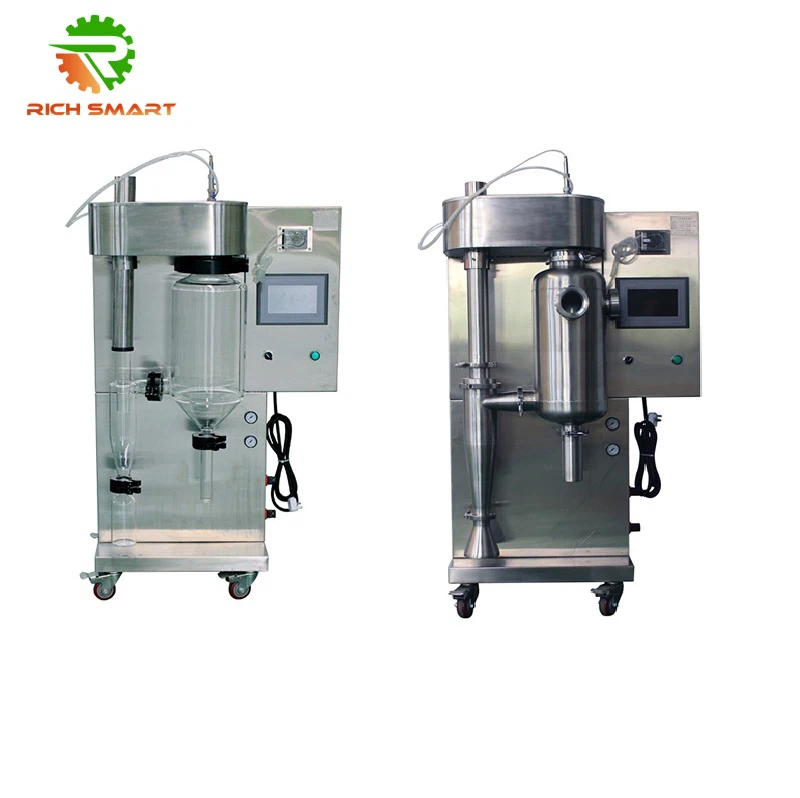
This is where the pilot spray dryers bridge the gap by typically having a capacity of 5-50 kg/hour. In other words, they can solve the problem of scaling from 500ml/hour in the laboratory unit to 100kg/hour on the production scale. The pilot spray dryer gives an intermediate solution without letting the process fail miserably due to a large transition. With this blog, we will understand how pilot spray dryers mitigate upscaling risks by examining the technical challenges.

Understanding the Pilot Spray Dryer And Upscaling Challenges
The pilot spray dryers offer the advantages of small volume, lower noise, lower power consumption, high recovery rate, and convenient operation. This whole machine occupies less than one square meter and can be ideally used in a laboratory. In addition, they feature a one-button start-up and a color LCD touchscreen for easy operation. Also, it can be used manually for experimental reasons. It generates spray particles with diameters of 1-100 microns and performs excellently in drying.
The pilot-scale dryer possesses an advanced control system, allowing researchers to monitor closely and adjust every aspect of the drying process. Presenting it as a perfect solution to bridge the laboratory to industrial scale-up. Whether you are working with heat-sensitive pharmaceuticals or robust industrial materials, this spray dryer offers reliability and accuracy essential for successful scale-up operations.
The upscaling challenges are categorized into two categories:
1. The Sclae-Up Dilemma
Upscaling spray drying is far more complex than simply multiplying the dimensions and flow rates. That's why the transitions bring a huge risk, as the heat and mass transfer ratio changes disproportionately. Atomization patterns also start to behave differently when nozzle pressure, rotary atomizer speed, or two-fluid nozzle configuration are scaled. This results in a direct impact of initial droplet size distribution, a critical parameter that determines final particle characteristics.
Interested in learning Spray Dryer for your Lab?[Send an Inquiry now]
2. Common Upscaling Failures
The most common upscaling failure is a shift in particle size distribution. The formulation that produces 5-15 μm particles in the laboratory can unexpectedly yield 15-40 μm particles due to differences in atomization and drying kinetics. For the pharmaceutical industry, this shift can ruin the entire batch of production. Moisture content variability arises from inconsistent drying and an altered air-to-product ratio. At the same time, a product can degrade if sensitive materials experience thermal stress. Furthermore, the other factor, like increased wall deposition, can reduce 15-30% yield. And during scale-up, the Reynolds number in the spray changes by a factor of 10-100.
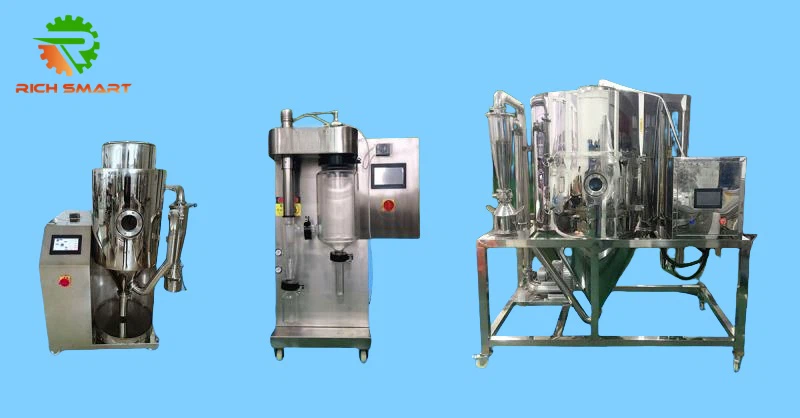
Technical Specification of Pilot-Scale Spray Dryers
A table representation of the features of the pilot spray dryer that make it the ideal solution for mitigating the risk factor during upscaling.
|
Specification |
Performance Data |
Scale-Up Benefit |
|
Evaporation Capacity |
5L/H (water equivalent) |
Provides intermediate scale between lab (<1L/H) and production (>50L/H) for meaningful validation |
|
Feed Rate Range |
50-5000 mL/h (adjustable) |
Wide range enables formulation development through process validation on a single platform |
|
Temperature Control |
40-350°C with PID control |
±1°C accuracy ensures thermal history replicates production conditions across diverse applications |
|
Atomization Systems |
High-speed centrifugal (10,000-25,000 RPM) or two-fluid nozzle |
Customizable options match production atomization technology for particle morphology consistency |
|
Control Interface |
Advanced PLC with 10-inch touchscreen |
Real-time monitoring and data logging support QbD and regulatory documentation |
|
Construction Material |
304 stainless steel with polished options |
GMP-compliant materials ensure product purity and facilitate cleaning validation |
|
Power Requirements |
380V/50Hz, 15KW total |
Moderate power consumption suitable for R&D facilities without specialized electrical infrastructure |
|
Equipment Footprint |
1500×1200×2500mm (L×W×H) |
Compact design fits standard laboratory spaces, reducing facility investment |
|
Safety Systems |
Automatic shutdown, over-temperature controls, explosion-proof options |
Protects valuable materials and enables safe testing of solvents and flammable materials |
Interested in learning Spray Dryer for your Lab?[Ask an Engineer now]
Final Thoughts!
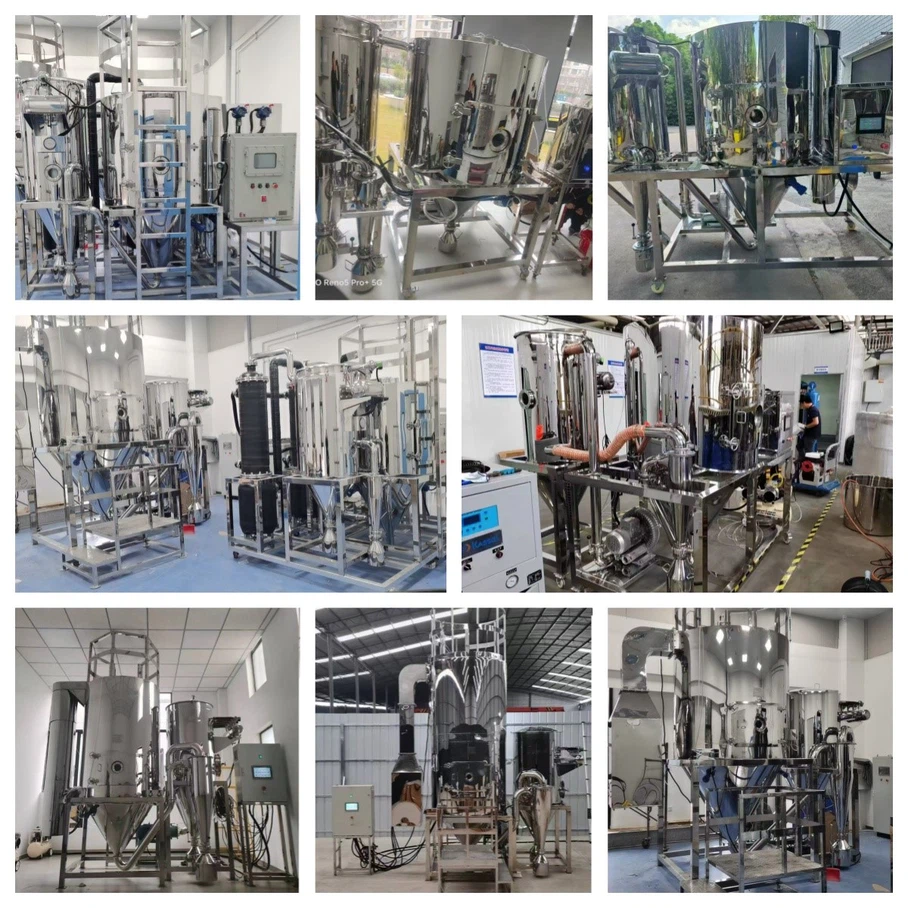
As discussed above, the pilot spray dryers are essential devices for reducing or even eliminating risk during upscaling in your environment. This makes your upscaling journey smooth and loss-free by bridging the gap between laboratory and commercial production needs. The technical validation also states its benefits by stating the risk that it reduces like material wastes, quality failure, and accelerates time-to-market. Companies that are in search of an upscalling device that will minimize the risk need Achieve Chem's pilot spray dryers. It is made with precision engineering and scalable design, offering evaporation capacities from 5-50 kg/hour with advanced control systems.
Frequently Asked Questions
Ques 1. What is the ideal capacity range for a pilot spray dryer?
Ans: The ideal capacity range varies from 5- 50 kg/hour of water evaporation to 10-100 kg/hour feed rate, depending on the solid content. The most perfect range for meaningful testing.
Ques 2. How many pilot batches are needed before scaling to production?
Ans: Typically, 3-5 batches are enough for validation of critical process parameters and make a transition from lab to production. This saves the 10-20 production batches that might have been needed in the absence of pilot-scale data.
Ques 3. Can pilot Spray dryers handle heat-sensitive pharmaceuticals?
Ans: Modern pilot spray dryers provide temperature control (1-2°C), short residence times (5-30 seconds), and inert gas capabilities for oxygen-sensitive materials. An ideal device for biologics, probiotics, and thermolanile APIs.
Ques 4. What's the typical scale-up ratio from pilot to production?
Ans: The typical scale-up ratio ranges from 1:10 to 1:20 in terms of throughput capacity. The key is maintaining similar process intensities (energy input per kg of product) rather than simple geometric scaling.