


How Efficient Is Spray Drying? Full Industry Efficiency Guide
Mar 27, 2026
Leave a message
Why Spray Dryer Efficiency Matters for Industrial Production
The spray drying process represents one of the fastest and most efficient ways of transforming the liquid feed of any viscosity into a fine, uniform dry powder. This whole process is done with the use of a machine spray dryer that converts the liquid into fine powder using different atomization principles in a single step. This makes it super fast and efficient, as it takes less time and delivers the best results with minimal human intervention through automation. The spray dryer comes with many other features that make using this high-tech machine very easy.
In this comprehensive blog, we will explore the features and results that efficient spray dryers deliver and how we can upgrade them to achieve more efficient results.
|
|
 |
 |

What are the Features of Efficient Spray Dryers?
High-efficiency spray dryers deliver maximum yield with minimal energy consumption and product loss. They maintain consistent product quality, lower operational costs, and support sustainable production with a reduced carbon footprint. The full process takes only 5–30 seconds, cutting energy waste and supporting green manufacturing goals.Highly efficient spray dryers yield the maximum product with minimum energy consumption, making it is the most favorable drying method.
The seamless process only takes up to 5-30 seconds to produce the final result, thus, reducing energy waste is a must. Especially at a time when environmental sustainability is the main focus. Therefore, reducing energy waste increases the industry's efficiency and leads to a smaller carbon footprint. For these reasons, understanding the spray dryer and improving its efficiency supports a broader environmental goal.
5 Key Factors Affecting Spray Dryer Efficiency
There are multiple factors that lead to the decreased efficiency of the spray dryer. Understanding these factors can significantly improve efficiency and facilitate the production of fine particles. As they say, identifying the problem is the first step toward improving overall performance and ensuring longevity.
1. Atomization
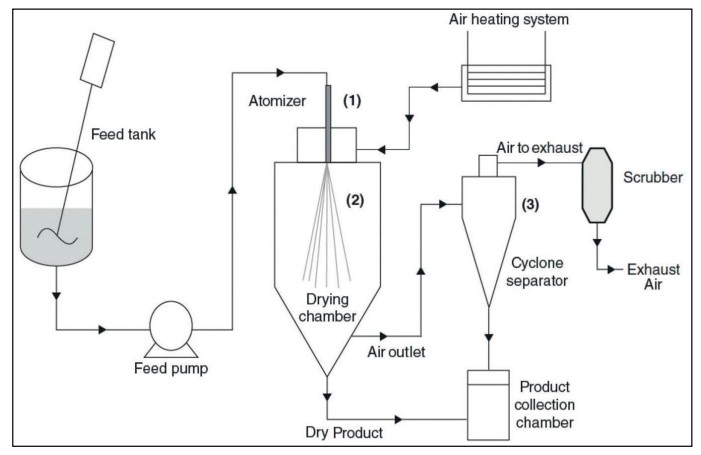
The drying efficiency is directly influenced by the atomization method and the droplet size distribution. The choice between different atomization methods, such as rotary or nozzle spray, has its own set of advantages and limitations. While small droplets can dry easily and faster, the control needs to be precise to avoid product loss.
2. Feed Properties
The drying efficiency can also be affected by the physical properties of the feed, which are viscosity, solids content, and temperature. For example, the feed can exhibit uneven drying and lower efficiency if it's too viscous, as it's not appropriately atomized. Additionally, the other factor that can influence the drying process is the composition of the feed. Such as feeds with high sugar content (For example, to prevent the sticking and burning, they may require different handling than others).
3. Dryer Design
The spray dryer's design is another consideration, as it affects operational efficiency, including the chamber size and configuration. Now, a well-designed dryer should facilitate easy cleaning and maintenance, preventing downtime and maintaining hygienic conditions. For applications in the pharmaceutical and food industries. Additionally, the efficient dryer design should minimize the heat loss and ensure uniform drying.
4. Airflow and Temperature
The Airflow rate and temperature are the critical aspects of the drying principle to achieve the desired level of drying. Without optimization, high temperatures can result in higher drying rates but also energy waste. In contrast, insufficient temperature can also delay the drying process and reduce throughput and efficiency. That's why finding the balance is vital and can only be achieved through constant monitoring and adjustments in the machine.
5. Exhaust Air Management
Enhancing the overall efficiency can be achieved by efficient management of exhaust air. As it can recover heat and reduce energy consumption. For even further improvement, you can choose the additional implementation of an exhaust air scrubber. Taking these points into consideration can make the process more cost-effective and sustainable over time.
Interested in learning our Spray Drying Technical?[Speak to an Engineer]
How to Improve Spray Dryer Efficiency: Final Tips
You can significantly boost spray dryer performance by optimizing the following areas:
- Optimize feed concentration, viscosity, and temperature
- Improve atomization control and equipment condition
- Adjust airflow and inlet/outlet temperatures for ideal evaporation
- Use heat recovery systems for exhaust air
- Perform regular cleaning, monitoring, and preventive maintenance
These changes maximize yield, cut energy use, stabilize product quality, and extend equipment life.
Frequently Asked Questions About Spray Dryer Efficiency
Q1: What is the most effective way to reduce spray dryer energy consumption?
A: Increasing feed solid content is the most effective method. Each 1% increase in solid content reduces energy consumption by 4–5%. Always balance viscosity to maintain proper atomization.
Q2: What is the ideal chamber temperature difference (ΔT) for maximum efficiency?
A: For most industrial products, the optimal inlet–outlet temperature difference is 60–100°C. A smaller ΔT leads to insufficient evaporation; a larger ΔT typically indicates energy waste.
Q3: How do inlet and outlet temperature control affect production?
A: Outlet temperature directly determines final product moisture and consistency, so it should be the primary control variable. Inlet temperature must be monitored and stabilized to avoid energy waste or equipment damage.
Q4: How often should atomizers be inspected and maintained?
A: Daily visual inspections are recommended. For high-throughput production, full disassembly and detailed inspection should occur at least weekly. Rotary atomizers require vibration monitoring for imbalance; pressure nozzles need regular flow testing to detect orifice wear.

Interested in one spray dryer for your lab/factory ?[check our spray dryer list]
Conclusion
Spray drying is one of the most efficient industrial drying technologies when properly optimized. By controlling atomization, feed properties, dryer design, airflow, temperature, and exhaust management, you can achieve high yield, low energy use, and consistent quality.
Regular maintenance and real-time monitoring keep your system performing like new. For high-performance, certified spray dryers with professional installation and support, choose Achieve Chem.
Visit the Achieve Chem website today, request a free quote, and take the next step to scale your production efficiently.