


How To Make Spray-dried Powder?
Jan 18, 2026
Leave a message
What are the Steps Involved in the Spray Drying Powder Formation?
Many liquid slurries are transformed into a uniform fine powder using a spray drying machine. But have you thought about the step-by-step process involved in making your powdered milk or instant coffee? In simpler terms, spray drying is an instrumental process that converts a liquid slurry of any product into its fine powder. Furthermore, these powders can be stored for longer and used as a quick, easy alternative instead of the original ones. For example, instead of waiting for a long time for coffee to brew, you can go for instant coffee powder. To have your morning cup of coffee quickly.
These powders are best when in a hurry. The same goes for another powder, such as baby milk powder. In this comprehensive blog, we will discuss one of the most important aspects. The process for converting liquids into fine powders using a spray-drying machine, and how we can optimize it.

What is a Spray-Dried Powder?
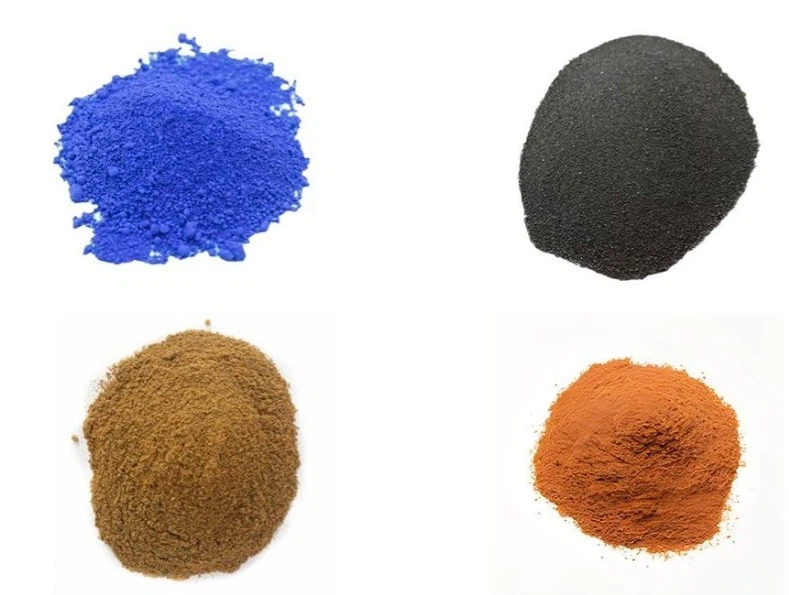
A spray-dried powder is a solid material produced by rapid drying of a liquid feedstock with a hot gas. This is a single step that occurs within a span of a few seconds and produces a fine, free-flowing powder. This process also ensures that the specific characteristics are preserved based on the initial liquid and the drying parameters. The final powder typically consists of small and spherical particles, although the exact morphology can vary. These powders are very good because they maintain the product's vitamin and nutritional integrity.
Interested in learning our professional service? [Speak to an Engineer]
What Makes the Spray Drying Process Special?
The method of spray drying has been under development for many years, but over the last 30-50 years, it has experienced tremendous growth. This process is considered very versatile, as it can be used from the laboratory to large-scale production in factories. Here's the five-step process that happens in the hood, resulting in the fine powder of the product you want.
1. Liquid Feed Preparation
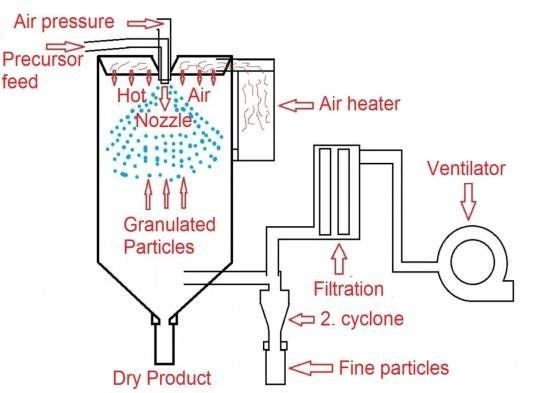
Before spray drying, the liquid feed is prepared. This feed can be in any form, solution, suspension, or emulsion containing the desired solid material. Optimal spray drying performance requires carefully controlled feed properties, such as viscosity and concentration. This prior practice ensures proper spray drying and optimizes yield. Generally, these three steps are part of this:
Dissolution/Formulation - allow the raw material to be prepared in liquid form if it's not available in liquid form.
Concentration / Evaporation - Ensure that the total solid is present in a large range of amounts, as an increased amount will result in a better yield.
Heating - It counterbalances the increasing viscosity due to the concentration
Pumping - the liquid feed is pumped at high pressure into the spray dryer.
2. Atomization
Atomization is the most important step in the process, which converts the liquid into tiny droplets to ensure fast drying. Due to the reduction in particle size and dispersion in the drying gas, this process increases the surface area for exchange. Where humidity can leave the particles, and the increased surface area helps the feed to dry in seconds.
This atomization is performed using one or more nozzles. Different spray dryers have various designs of nozzles that should be chosen based on material requirements for the best results. Typically, this process is done with the help of one of these three atomizers:
Rotary Nozzles: These atomizers break the liquid into droplets by using a spinning disc or wheel. These are generally suitable for large-scale processing of liquid volumes.
Pressure Nozzles: These atomizers use pressure to force liquid through a small nozzle, creating a spray. These are used for viscous liquids.
2-fluid Nozzle: These atomizers propel liquids into a fine mist using high-speed air, enhancing air efficiency. These are used for processes that require finely atomized sprays.
3. Droplet Ait Contact and Moisture Evaporation
Atmospheric air is typically used as a drying medium in spray drying. In this, the atmospheric air is filtered and then preheated according to operating parameters. This process is an example of heat and mass transfer as the heat from the drying medium is transferred to the droplets. The rates of heat and mass transfer depend on the droplet diameter and the velocities of the air and the droplets.
In spray drying, heated dry air removes moisture from droplets, and the air enters with low humidity and leaves with higher humidity. As air can flow in two ways:
Co-current (top-down): In this mode, the high-temperature air first contacts the particles with the highest humidity, helping protect them from overheating.
Counter-current (bottom-up): This process is used in other drying processes, but it's less common in spray drying.
4. Drying
Drying is a continuous process from the start, in the spray drying chamber, followed by the progression of the solids particles within. Furthermore, with the help of heat and mass transfer between the particle and the air, the moisture is completely removed.
Constant Drying Rate: the particle is saturated in liquid feed, as the mass transfer directly depends on the particle surface area.
Falling Rate: Once the particle surface is no longer saturated with liquid, drying slows. The drying part will depend on the capacity of the liquid trapped in the solid particle. Moisture trapped inside this should diffuse to the surface before it can evaporate, making the process diffusion-controlled.
Bubble Formation: During the falling rate stage, the particle temperature starts to rise. If this rising temperature exceeds the boiling point, the particle starts to vaporize. And can cause it to expand and form bubbles.
5. Powder Collection
Once the particles are dried, it takes time to collect them. However, this powder is collected at the bottom of the spray dryer. Very often, this separation is done in cyclones with increased efficiency enabled by filters. The dried powder is then separated using cyclones, bag filters, or electrostatic precipitators from the exhaust gas. The collection ensures the recovery of efficient powder while minimizing losses.
Interested in one spray dryer for your lab/factory ? [check our spray dryer list]
Why Choose Achieve Chem As Your Manufacturer?
Achievem Chem holds multiple technical patents and has successfully obtained EU CE certification and ISO 9001 quality management system certification. Additionally, we also have a special equipment product license. You should choose Achieve Chem for a scalable solution that prioritizes safety, quality, and total cost of ownership, trusted by leading brands worldwide.


Wrapping It Up!
Spray drying is the dominant method among all other drying methods. It's not just popularity, but also the dedicated, timely delivery of products within a given time range. Over the years, the production has been significantly profitable due to the time process of the spray drying machine. It's a single process work. To maintain this good production result, a large-scale, reliable manufacturer with robust, well-built equipment is needed.

If you're looking for one of them, then look no further than Achieve Chem. Fortune 500 companies trust us across 30+ countries. Additionally, we provide an on-site installation guide, 24/7 technical support, and lifetime technical support, so you never have to worry about the spray dryer machine you purchased from us. Contact us today through the sources given on our website.
Frequently Asked Questions
Q 1. What are the common signs of inefficient spray drying?
Ans: The common signs include sticking of excessive powder to the chamber walls, low product yield, or high moisture content.
Q 2. What safety features are critical for a spray dryer?
Ans: There are numerous, but here are a few important ones. Starting with explosive venting, pressure relief systems, and inert gas (N2) purging. These are a few crucial properties for solvents or combustible materials.
Q 3. Can I get a custom-made spray dryer for my product, and how long will it take?
Ans: Yes, you can get a custom-made spray dryer for your products. Here, to achieve chem, we make custom solutions for unique feed characteristics, capacity, or final product specifications. 1-2 weeks are needed for design, fabrication, and testing.