


How Is Evaporator Capacity Calculated?
Jul 07, 2024
Leave a message
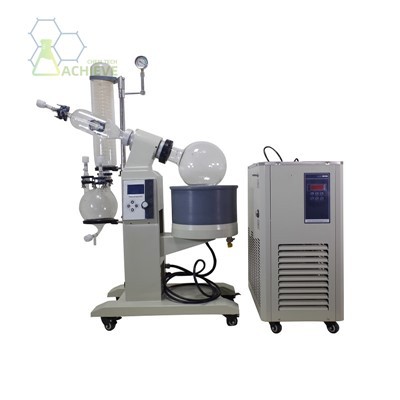
Calculating the capacity of an evaporator is a critical aspect in various industrial processes, particularly in chemical engineering, food processing, and pharmaceuticals. The evaporator plays a pivotal role in the concentration and purification of liquids by removing solvents, which is essential for achieving the desired product specifications and quality.
Understanding how to accurately calculate evaporator capacity helps in optimizing the efficiency and effectiveness of the evaporation process, ensuring that operations run smoothly and cost-effectively.
Moreover, accurate calculations are crucial for scaling up laboratory processes to industrial production levels, minimizing energy consumption, and reducing operational costs.
This blog delves into the intricacies of evaporator capacity, answering key questions that frequently arise in professional and academic settings.
By exploring the factors that influence evaporator performance, the methodologies for calculating heat load, and the strategies for optimizing capacity, we aim to provide a comprehensive understanding that will benefit engineers, technicians, and researchers alike. Through this detailed exploration, readers will gain valuable insights into how to enhance the performance and efficiency of their evaporative processes.
What Factors Influence Evaporator Capacity?
Evaporator capacity is influenced by a variety of factors, each playing a crucial role in determining how efficiently the evaporator performs. One of the primary factors is the heat transfer coefficient, which measures the effectiveness of heat transfer from the heating medium to the evaporating liquid. Higher coefficients generally indicate more efficient heat transfer, leading to higher evaporation rates. The nature of the heating medium itself-whether steam, hot water, or another substance-also significantly impacts the capacity.
The temperature difference between the heating medium and the boiling liquid is another critical factor. A greater temperature difference typically results in a higher rate of evaporation. However, this must be balanced with the thermal stability of the liquid being evaporated, as excessive temperatures can cause degradation or unwanted chemical reactions.
Flow rates of both the heating medium and the liquid to be evaporated are crucial. The flow rate of the heating medium needs to be optimized to ensure adequate heat transfer without causing excessive energy consumption. Similarly, the flow rate of the liquid influences the residence time within the evaporator, affecting the overall efficiency.
The physical properties of the liquid, such as viscosity, boiling point, and thermal conductivity, play a significant role in determining the evaporator's capacity. Liquids with lower boiling points and higher thermal conductivity generally evaporate more readily, enhancing the capacity.
Moreover, the design and construction of the evaporator itself, including the surface area available for heat transfer and the type of evaporator (e.g., falling film, forced circulation, or rotary), are pivotal. Evaporators with larger heat transfer surfaces or more efficient designs can handle higher capacities.
How Do You Calculate the Heat Load in an Evaporator?
The heat load is a fundamental component in calculating the capacity of an evaporator. It represents the amount of heat energy required to evaporate a given quantity of liquid. To calculate the heat load, one must understand the principles of enthalpy and latent heat of vaporization.
Firstly, the mass flow rate of the liquid entering the evaporator needs to be determined. This can be obtained through flow meters or calculated based on the process requirements. Once the mass flow rate is known, the next step is to determine the enthalpy change of the liquid as it undergoes phase transition from liquid to vapor.
The heat load (Q) can be calculated using the formula:
Q = m × times (hv - hf)
Where:
Q is the heat load (in kJ/hr or BTU/hr)
m is the mass flow rate of the liquid (in kg/hr or lb/hr)
hv is the enthalpy of the vapor phase (in kJ/kg or BTU/lb)
hf is the enthalpy of the liquid phase (in kJ/kg or BTU/lb)
The latent heat of vaporization (∆Hv) plays a pivotal role in this calculation. This value represents the amount of energy required to transform the liquid into vapor without changing its temperature. For most substances, this value is well-documented and can be found in engineering handbooks or material datasheets.
In practical applications, additional factors such as heat losses to the surroundings and efficiency of the evaporator system need to be considered. These factors often necessitate corrections to the theoretical heat load to account for real-world inefficiencies and losses.
What Methods are Used to Optimize Evaporator Capacity?

Optimizing evaporator capacity involves several methods aimed at enhancing the efficiency and effectiveness of the evaporation process. One of the primary methods is the optimization of operating conditions, such as the temperature and pressure of the heating medium. Adjusting these parameters can significantly influence the evaporation rate and overall capacity.
Regular maintenance and cleaning of the evaporator system are also crucial. Fouling and scaling on heat transfer surfaces can drastically reduce efficiency, leading to decreased capacity. Implementing a routine maintenance schedule to clean and inspect the evaporator helps maintain optimal performance.
Another method is the use of advanced control systems. Modern evaporators are often equipped with sophisticated control systems that monitor and adjust operating parameters in real-time. These systems can optimize flow rates, temperatures, and pressures, ensuring that the evaporator operates at peak efficiency.
Energy recovery systems can also play a significant role in optimization. For instance, incorporating a vapor recompression system can help recover and reuse energy from the vapor, reducing the overall energy consumption and increasing the evaporator's capacity.
The design of the evaporator itself can be optimized through modifications or upgrades. For example, retrofitting an existing evaporator with more efficient heat exchangers or implementing a multiple-effect evaporation system can enhance capacity. In multiple-effect evaporators, the vapor from one effect is used to heat the next, significantly improving efficiency and capacity.
Finally, process integration can optimize the entire production line. By ensuring that upstream and downstream processes are well-coordinated with the evaporator, the overall efficiency and capacity can be maximized. This holistic approach often involves conducting a detailed process analysis and identifying areas for improvement across the entire system.
Conclusion
By understanding the factors influencing evaporator capacity, calculating the heat load accurately, and employing methods to optimize performance, industries can ensure efficient and effective evaporation processes. These strategies not only enhance productivity but also contribute to energy savings and cost reductions.