


How Long Does It Take To Rotovap?
Jul 07, 2024
Leave a message
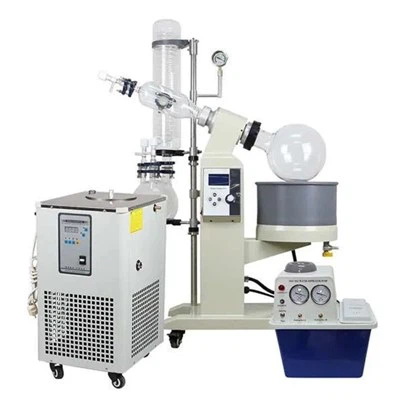
Rotary evaporation, commonly known as rotovap, is a widely used technique in laboratories and industries for efficient solvent removal under vacuum. The duration of this process varies depending on several factors, including the solvent type, volume, and operational conditions. This blog explores the intricacies of how long it takes to rotovap, addressing common questions and providing insights based on practical experience and scientific knowledge.
What Factors Influence Rotovap Duration?
The duration required for rotary evaporation hinges on several critical factors that collectively determine the efficiency and speed of solvent removal. Chief among these factors is the boiling point of the solvent. Solvents with lower boiling points typically evaporate more rapidly when subjected to reduced pressure conditions typical of rotary evaporators. In contrast, solvents with higher boiling points necessitate longer processing times due to their slower evaporation rates under the same conditions.
Another pivotal factor is the temperature of the water bath. This parameter plays a dual role in regulating the temperature of the solvent and consequently influencing its vapor pressure and evaporation rate. Higher temperatures in the water bath can accelerate the evaporation process; however, precise control is essential to prevent overheating or potential degradation of temperature-sensitive substances.
The vacuum level employed during rotary evaporation also significantly impacts the evaporation rate. A stronger vacuum effectively lowers the boiling point of the solvent, facilitating faster evaporation. It is crucial to maintain an efficient vacuum system with proper seals and optimal pump performance to ensure consistent pressure levels throughout the evaporation process.
Furthermore, the rotational speed of the flask on the rotary evaporator plays a critical role in determining the efficiency of solvent removal. Higher rotational speeds increase the surface area exposed to the vacuum, thereby promoting faster evaporation rates. However, it's essential to strike a balance, as excessively high speeds can lead to foaming or splashing, which may compromise process efficiency and safety.
How Do You Calculate Evaporation Time on a Rotovap?
Calculating the evaporation time on a rotary evaporator hinges on determining the evaporation rate (E). The evaporation rate represents how quickly the solvent volume decreases over time under specific conditions of temperature, vacuum level, and flask rotation speed. It is typically measured in mL/min or L/hour, depending on the volume of solvent and the desired endpoint conditions. Calculating the evaporation time of rotary evaporation involves considering the solvent volume, initial concentration, and desired endpoint conditions.
The evaporation rate (E) can be estimated using the formula:
E = V/t
Where:
V is the volume of solvent to be evaporated (in mL or L)
t is the time required for evaporation (in minutes or hours)
The time t can then be calculated as:
t = V/E
To determine E, one needs to establish the rate at which the solvent is evaporating under the specific conditions of temperature, vacuum, and flask rotation speed.
This rate can vary significantly based on the factors mentioned earlier.
What Techniques Optimize Rotovap Efficiency?
Pre-heating of Solvents
Pre-heating the solvent before starting rotary evaporation is a proven technique to optimize efficiency. By heating the solvent to a temperature close to its boiling point before applying vacuum, the time required for the solvent to reach the evaporation stage is significantly reduced. This approach minimizes initial heating time under vacuum, thereby speeding up the overall evaporation process.
Parallel Evaporation Using Multiple Flasks
Utilizing multiple evaporative flasks concurrently is another effective method to enhance rotary evaporation efficiency. Laboratories can increase throughput by running parallel evaporation processes for different samples or solvents simultaneously. This approach not only saves time but also optimizes resource utilization, making it ideal for high-volume operations or when handling diverse samples requiring different processing times.
Optimal Selection of Glassware and Accessories
Choosing the right glassware and accessories is crucial for maximizing rotary evaporation efficiency. Selecting flasks of appropriate size and shape ensures efficient heat transfer and maximizes surface area exposure to the vacuum, accelerating solvent evaporation. Additionally, incorporating cold traps or condensers helps capture and condense solvent vapors, preventing them from escaping into the laboratory environment. This not only improves process safety but also enhances overall efficiency by reducing solvent loss.
These techniques collectively contribute to optimizing rotary evaporation efficiency, making the process faster, more reliable, and better suited for various laboratory applications.
Conclusion
In conclusion, comprehending the duration of rotary evaporation processes necessitates meticulous consideration of influencing variables, precise evaporation time calculations, and the implementation of optimization strategies to boost efficiency.
Mastery of these elements empowers laboratories and industries to streamline solvent removal processes effectively, ensuring consistent and efficient operations across diverse applications.