


How Do You Calculate The Size Of The Evaporator?
Jul 07, 2024
Leave a message
Determining the appropriate size for an evaporator, especially a rotary evaporator, is crucial for achieving optimal efficiency and effectiveness in various applications. Whether you are working in a laboratory or an industrial setting, understanding the principles behind sizing your evaporator can save time, resources, and ensure the success of your processes. In this blog, we will explore key considerations for sizing a rotary evaporator, providing insights based on common queries and authoritative sources.
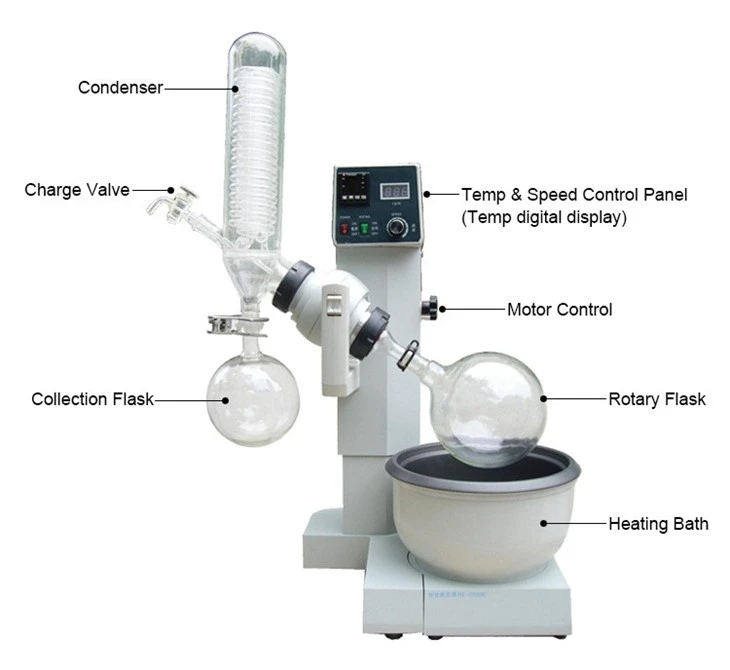
What Factors Influence the Sizing of a Rotary Evaporator?
Types of Rotary Evaporators
Rotary evaporators are available in a variety of sizes and configurations to meet a variety of requirements and applications. Each type has a specific function, ranging from small benchtop models to large industrial units. Your needs for volume and the nature of the materials you're working with will heavily influence the size of the evaporator you select. For example, small-scale experiments and sample preparations benefit most from laboratory-scale rotary evaporators, whereas larger units are required for industrial-scale operations that require greater solvent recovery volumes.
Capacity and Throughput
One of the main variables impacting the size of a rotary evaporator is its ability and throughput. This alludes to the volume of fluid it can handle inside a given time period. The maximum volume of solvent that you intend to evaporate per batch as well as the frequency of your operations must be taken into consideration when selecting the appropriate size. A bigger evaporator with a higher throughput will be vital in the event that you have high-volume needs or require constant activity.
Heat Source and Temperature Control
The intensity source and temperature control capacities of a rotary evaporator likewise assume a critical part in estimating. The evaporator must be able to reach and maintain the appropriate temperatures for effective evaporation because different solvents have varying boiling points. The warming shower size and power will decide how rapidly and equitably the dissolvable is warmed. While an appropriately sized heating bath ensures rapid and uniform heating, an undersized one may result in inefficient evaporation and longer processing times.
Vacuum System Efficiency
Another crucial aspect is the vacuum system's effectiveness. A rotary evaporator depends on a vacuum to decrease the limit of the dissolvable, working with vanishing at lower temperatures. The rate of evaporation and the quality of the finished product are influenced by the vacuum system's stability and strength. Consider the vacuum pump's capacity and system compatibility when sizing your evaporator to ensure that it can consistently achieve and maintain the desired vacuum levels.
How Do You Determine the Correct Heating Bath Size for a Rotary Evaporator?
Importance of Heating Bath Size
The warming shower is a fundamental part of a rotary evaporator, giving the important intensity to the cup containing the dissolvable.
To ensure effective heat transfer and evaporation, the heating bath must be the same size as the flask and solvent.
Uneven heating, inefficient evaporation, and potential safety hazards can all result from a heating bath that is too small.
Calculating the Heating Bath Size
To ascertain the right warming shower size, begin by deciding the volume of the cup you will utilize.
The flask should fit comfortably in a heating bath that is large enough to distribute heat evenly.
To ensure effective heat transfer, the heating bath should be at least 1.5 times larger than the flask's volume.
For instance, on the off chance that you are utilizing a 1-liter cup, the warming shower ought to have a limit of no less than 1.5 liters.
Temperature Range and Control
Consider the temperature range and control precision of the heating bath.
Different solvents require specific temperatures for optimal evaporation.
The heating bath should be capable of reaching and maintaining these temperatures accurately.
Look for heating baths with precise temperature control mechanisms and a wide temperature range to accommodate various solvents and applications.
Material and Construction
The material and construction of the heating bath also influence its efficiency and durability.
High-quality materials such as stainless steel or aluminum provide excellent heat conduction and resistance to corrosion.
Ensure that the heating bath is well-insulated to minimize heat loss and maintain consistent temperatures throughout the evaporation process.
Additionally, check for safety features such as over-temperature protection and automated shut-off mechanisms to prevent accidents and ensure safe operation.
What Are the Best Practices for Maintaining a Rotary Evaporator?
Regular Cleaning and Maintenance
Maintaining your rotary evaporator is crucial for ensuring its longevity and optimal performance. Regular cleaning of all components, including the heating bath, condenser, and vacuum pump, prevents the buildup of residues and contaminants that can affect efficiency and product quality. Follow the manufacturer's guidelines for cleaning procedures and use appropriate cleaning agents to avoid damaging the equipment.
Checking for Leaks and Seal Integrity
Inspect the rotary evaporator for any leaks or signs of wear and tear, particularly in the seals and gaskets. Leaks can compromise the vacuum system's efficiency and lead to solvent loss and decreased evaporation rates. Replace any damaged or worn-out seals promptly to maintain a tight and efficient vacuum.
Monitoring and Adjusting Vacuum Levels
Consistently monitor the vacuum levels to ensure they remain within the desired range for your specific application. Adjust the vacuum pump settings as needed to maintain optimal pressure levels. Regularly check the vacuum pump for signs of wear and replace it if necessary to ensure reliable and consistent vacuum performance.
Calibration and Performance Testing
Periodically calibrate the temperature control systems and conduct performance tests to verify the accuracy and efficiency of your rotary evaporator. Calibration ensures that the heating bath maintains the correct temperatures, while performance tests help identify any issues that may affect the evaporation process. Address any discrepancies or malfunctions promptly to prevent disruptions and maintain high-quality results.
Training and Safety Protocols
Ensure that all personnel operating the rotary evaporator are adequately trained and familiar with the equipment's operation and safety protocols. Proper training minimizes the risk of accidents and ensures that the equipment is used correctly and efficiently. Implement safety protocols such as wearing appropriate personal protective equipment (PPE) and following standard operating procedures (SOPs) to create a safe and productive working environment.
Preventive Maintenance Schedule
Establish a preventive maintenance schedule that includes routine inspections, cleaning, and servicing of all components. Regular maintenance not only extends the lifespan of the rotary evaporator but also ensures consistent performance and minimizes downtime. Keep detailed records of maintenance activities and any repairs or replacements performed to track the equipment's condition and performance over time.