



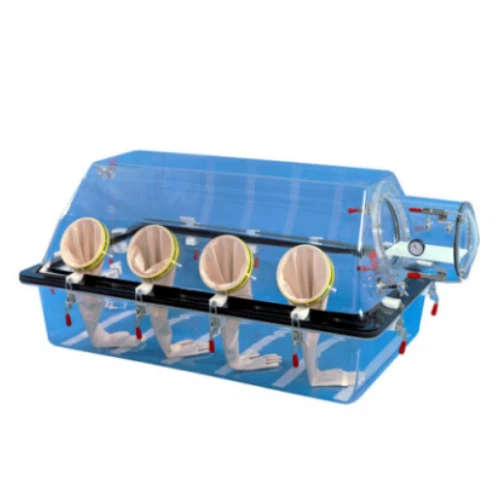
Plastic Glove Box
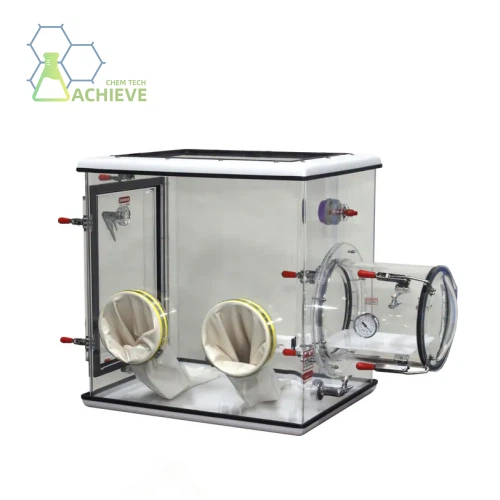
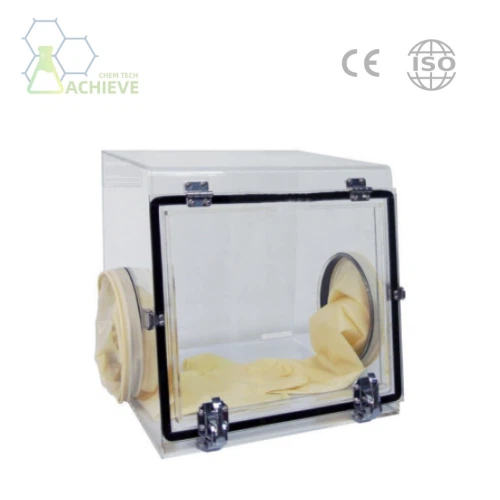
1)Acrylic Type A glove box: No sample transfer window, must be take it out from the door.
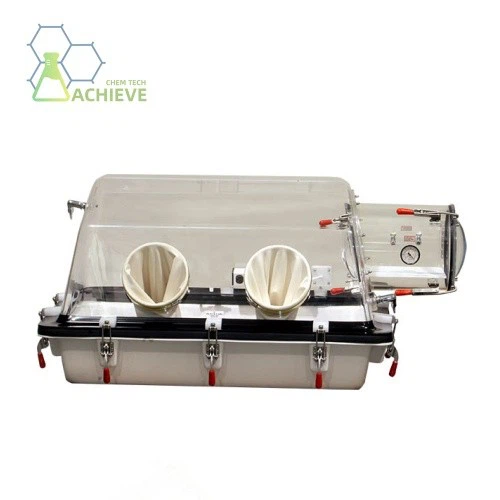
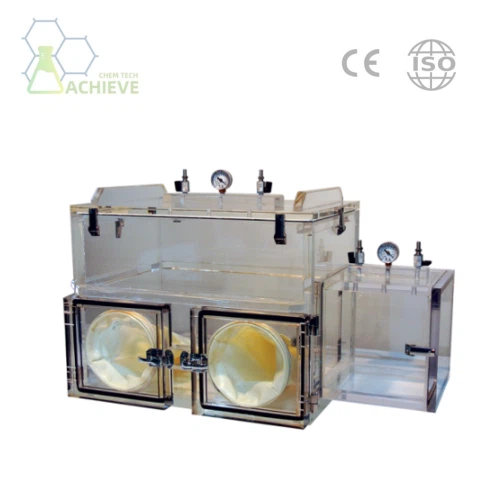
2)Acrylic Type B glove box:There is a sample transfer window, which can protect the gas environment inside the box from being damaged by the outside world.
3)Acrylic Type B glove box:The air in the box can be extracted through the vacuum pump, and then through the high purity dry inert gas into the box, and reach the lower water oxygen content in the box
2.Customization:
1)Single, double, multiple people and other different station boxes.
2)Different shapes, different structures, different applications, different thickness customization options.
3)Doors of different sizes can be opened on any side of the box to facilitate the entry and exit of equipment and accessories.
4)For other optional configurations, contact sales personnel.
***Price List for whole above, inquire us to get
Description
Technical Parameters
Plastic glove boxes are airtight, plastic-based enclosures designed to allow operators to perform various operations inside the box with gloves on their hands without direct exposure to the outside environment. This type of equipment is primarily used in experimental or industrial production environments where high purity, sterile or special gas atmospheres are required. They have more Application in Scientific research and Industrial field.
◆ Scientific research: They are widely used in laboratories in the fields of material science, chemistry, biology, medicine, etc., for conducting various experiments that require high purity or sterile conditions.
◆ Industrial field: In semiconductor manufacturing, electronic packaging, optical device production and other industries, the device is also commonly used to protect sensitive materials from contamination and ensure product quality and reliability.
Origins and Evolution
|
|
The concept of a glove box isn't a recent innovation. Initially, these enclosures were primarily used in scientific and industrial settings to provide a controlled environment for sensitive operations. Early glove boxes were often made of glass or metal, reflecting their need for durability and isolation from external contaminants. However, as technology advanced and materials science evolved, plastic emerged as a viable alternative. The device has several advantages over conventional materials. They are lighter, easier to manufacture, and more cost-effective. In addition, the plastic can be molded into complex shapes, allowing for greater design flexibility. Over the decades, it has undergone significant improvements. Manufacturers have introduced various grades of plastics, each tailored for specific applications. High-density polyethylene (HDPE), polypropylene (PP) and polyvinyl chloride (PVC) are the most commonly used materials. These plastics offer a balance of durability, chemical resistance and transparency, making them ideal for a wide range of uses.
|

Construction and Design
The construction of the device is a perfect combination of engineering and aesthetics. The box itself usually consists of a clear or translucent plastic shell, and the contents can be easily seen without opening the box. This transparency is essential in scientific and medical applications, where visual inspection is often required.
The gloves, which are an integral part of the system, are attached to the box via ports or sleeves. These ports are designed to be airtight, preventing contamination from entering the box while allowing the user to manipulate the contents with their hands. The gloves themselves are usually made of materials like latex, nitrile, or vinyl, chosen for their durability, comfort, and chemical resistance.
In addition to the basic structure, plastic glove boxes often incorporate various features to enhance their functionality. These include:
◆ Gas Ports: For introducing or removing gases, essential in controlled atmosphere applications.
◆ Filters: To purify the air within the box, ensuring a sterile environment.
◆ Heaters and Coolers: To maintain a constant temperature, crucial for preserving sensitive materials.
◆ Humidity Controls: To regulate moisture levels, preventing mold and corrosion.
applications of polymer materials
The device plays an important role in the development of polymer materials, providing a relatively closed and controlled experimental environment that helps scientists perform accurate experimental operations and material analysis.
◆ The development of polymer materials on the special requirements of the environment
Oxygen-free or low-oxygen environment:
the synthesis or modification of certain polymer materials need to be carried out in an oxygen-free or low-oxygen environment to avoid the interference of oxygen on the nature of the material.
Water-free environment:
Moisture may affect the synthesis, polymerization or curing process of polymer materials, so the moisture content in the experimental environment needs to be controlled.
◆ Application in the development of polymer materials
Synthesis of polymer materials:
Inside the glove box, scientists can conduct synthesis experiments of polymer materials. By controlling factors such as oxygen, moisture and atmosphere in the experimental environment, the synthesis process can be precisely controlled to obtain polymer materials with specific properties.
Modification of polymer materials:
the glove box can also be used for polymer material modification experiments. For example, by adding fillers, plasticizers and other additives, the physical, chemical or mechanical properties of polymer materials can be improved. Experiments inside the glove box can avoid the influence of external factors on the modification process and ensure the stability and reliability of the modification effect.
Characterization and analysis of polymer materials:
a series of characterization and analysis experiments need to be carried out, such as infrared spectroscopy, nuclear magnetic resonance analysis, thermogravimetric analysis and so on. These experiments need to be conducted in a relatively closed and controlled environment to avoid the influence of external factors on the experimental results, it provides an ideal experimental environment to ensure the accuracy and reliability of the characterization and analysis experiments.
◆ Advantages in the development of polymer materials
Improvement of experimental precision:
By strictly controlling the experimental environment, it can significantly improve the precision and accuracy of polymer material development experiments.
Protecting experimental materials:
The environmental control inside the glove box can effectively protect the experimental materials from the interference and pollution of external factors, ensuring the stability and reliability of the experimental results.
Improve experimental efficiency:
conducting experiments inside the glove box can avoid frequent opening and closing of the experimental device, thus saving experimental time and improving experimental efficiency.
Products Description
The handling and application of plastic glove boxes during radiation therapy is not their primary design use. We can explore the potential role of glove boxes in specific radiation therapy preparation or ancillary tasks involving radioactive materials or requiring a sterile, dust-free environment.
I. Potential Application Environments
There are certain aspects of the radiation therapy process that may need to be performed under specific environmental conditions, such as aseptic, dust-free, or low-oxygen environments. Although conventional radiation therapy equipment (e.g., linear gas pedals, CT scanners, etc.) does not directly utilize gloveboxes, there are specific situations where gloveboxes may be used as auxiliary equipment for handling items or materials related to radiation therapy.
II. Potential applications for handling radioactive materials
 |
■ Handling of radiopharmaceuticals: In certain radiation treatments, such as boron neutron capture therapy, radiopharmaceuticals are required. The preparation and handling of these drugs needs to be done in a strictly controlled environment to prevent leakage and contamination of radioactive materials. Although the glove box is not specifically designed for this purpose, it may be used as a temporary barrier for the handling of radiopharmaceuticals in some laboratory environments to minimize the risk of operator exposure.
■ Radioactive Waste Disposal: Radioactive waste generated during radiation therapy requires proper disposal. In some cases, glove boxes may be used for temporary storage or disposal of these wastes to minimize contamination of the environment and injury to operators. |
III. Potential applications of aseptic and dust-free environments
Aseptic operation:
In the preparatory stage before radiation therapy, such as making thermoplastic film fixation, vacuum pad fixation and other body fixation devices, it is necessary to maintain a sterile environment to prevent infection. Although a glove box is not standard equipment for fabricating these devices, in some cases it may be used as a temporary aseptic operating table to minimize airborne microbial contamination.
Dust-free environment:
In certain sophisticated radiation therapy equipment, such as proton heavy ion gas pedals, a dust-free environment needs to be maintained to ensure proper operation and prolong the life of the equipment. Although the glove box is not specifically designed for this purpose, it may be used as a temporary dust-free operating environment during certain maintenance or cleaning task
Specific application cases
■ Synthesis reaction: the use of Plastic glove box can ensure that the reaction is carried out in the absence of oxygen, water or a specific atmosphere, thus improving the yield and purity of the reaction. For example, in the synthesis of certain transition metal olefin complexes, the use of a glove box can avoid the interference of oxygen and moisture on the reaction, and get a purer product.
■ Catalytic reaction: Often used as a catalyst in various chemical reactions. When using these catalysts, the reaction environment needs to be strictly controlled. This device provides an ideal reaction environment to ensure the stability and activity of the catalyst, thereby improving the efficiency and selectivity of the catalytic reaction.
■ Storage and transportation: They usually need to be stored and transported under specific conditions to prevent chemical reactions or degradation. The device can provide a relatively closed and stable environment to ensure its safety and stability during storage and transportation.


Plastic glove box meets the special requirements of polymer material development on environment by providing a relatively closed and controlled experimental environment. Its main applications include:
■ Synthesis of polymer materials: Inside the glove box, scientists can conduct synthesis experiments of polymer materials. By controlling factors such as oxygen, moisture and atmosphere in the experimental environment, the synthesis process can be precisely controlled to obtain polymer materials with specific properties.
■ Modification of polymer materials: the glove box can also be used for polymer material modification experiments. For example, by adding fillers, plasticizers and other additives, the physical, chemical or mechanical properties of polymer materials can be improved. Experiments inside the glove box can avoid the influence of external factors on the modification process and ensure the stability and reliability of the modification effect.
Hot Tags: plastic glove box, China plastic glove box manufacturers, suppliers, factory, Laboratory Rotary Evaporator, Hydrothermal Synthesis Reactor, 20l Rotary Evaporator, High Pressure Chemical Reactor, Short Path Distillation System, High Pressure Hydrogenation Reactor
Previous
Acrylic Glove BoxNext
Portable Glove BoxSend Inquiry


