



5l Rotovap
(1)1L/2L---Manual lifting with irony base/Manual lifting with SS base/Electric lifting
(2)3L/5L/10L/20L/30L/50L---Manual Lifting/Electric Lifting
***Price List for whole above, inquire us to get
2. Customization:
(1)Design support
(2)Directly supply the Senior R&D organic intermediate, shorten your R&D time and cost
(3)Share the advanced purifying technology with you
(4)Supply the high quality chemicals and analysis reagent
(5)We want to assist you on Chemical Engineering (Auto CAD, Aspen plus etc.)
3. Assurance:
(1)CE and ISO certification Registered
(2)Trademark: ACHIEVE CHEM(since 2008)
(3)Replacement parts within 1-year for free
Description
Technical Parameters
A 5L rotovap, or 5L rotary evaporator, is a laboratory instrument used for solvent evaporation, concentration, and separation. It consists of several main components: evaporation flask, rotation motor, heating bath, condenser, collection flask, vacuum pump, and control panel.
The instrument usually consists of a combination of glass and metal components. Glassware, including evaporative flares, condensers and collection flares, are made of borosilicate glass and are known for their resistance to thermal shock. Heating baths are usually made of stainless steel or other heat-resistant materials to provide durability and efficient heat transfer. Its specific design and construction may vary from manufacturer to manufacturer, but the general principles and components mentioned above are common in most models.

Product Introduction
|
|
|
|
|


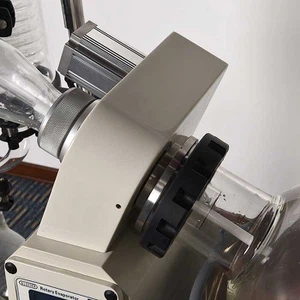
To use a 5L Rotovap, it is necessary to understand its operating principles, common parameters, and safety issues to ensure correct operation and achieve the desired experimental results. Here are some key points to consider:
Operating principles: understand how Rotovap works, including the basic principles of evaporation and concentration, as well as the role and location of each component in the instrument. This will help you better operate the instrument and avoid incorrect operations.
Common parameters: understand the common parameters of Rotovap, including the evaporation rate, evaporation time, stirring rate, heating power, flask capacity, and materials of the flask and rotor. These parameters will affect the performance and results of Rotovap, so you need to choose appropriate parameters according to your experimental needs.
Safety issues: pay attention to safety issues during use, including protecting yourself and the laboratory environment from exposure to heat and toxic substances, ensuring that the instrument is in good condition to avoid accidents, and particularly need to pay attention to avoid touching the hot parts of the instrument. In addition, regular maintenance and cleaning of Rotovap can help extend its service life and maintain good performance.
Precautions for use: master the correct use methods, including how to load liquids into the flask, how to adjust the heating temperature and stirring rate, how to deal with liquid leakage or other problems during use, etc. In addition, you should also understand how to clean and store Rotovap after use to maintain its good performance and extend its service life.
Product Parameter


All kinds of "Rotary Evaporator", Price List, you can choose online HERE
Decompression operation
Decompression procedures
Ensure that the vacuum pump and the vacuum interface of the rotary evaporator are tightly connected, and there is no air leakage.
The choice of vacuum pump should be determined according to the experimental requirements and the specifications of the rotary evaporator.
Turn on the power switch of the vacuum pump and start the vacuum pump.
After the vacuum pump is started, the pressure in the rotary evaporator system is gradually reduced.
By observing the reading of the vacuum gauge, you can know the vacuum degree in the system.
According to the experimental requirements and the boiling point of the solvent, the working state of the vacuum pump is properly adjusted to achieve the required vacuum degree.
Too high vacuum may lead to solvent boiling, too low will affect the evaporation efficiency.
During the decompression process, the liquid level change in the evaporation bottle should be closely observed.
If it is found that the liquid level fluctuates greatly or there is a sudden boiling phenomenon, the decompression operation should be stopped immediately, and the heating temperature and vacuum degree should be adjusted appropriately.
When the vacuum degree reaches a stable state and the liquid level in the evaporation bottle begins to decline steadily, it indicates that the decompression operation is successful and stable evaporation can begin.
Decompression operation precautions


Ensure tightness
Before decompression, carefully check the sealing of the rotary evaporator, including the sealing of the evaporator bottle, condensing pipe, and vacuum interface.
If air leakage is found, the decompression operation should be stopped immediately, and the cause of air leakage should be found for repair.
Select the right vacuum pump
The choice of vacuum pump should be determined according to the experimental requirements and the specifications of the rotary evaporator.
The performance of vacuum pump directly affects the effect and efficiency of decompression operation.
Control vacuum
The choice of vacuum degree should be determined according to the experimental requirements and the boiling point of the solvent.
Too high vacuum may lead to solvent boiling, too low will affect the evaporation efficiency.
Observe evaporation process
During the decompression process, the liquid level change in the evaporation bottle should be closely observed.
If it is found that the liquid level fluctuates greatly or there is a sudden boiling phenomenon, the decompression operation should be stopped immediately, and the heating temperature and vacuum degree should be adjusted appropriately.
Safe operation
In the process of decompression operation, laboratory safety regulations should be strictly observed.
Wear appropriate protective glasses and gloves to prevent damage to skin and eyes from accidental spillage of samples.
Ensure that the laboratory is well ventilated to avoid harmful gas accumulation.
The significance of decompression operation
Decompression operation is of great significance in rotary evaporators:
Reduce solvent boiling point
By decompression operation, the boiling point of the solvent can be reduced, so that it can evaporate at a lower temperature.
This helps protect the heat-sensitive sample from breaking down or deteriorating at high temperatures.
Improved evaporation efficiency
The decompression operation can increase the heat transfer temperature difference and improve the evaporation efficiency.
This is helpful to shorten the experiment time and improve the experiment efficiency.
Achieve continuous evaporation
The decompression operation can realize continuous evaporation, which makes the experiment process more automatic and convenient.
This helps to reduce the error caused by human operation and improve the accuracy of experimental results.
To sum up, the decompression operation of the 5l rotovap is a crucial step in the experiment. The correct decompression operation can ensure the smooth progress of the experiment, improve the evaporation efficiency and the accuracy of the experimental results.
Care and maintenance
 |
 |
 |
Routine maintenance
Pre-use inspection
Before each use, the appearance of the instrument should be carefully checked to see whether the overall instrument is damaged, especially whether the glass parts are cracked, damaged, and whether the connection parts are firm.
Check that switches and knobs on the control panel function properly.
Check whether the oil level of the vacuum pump is normal, if insufficient, add it to the appropriate scale in time.
Precautions for use
The glass parts should be handled gently to avoid bumping and damage.
Wash and dry or dry the glass parts before loading.
Each grinding edge, sealing surface, sealing ring and joint need to be coated with a vacuum grease before installation to maintain lubrication and tightness. Cover the vacuum grease after use to prevent dust and sand from entering.
Water must be added before the heating tank is energized, and dry burning without water is not allowed.
During use, the interfaces should not be tightened too tightly, and should be loosened and activated regularly to avoid long-term locking of the connector.
When starting the instrument, the power switch should be turned on first, and then the machine should be turned from slow to fast, and the machine should be confirmed that the instrument has entered the standstill state when stopping, and then the switch should be turned off.
The teflon switch cannot be over-tightened to avoid damaging the glass.
The liquid in the liquid storage ball should be poured out in time to avoid pressing the spring in the lifting table and affecting the efficiency of spinning.
The coolant is recommended to use pure water, and if tap water is used, it should be placed for 1-2 days to reduce corrosion. The bath water should be changed at least twice a month to maintain the clean water quality and the normal operation of the equipment.
Clean after use
After each use, the evaporation bottle, condensing tube and receiving bottle must be cleaned in time to remove residual impurities. If necessary, it can be cleaned with appropriate amount of detergent, rinsed with distilled water, dried and reserved.
Use a soft cloth (can be used instead of napkins) to wipe the interface and the surface of the machine residual various oil stains, stains and solvents to keep clean.
After shutdown, loosen the polytetrafluoroethylene switch to avoid the polytetrafluoroethylene piston in the working state for a long time and deformation.
Regular maintenance
Seal maintenance
The rotary sealing assembly of the rotary evaporator includes a gas shaft, a main shaft, a lubricating sleeve, a rotating head, an imported skeleton oil seal, a polytetrafluoroethylene sealing sleeve and an "O" ring. Regular lubrication maintenance is required.
Perform maintenance at least once a month, remove the polytetrafluoroethylene sealing sleeve, and clean the outer surface of the gas shaft and the sealing sleeve itself. Re-apply advanced grease with a temperature above 120 ° C to the inner hole of the inlet frame oil seal, and reinstall the sealing sleeve to ensure that excess grease is removed.
Perform deep maintenance at least once a year, remove the gas guide cylinder, and pull the gas guide shaft from the left end of the nose. Clean the head and reapply high-grade grease to each lubricating surface. At the same time, remove the motor at the bottom of the head, clean the change gear and regrease it.
The surface of the "O" ring should be coated with vacuum silicone grease, and should be replaced immediately once damage is found. The "O" ring on each flange mouth should be replaced regularly (with spare parts).
Check the seal ring regularly for aging or damage, and replace it in time if necessary. Remove the seal ring, check whether there is dirt on the shaft, wipe it clean with a soft cloth, and then apply a little vacuum grease, reinstall it to keep the shaft and seal ring smooth.
Electrical maintenance
The electrical part shall not be flooded and strictly prohibited from moisture.
During use, pay attention to check whether the electrical connection is good to avoid short circuit or leakage.
Maintenance of other components
Check the oil quality of the vacuum pump regularly, and replace it in time if the oil quality becomes bad or polluted.
Check the sealing condition of each connection part, if there is leakage, replace the seal in time.
The lifting platform finally rises to the highest position when not in use, and do not press the spring inside for a long time.
For the cooling water circulating machine, you can not turn on the pump when you do not use rotary steaming, because the continuous circulation will condense water droplets in the air outside the condenser. The screen behind the machine should be cleaned regularly.
If the instrument is not used for a long time, it should be cleaned, and all components should be dried and stored properly. Empty the oil in the vacuum pump and rinse it with the vacuum pump oil several times to prevent rust in the pump.
Troubleshooting and handling of faults
If the motor does not turn or the speed slows down during use, the vacuum degree is insufficient, and the coolant temperature is too high, you should first check whether the power supply is stable, whether the interfaces are sealed, and whether the sealing ring and the vacuum pump are working normally.
If the preceding methods fail to solve the problem, contact the equipment supplier or professional maintenance personnel.
By following the above maintenance and maintenance guidelines, the normal operation and long-term use of the 5l rotovap can be ensured, providing stable and reliable support for experiments and production.
Hot Tags: 5l rotovap, China 5l rotovap manufacturers, suppliers, factory, Short Path Vacuum Distillation, 10 Liter Short Path Distillation, 20l Rotary Evaporator, Double Layer Glass Reactor, High Pressure Chemical Reactor, High Pressure Reactor Vessel
Send Inquiry


