


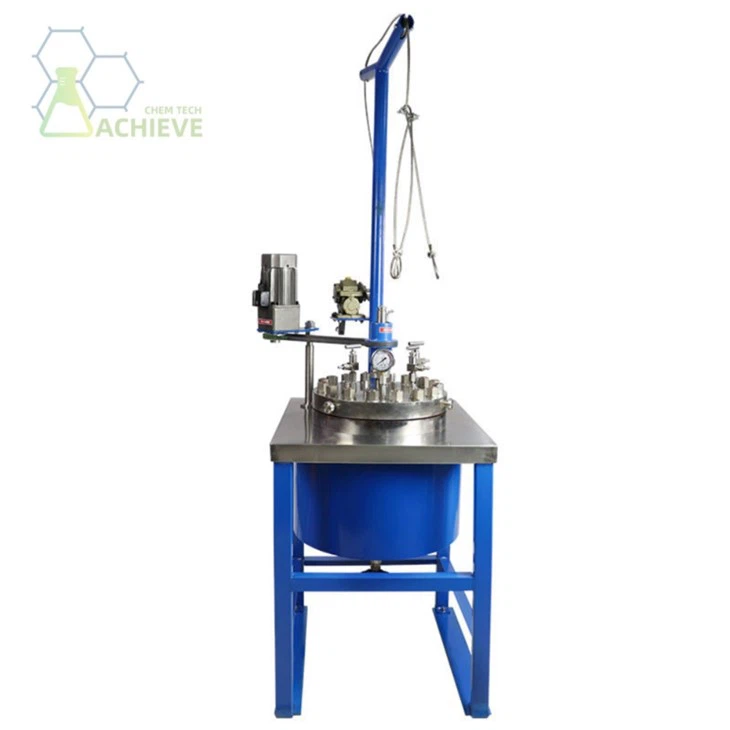

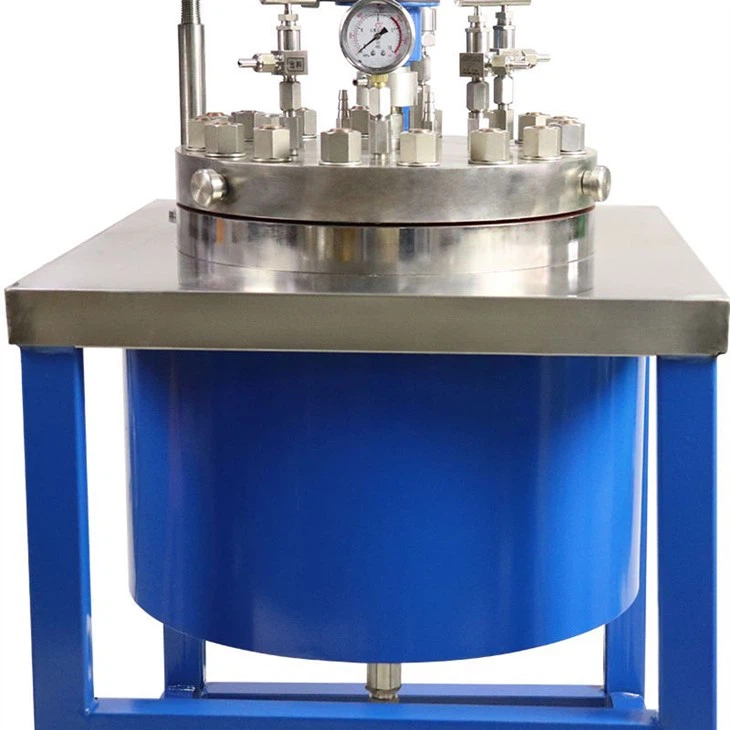
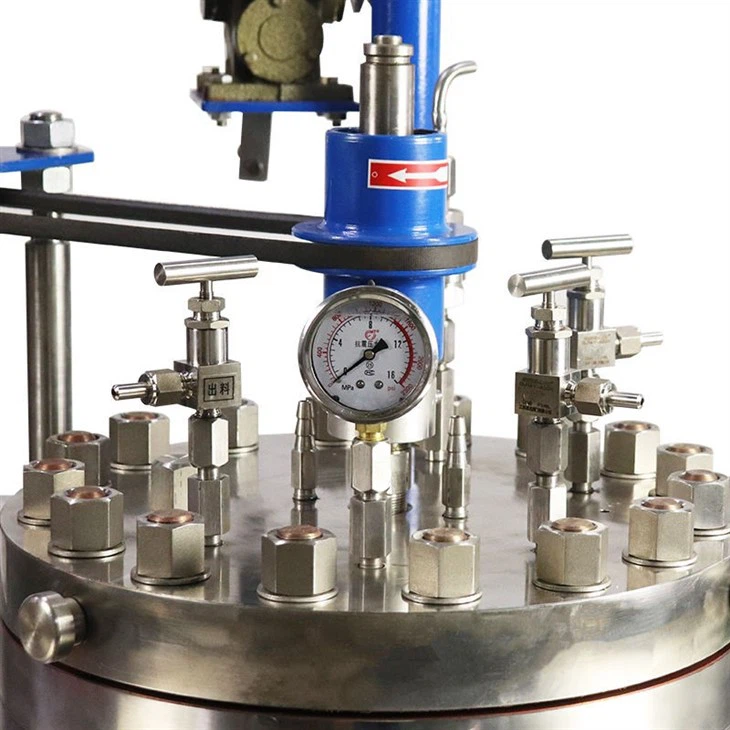
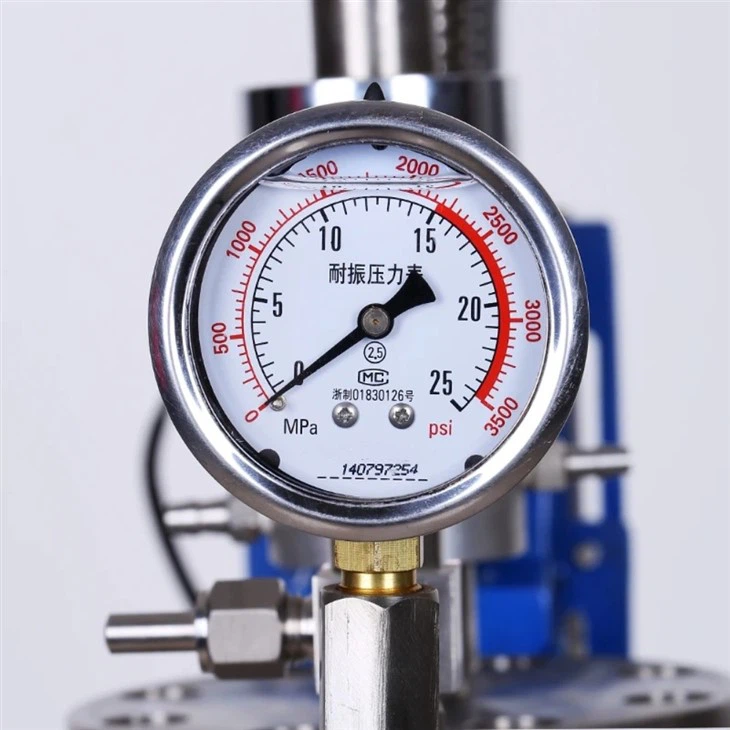
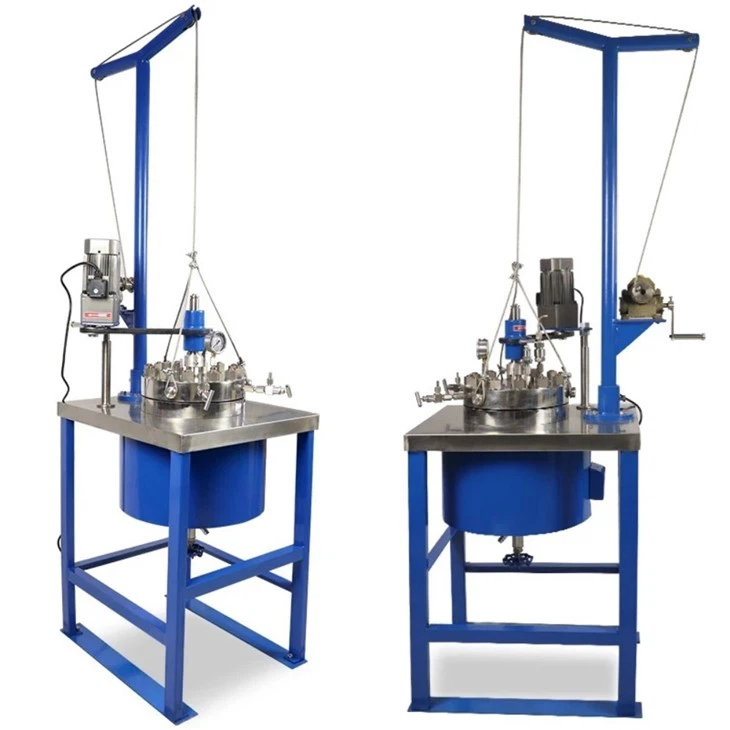

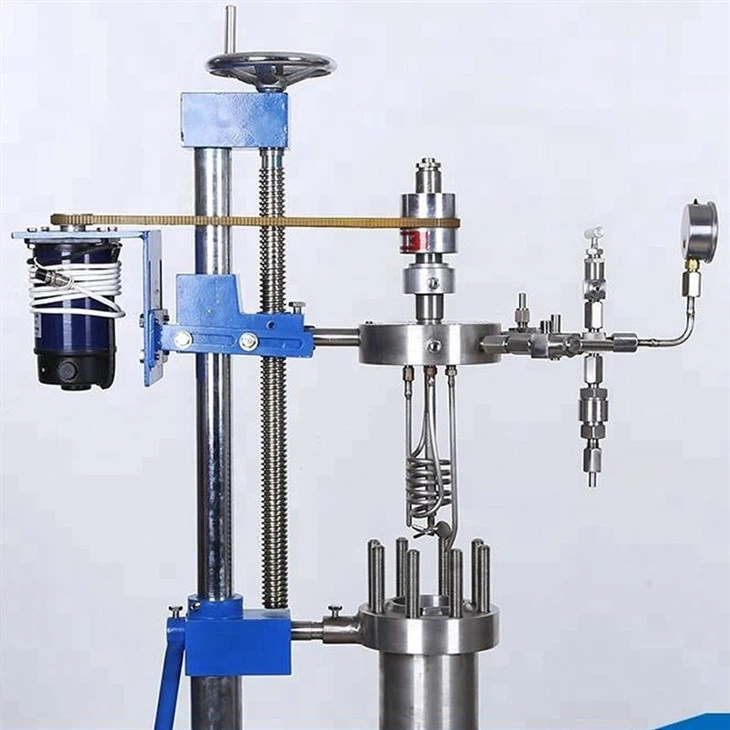
High Pressure Autoclave Reactor
2. Capacity: 0.1-50L
3. Suitable for alkylation, amination, bromination, carboxylation, chlorination, and catalytic reduction
4. Stainless steel framework
5. Temperature: up to 350°C
6. Voltage: 220V 50/60Hz
7. Manufacturer: ACHIEVE CHEM Xi’an Factory
8. 16 years experiences on Chemical Equipment
9. CE and ISO certification
10. Professional shipping
Description
Technical Parameters
High Pressure Autoclave Reactor is a device specifically designed for conducting chemical reactions under high pressure conditions.It can hold high-pressure gases or liquids and provide appropriate temperature and stirring conditions inside the reactor to facilitate the reaction.As an indispensable and important equipment in the chemical industry,it is widely used in the research and production of chemical reactions under high pressure and high temperature conditions.Its unique design and wide range of applications make it a key tool in multiple fields such as modern chemistry,life sciences,materials science,energy,and food technology.High pressure reactor is an important reaction equipment in the chemical industry,widely used in various catalytic reactions,high-temperature and high-pressure synthesis,hydrogenation reactions,gas-liquid two-phase,liquid-liquid two-phase,exothermic reactions,composition testing,stability,corrosion testing,fine chemical engineering,supercritical reactions,catalyst evaluation and development,etc.
We provide High Pressure Autoclave Reactor, please refer to the following website for detailed specifications and product information.
Product: https://www.achievechem.com/chemical-equipment/high-pressure-reactor.html
Products Introduction
Common types of high pressure autoclave reactor are stainless steel autoclave,zirconium autoclave,Hastelloy autoclave,Inconel autoclave,etc.They usually have the characteristics of strong pressure resistance and good corrosion resistance.
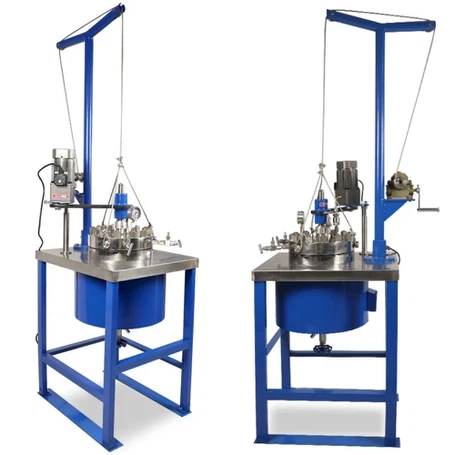
As an important equipment in the chemical industry,they have various types and unique features.Common types include stainless steel high-pressure vessels,zirconium high-pressure vessels,Hastelloy high-pressure vessels,and Inconel (usually referring to Monel alloy) high-pressure vessels.These peoduct usually have strong pressure resistance and good corrosion resistance to adapt to various complex chemical reaction conditions.The following is a detailed introduction to these types of high-pressure reactors:
1) Characteristic:
Corrosion and high temperature resistance:Stainless steel materials have excellent corrosion and high temperature resistance,and can operate stably for a long time in harsh working environments.
Sturdy Structure:The stainless steel high-pressure vessel has a sturdy structure and stable operational performance,ensuring the safety and reliability of the reaction process.
Good sealing performance:Its sealing performance is excellent,which can effectively prevent material leakage and external impurities from entering,thereby ensuring the quality and output of the product.
2) Application:
Stainless steel high-pressure reactors are widely used in various fields such as chemistry,medicine,and food,and are particularly suitable for chemical reactions that require high temperature,high pressure,and corrosion-resistant environments.
1) Characteristic:
Strong corrosion resistance:Zirconium has excellent corrosion resistance in most organic acids,inorganic acids,strong bases,and some molten salts,surpassing titanium and certain special steels and approaching tantalum.
Good mechanical and heat transfer properties:Zirconium materials are not only corrosion-resistant,but also have excellent mechanical and heat transfer properties,making zirconium high-pressure reactors perform well in harsh industrial environments.
2) Application:
Zirconium high-pressure reactors are particularly suitable for acid and alkali media that titanium cannot handle (except hydrofluoric acid),and have been widely used in industries with harsh corrosion conditions such as petrochemicals.
1) Characteristic:
Corrosion resistance and high temperature and high pressure bearing capacity:Hastelloy alloy has excellent corrosion resistance and high temperature and high pressure bearing capacity,and can be used in a wide range of corrosive media such as acid,alkali,salt,etc.
Excellent sealing performance:The Hastelloy high-pressure vessel adopts an excellent sealing system,effectively preventing the leakage of reactants or products.
Accurate reaction control:Equipped with devices and sensors for controlling parameters such as temperature,pressure,stirring speed,etc.,to achieve precise reaction control.
2) Application:
Hastelloy high-pressure reactors are widely used in the chemical industry for organic synthesis,catalytic reactions,high-temperature reactions,and other fields.They are important equipment for producing chemical products such as pharmaceuticals,dyes,pesticides,plastics,etc.
Characteristic:
Corrosion resistance of hydrofluoric acid:Monel alloy is a type of nickel based alloy that has significant advantages over other materials in terms of corrosion resistance to hydrofluoric acid.
Corrosion resistance and service life:For small high-pressure reactors,Monel alloy material can be processed through pipes or rods,and its corrosion resistance and service life are better than welding manufacturing.
Application:
Monel alloy high-pressure reactors are particularly suitable for chemical reaction processes that require treatment of highly corrosive media such as hydrofluoric acid.
Product Features
It can withstand very high pressures,which enables them to carry out some reactions that cannot be carried out at atmospheric pressure.
High-pressure autoclave can also withstand high temperatures,usually above 300 degrees Celsius.This makes it suitable for the reaction under the condition of high temperature.
The high-pressure lab reactor has safety measures,such as pressure relief valve and temperature control device,to ensure the safety during operation.


|
No. |
Component |
Description |
|
1 |
Magnetic coupling stirrer |
Material mixing |
|
2 |
Pressure gauge |
Pressure measurement |
|
3 |
Safety valve |
Safety blasting |
|
4 |
Pressure sensor |
Pressure digital display |
|
5 |
Spare port |
Spare port |
|
6 |
Temperature sensor |
Temperature measurement |
|
7 |
Spare port |
Spare port |
|
8 |
Gas phase port |
Intake and exhaust |
|
9 |
Condensing tube |
Condensation reflux (optional) |
|
10 |
Constant pressure feeding tank |
Constant pressure feeding,process feeding (optional) |
|
11 |
Exhaust valve |
Intake and exhaust |
|
12 |
Sampling tube |
Sampling tube |
|
13 |
Mixing shaft |
Mixing drive |
|
14 |
Paddle blades |
Stirring paddle |
|
15 |
Operation screen |
Temperature,pressure,stirring display operation,parameter setting |
|
16 |
Heating furnace |
High temperature heating |
|
17 |
Bolts |
Pre tightening seal |
|
18 |
Electric control box |
Electric control box |
|
19 |
Lifting base |
Lifting base |
|
20 |
Bottom valve |
Bottom discharge |
|
21 |
Frame |
Basic framework |
|
22 |
Kettle cover |
Kettle cover |
Certification
High pressure autoclave reactor is a type of pressure vessel,and there are different certifications for pressure vessels in different countries.The import and export of high pressure reactor must comply with local laws and regulations.
|
Country |
Local Regulatory Requirements |
Certification |
Approved Design Standards (Not Fully Listed) |
|
America |
NB Registration |
NB |
ASME Standard |
|
Canada |
CRN Registration |
/ |
|
|
Russia |
CU-TR Certification |
EAU |
|
|
Belarus |
CU-TR Certification |
EAU |
|
|
Kazakhstan |
CU-TR Certification |
EAU |
|
|
Kyrgyzstan |
CU-TR Certification |
EAU |
|
|
ARMENIA |
CU-TR Certification |
EAU |
|
|
EU Member States |
PED Certification |
CE |
|
|
Turkey |
PED Certification |
CE |
|
|
India |
IBR Certification |
/ |
|
|
Malaysia |
DOSH Certification |
/ |
|
|
Singapore |
MOM Certification |
/ |
|
|
Brazil |
NR13 |
/ |
|
|
Korea |
KGA/KGS/KOSHA Certification |
/ |
|
|
Japan |
MHLW/KHK Certification |
/ |
|
|
Australia |
AS1210 |
/ |
|
|
New Zealand |
AS1210 |
/ |
|
|
Saudi Arabia |
SABER Certification |
/ |
|
|
Thailand |
Ministry of Energy |
/ |
Applications in biodegradation
► High pressure hydrothermal pretreatment of biomass
1) How it Works:
The use of water at high temperature and high pressure is different from the special properties of ordinary water,so that the molecular structure of biomass can be carried out in the direction that people want.The viscosity,density,ionic product and dielectric constant of high-pressure liquid water have drastic changes.These changes enhance the dissolution ability of organic matter in liquid water,which is conducive to the degradation of biomass.
2) Applications:
Biomass (such as cellulose,hemicellulose) after high-pressure hydrothermal pretreatment,can be more easily hydrolysis,fermentation and other subsequent processes,so as to prepare ethanol,glacial acetic acid,ethylene and other high value-added products.
► Synthesis of biodegradable materials
1) Biodegradable additives:
An organic compound based on biological enzymes that can be broken down by natural microorganisms and can be added to various plastic materials (such as PP,PE,PO,PS,ABS,PVC,PET,TPE,TPU,EVA,etc.) to make it biodegradable.When the material added with biodegradant is discarded in the landfill,hydrolysis can occur in the microbial active environment and lead to the fracture of the polymer molecular chain,so that the molecular weight of the polymer is greatly reduced,to achieve the purpose of easy erosion and digestion by microorganisms.
2) PLA/PBAT modified biodegradation raw materials:
The mixed modified biological raw materials of PLA (polylactic acid) and PBAT (polyethylene terephthalate - co-caprolactone) can produce different biodegradable products.These products are mainly used in disposable plastic tableware,containers,hotel supplies and various plastic packaging products.They can be decomposed by microorganisms in the compost environment without causing pollution to the environment.
► Optimization of biodegradation processes
1) Improve degradation efficiency:
The high-pressure environment provided by the autoclave reactor can accelerate the growth and metabolic activities of microorganisms,thereby improving the rate and efficiency of biodegradation.
2) Optimized degradation conditions:
By precisely controlling the temperature and pressure conditions of the autoclave reactor,the most suitable environment for microbial degradation can be simulated,thus optimizing the degradation process.
► Application case
1) Biomass degradation:
In the process of biomass degradation,autoclave reactors are used to accelerate the decomposition and conversion of biomass.For example,through high-pressure hydrothermal pretreatment technology,biomass can be converted into biofuels or biochemicals.
2) Plastic degradation:
The obvious degradation of plastic products with biodegradant or PLA/PBAT modified biodegradable materials can be observed in the autoclave reactor biodegradation experiment.These experiments are helpful to evaluate the degradation performance and degradation rate of biodegradable materials.
► Matters needing attention
1) Safe operation:
When using autoclave reactor for biodegradation experiment,it is necessary to strictly follow the safety operation procedures to ensure the safety and reliability of the experimental process.
2) Equipment maintenance:
Regular maintenance and maintenance of the autoclave reactor to ensure its normal operation and long-term use.
Case Studies and Examples
To illustrate the versatility and power of the HPAR, let's consider a few case studies and examples:
|
► Photochemical High-Pressure Reaction In one study, researchers used the HPAR to investigate the photochemical reduction of carbon dioxide (CO2) to methanol under high-pressure conditions. By optimizing reaction parameters such as temperature, pressure, and light intensity, they achieved significant improvements in product yield and selectivity. ► Hydrothermal Carbonization of Waste Biomass Another study focused on the hydrothermal carbonization of waste biomass collected from local wood mills. The researchers processed the biomass in the HPAR at different temperatures (180, 200, and 220°C) and residence times (1, 3.5, and 6 hours) to investigate the thermal behavior of the reactor and optimize the yield of hydrochar. The results showed that the maximum yield of hydrochar was obtained at a temperature of 180°C and a residence time of 1 hour. ► High-Pressure Photocatalytic Degradation of Formaldehyde In another example, researchers used the HPAR to study the high-pressure photocatalytic degradation of formaldehyde. By combining high-pressure conditions with a photocatalytic material, they achieved significant improvements in the degradation rate and efficiency of formaldehyde removal. |
|

Conclusion
As the field continues to evolve, new advancements and innovations will drive improvements in reactor design, performance, and safety. These developments will enable more efficient and effective reactions, leading to higher yields and purities, as well as reduced waste and emissions. The future of high-pressure autoclave reactors looks promising, with exciting opportunities for further research and development in this area.
Hot Tags: high pressure autoclave reactor, China high pressure autoclave reactor manufacturers, suppliers, factory, Short Path Distillation Kit Turn Key, Double Jacketed Glass Reactor, Jacketed Glass Reactor Vessel, Double Layer Glass Reactor, 20l Rotovap, Rotary Distillation
Previous
High Pressure Reactor VesselSend Inquiry


