



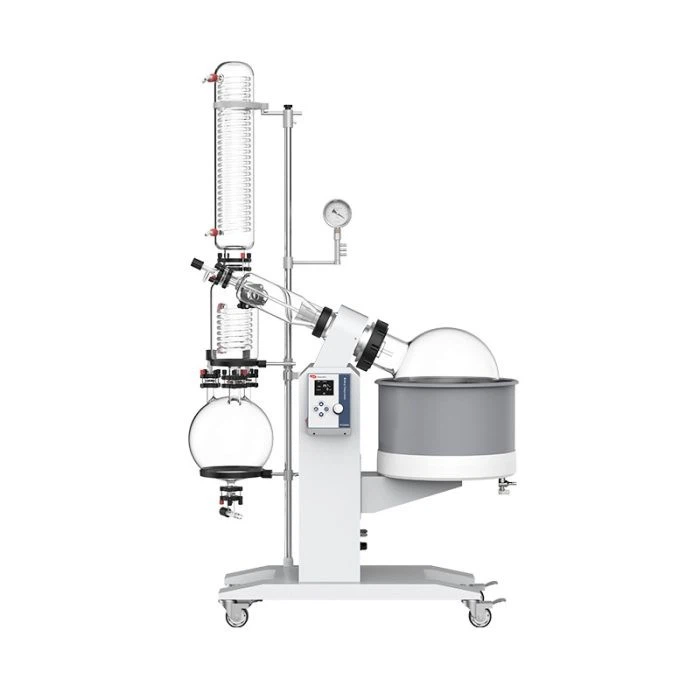

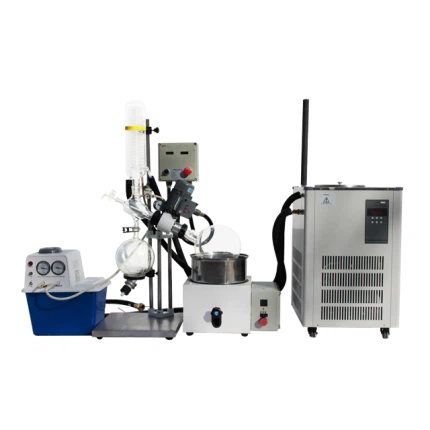


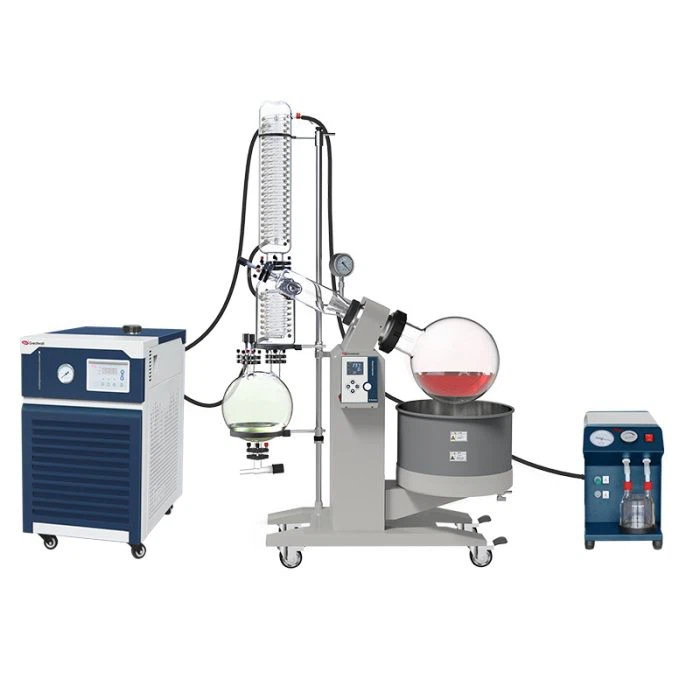

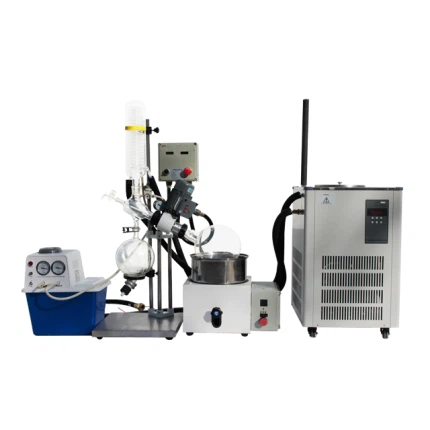
Rotovap Machine
(1)1L/2L---Manual lifting with irony base/Manual lifting with SS base/Electric lifting
(2)3L/5L/10L/20L/30L/50L---Manual Lifting/Electric Lifting
***Price List for whole above, inquire us to get
2. Customization:
(1)Design support
(2)Directly supply the Senior R&D organic intermediate, shorten your R&D time and cost
(3)Share the advanced purifying technology with you
(4)Supply the high quality chemicals and analysis reagent
(5)We want to assist you on Chemical Engineering (Auto CAD, Aspen plus etc.)
3. Assurance:
(1)CE and ISO certification Registered
(2)Trademark: ACHIEVE CHEM(since 2008)
(3)Replacement parts within 1-year for free
Description
Technical Parameters
The rotovap machine, also known as a rotary evaporator or "rotavap," is a widely used instrument in the field of chemistry for efficient distillation and solvent recovery. Its distinctive appearance, unique architecture, and operating principle make it an indispensable tool in laboratories and industries worldwide. Rotary evaporator, also known as rotary evaporator or "rotavap", is an efficient distillation and solvent recovery instrument widely used in the field of chemistry. Its unique appearance, structure, and working principle make it an indispensable tool in laboratories and industries worldwide. It is a laboratory equipment that continuously distills volatile solvents under reduced pressure by increasing the evaporation area through rotation.
It mainly consists of a motor, a distillation flask, a heating pot, a condenser tube, and other parts, which can efficiently carry out sample concentration, separation, recovery, and other operations. The rotary evaporator plays an important role in scientific research and production due to its high efficiency, stability, and reliability. The machine is easily recognizable by its cylindrical shape and vertical design. Its tall stature and compact footprint allow for efficient utilization of laboratory bench space. The instrument consists of several key components that work together seamlessly.

We provide rotovap machine, please refer to the following website for detailed specifications and product information.
Product: https://www.achievechem.com/chemical-equipment/rotary-evaporators.html
How to choose?
To select a rotovap machine, several key indexes need to be considered. These indexes serve as essential parameters that determine the performance, efficiency, and suitability of the instrument for specific applications. By understanding and evaluating these indexes, buyers can make an informed decision and select a rotary evaporator machine that best suits their requirements. Let's explore some of these crucial indexes and their significance: capacity, rotational speed, temperature control, condenser type, vacuum level, and safety features.

When selecting a rotovap, buyers must assess their specific requirements and preferences. Consideration should be given to the available laboratory or workspace, the nature of the samples being handled, and the desired level of automation. Evaluating the aforementioned indexes against these requirements will help buyers narrow down their choices and identify a rotovap that aligns with their needs.
Additionally, it is recommended to compare different models from reputable manufacturers, read customer reviews and testimonials, and seek expert advice if necessary. Some manufacturers even offer product demonstrations, which allow buyers to experience the machine's functionalities firsthand before making a final decision.
By diligently considering these indexes, buyers can select a rotovap that maximizes productivity, ensures safety, and meets their specific demands. Investing time and effort into the selection process will result in a more satisfactory and long-lasting purchase, enabling efficient distillation and solvent recovery operations in the laboratory or industrial setting.
Advantages and disadvantages of rotary evaporator
Advantages
1) Wide range of application: The rotary evaporator is suitable for evaporation and concentration of a variety of samples, including organic solvents, aqueous solutions, etc. At the same time, it can also be used to recover and reuse solvents, which has environmental significance.
2) Good sample protection: The rotary evaporator can maintain the appropriate temperature and vacuum during evaporation, so as to avoid sample decomposition or deterioration. This is especially important for experiments where the properties of the sample need to be protected.
3) High degree of automation: modern rotary evaporator is usually equipped with an automatic control system, which can realize the automatic adjustment and monitoring of heating temperature, rotation speed, vacuum degree and other parameters. This greatly improves the accuracy and reliability of the experiment.
Disadvantages
Although the rotary evaporator has many advantages, there are also some shortcomings:
Low recovery rate: In some cases, the recovery rate of the rotary evaporator may be low. This may be due to the loss of solvent during evaporation, sample decomposition, or incomplete condensation. In order to improve the recovery rate, some measures can be taken, such as optimizing the experimental conditions, choosing the appropriate solvent and receiving container.
Applications
The rotovap finds extensive applications in various fields, making it a versatile and indispensable tool. In the present, it is widely used in chemistry laboratories for rotovap distillation, solvent recovery, and purification of organic compounds. Its ability to efficiently evaporate volatile substances while minimizing sample degradation makes it suitable for applications such as separation of mixtures, concentration of solutions, and extraction of essential oils.
The machine holds significant potential for future advancements and expanded applications. As technology continues to advance, we may see improvements in automation and integration with other laboratory equipment and workflows. This could enhance productivity and efficiency in processes such as drug discovery, natural product synthesis, food and beverage analysis, and environmental monitoring.
Its gentle evaporation techniques and precise temperature control make it promising for the extraction and purification of valuable compounds like cannabinoids in the pharmaceutical and cannabis industries. Additionally, its scalability and adaptability to different solvents offer possibilities for industrial-scale applications, such as chemical manufacturing and production of fine chemicals.
 |
 |
What is Cannabinoids
Cannabinoids, also known as cannabinoids, are a class of compounds found naturally in the Cannabis sativa plant, commonly referred to as marijuana or cannabis. These compounds interact with the human endocannabinoid system, a network of receptors and molecules involved in regulating various bodily functions such as mood, appetite, pain sensation, and memory.
The most well-known cannabinoid is tetrahydrocannabinol (THC), which is responsible for the psychoactive effects associated with marijuana use, including feelings of euphoria, altered perception, and relaxation. Another significant cannabinoid is cannabidiol (CBD), which does not produce intoxicating effects but has shown potential therapeutic benefits in treating conditions like anxiety, pain, and inflammation.
The medical use of cannabinoids has gained increasing attention in recent years, with studies suggesting that certain cannabinoids could be effective in managing symptoms of various medical conditions. However, the recreational use of marijuana, particularly high-THC varieties, remains controversial due to its potential for addiction, cognitive impairment, and other negative health outcomes.
Overall, cannabinoids represent a complex and multifaceted class of compounds with both medicinal and recreational applications. While research continues to uncover their potential benefits, it is crucial to approach their use with caution and under the guidance of medical professionals.
Parameter
|
Model |
RE-5L |
RE-10L |
RE-20L |
RE-50L |
|
Optimum Ambient(℃) |
5~35 |
|||
|
Power (V/Hz) |
Single phase 220/60 |
Three phase 380/60 |
||
|
Motor Rotary control |
Digital display frequency conversion stepless speed regulation |
Digital DC stepless speed regulation |
||
|
Rotating Speed(rpm) |
10~140 |
20~130 |
20~110 |
|
|
Rotary motor(W) |
40 |
Brushless 250 |
||
|
Temperature range (℃) |
RT-99 water bath, oil bath is available |
|||
|
Maxvacuum(Pa) |
399.9(≤3mmHg) |
|||
|
Rotary Flask |
5/6 FlangetypeØ50 |
10 FlangetypeØ125 |
20 FlangetypeØ125 |
50 FlangetypeØ125 |
|
Collection volume(L) |
3 |
5 |
10 |
20 |
|
Condenser |
Vertical double serpentine tube |
Vertical, main cold + sub-cool, high efficiency three-return condenser |
||
|
Condensation area(m2) |
0.27 |
Main cold 0.42 Deputy cold 0.22 |
Main cold 0.8 Deputy cold 0.39 |
Main cold 0.91 Deputy cold 0.52 |
|
Evaporation rate(L/h) |
Water≥2 Alcohol≥4 |
Water≥3.5 Alcohol≥7 |
Water≥5 Alcohol≥13 |
Water≥10 Alcohol≥23 |
|
Bath material |
Stainless Steel |
|||
|
Bath Size(mm) |
Φ300×170 |
Φ350×220 |
Φ450×260 |
Φ550×320 |
|
Lift Type |
Electric(Automatic) lift |
|||
|
Lift Distance(mm) |
0~150 |
0~160 |
0~190 |
0~180 |
|
Heat Power(kW) |
2.0 |
3.0 |
4.0 |
4.0(220V) |
|
Dimension(mm) |
860×500×1000 |
920×550×1700 |
1250×600×2100 |
1320×770×2340 |
Other Features
The rotovap machine, also known as a rotary evaporator, is a versatile piece of laboratory equipment widely used for solvent distillation and evaporation processes in chemistry, biochemistry, and pharmaceutical research. Despite its efficiency and popularity, this machine is not devoid of drawbacks.
One significant disadvantage is its high initial cost, which can be a financial burden for smaller laboratories or startups with limited budgets. Maintenance and repair costs can also escalate over time, especially with frequent use or improper handling.
Another notable issue is the complexity of the setup and operation, requiring skilled personnel for efficient use. The learning curve for new users can be steep, and improper handling can lead to inefficient distillation or even damage to the equipment.
Moreover, it can be quite bulky and space-consuming, making it less suitable for cramped or compact laboratories. Its operation also generates noise, which can be a disturbance in quiet research environments.
Although it occupies an important position in the laboratory, its volume is relatively large and requires a certain amount of space. This may cause some difficulties for laboratories with limited space.
High quality rotary evaporators are usually expensive, especially those models with high automation and precision control functions. This may increase the operating costs of the laboratory and be a significant burden for users with limited budgets.
Despite the increasingly user-friendly interface of modern instruments, first-time users still need a certain learning and adaptation process. Especially for models with complex functions and advanced options, users need to carefully read the instructions and familiarize themselves with various operations to ensure the success of the experiment.
Various solvents need to be handled during use, so high requirements are placed on their corrosion resistance and sealing properties. Some flammable, explosive, or toxic solvents may cause damage or safety risks to equipment, so special attention and appropriate protective measures need to be taken when using them.
During the working process, a large amount of electrical or thermal energy is required to heat the solution and maintain the vacuum degree. This may lead to an increase in energy consumption in the laboratory, posing certain challenges to environmental protection and energy conservation and emission reduction.
The rotovap machine, also known as a rotary evaporator, is a versatile and essential piece of equipment in chemistry, biochemistry, and pharmaceutical labs. It is primarily used for the efficient and gentle removal of solvents from samples through a process called evaporation under reduced pressure.
This machine features a rotating flask, which is crucial for enhancing the evaporation rate by creating a larger surface area for the solvent to vaporize. The flask is heated either by a water bath or a heating mantle, allowing precise temperature control. The vaporized solvent is then condensed back into a liquid form in a separate condenser unit, often cooled by water or an ice-salt bath, ensuring minimal loss of the target compound.
It is renowned for its ability to handle a wide range of solvents and sample volumes, making it indispensable for tasks such as purification, concentration, and solvent switching. Its automated features, including vacuum control and automatic lifting mechanisms for flasks, further streamline the evaporation process, reducing manual handling and the risk of contamination.
Moreover, the machine's compact design and user-friendly interface facilitate easy setup and operation, even for less experienced users. Safety features, such as overflow protection and pressure relief valves, further enhance its reliability and make it a trusted choice for various laboratory applications.
conclusion
In summary, as an important equipment in the laboratory, the rotary evaporator has the advantages of high efficiency and speed, simple operation, solvent recovery, etc., and has a wide range of applications in chemistry, chemical industry, biomedicine and other fields. However, it also has some shortcomings, such as low recovery rate, high equipment cost, complex maintenance and so on. With the continuous progress of science and technology and the continuous improvement of laboratory needs, the future rotary evaporator will be more intelligent, multi-functional, energy saving and environmental protection, as well as miniaturization and portability. This will help to further improve the operation convenience and experimental efficiency of the equipment, and expand its application range and use scenarios. Therefore, we can expect rotary evaporators to play a more important role in future laboratories.
Hot Tags: rotovap machine, China rotovap machine manufacturers, suppliers, factory, 5l Short Path Distillation, Crystallization Reactor, Autoclave For Hydrothermal Synthesis, Hydrothermal Autoclave, PPL Lined Hydrothermal Autoclave, Teflon Autoclave
Send Inquiry


