



Empty Chromatography Columns
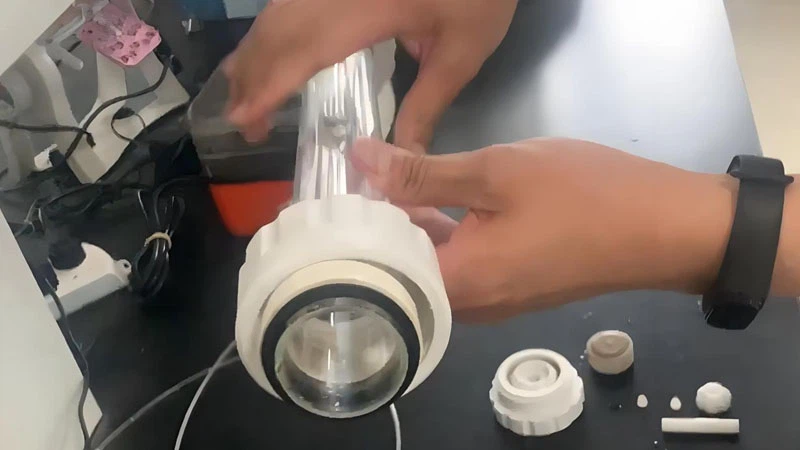
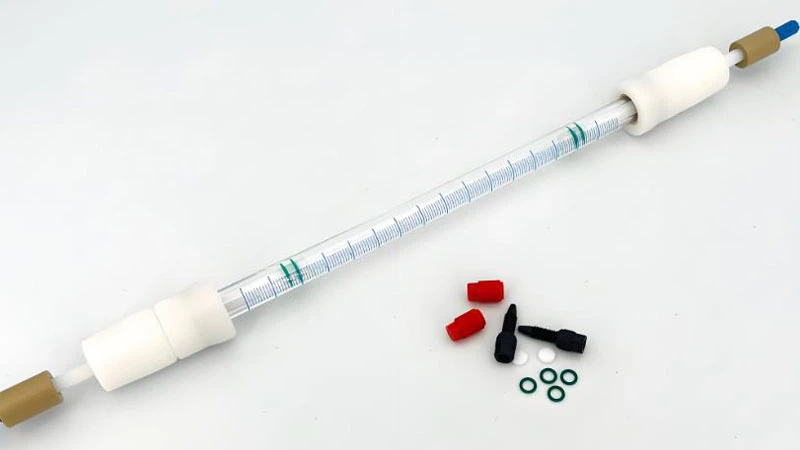
2.Chromatographic Column (Rotation Type)
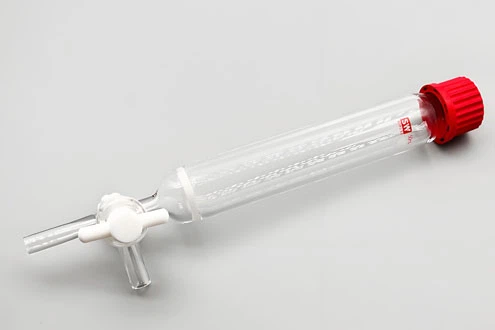
3.Chromatographic Column (Manual)
***Price List for whole above, inquire us to get
Description
Technical Parameters
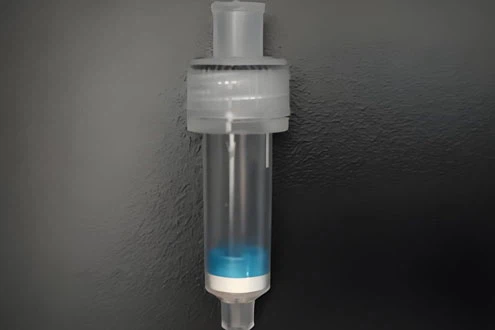
Empty chromatography columns refers to the column that is not filled with stationary phase, usually used in chromatographic analysis or purification experiments, and users can fill different chromatographic fillers according to the experimental needs. It is mainly used for system inspection to detect leakage or blockage of chromatographic system; It can also be used for flow test to verify whether the flow rate of the mobile phase is stable. It is also used in method development to help determine the optimal mobile phase and flow rate prior to formal experiments.
The column has no fixed phase, does not contain any fixed phase materials, low pressure drop, because there is no fixed phase, small flow resistance, short retention time, fast sample passing speed, short retention time these three characteristics.
Parameter


Specific explanation
 |
 |
 |
 |
The empty chromatography columns, which has a specific meaning in the field of chromatographic analysis, may refer to two different situations:one is that the column is in a state of no sample or mobile phase passing through during the separation process, that is, the column is "empty"; The second is that the column itself is empty tube and is not filled with any separation medium. The following are detailed explanations of both cases to delve deeper into the concept of empty columns, their effects, and what to do about them.
Column "emptying" phenomenon
Definition and context
Column "emptie" refers to the state in which no sample or mobile phase passes through the column during chromatographic analysis because the sample injection is not timely, the mobile phase pump stops working or the flow rate is set improperly. This usually occurs during the operation of the chromatograph and has a direct impact on the analysis results.
Impact analysis
A column emptying can cause a number of problems. First, the separation effect is reduced because the material molecules cannot efficiently migrate and separate in the column due to the lack of a mobile phase or sample push. Secondly, the chromatographic peak shape may be deformed, the peak width increases, the peak height decreases, and even the tailing phenomenon may occur, which affects the accuracy of qualitative and quantitative analysis. In addition, a long period of no-load operation may accelerate the aging of the column and shorten its service life.
Countermeasures
For the problem of column emptying, the following measures can be taken to prevent and solve:
Ensure timely and moderate sample injection to avoid sample overload or insufficiency.
Check the working state of the mobile phase pump regularly to ensure its normal operation and stable flow rate.
Optimize chromatographic conditions, such as adjusting mobile phase composition, pH, temperature, etc., to improve separation efficiency and peak shape quality.
For columns that have been emptied, they should be stopped immediately, cleaned and re-balanced, and replaced with new columns if necessary.
Empty chromatographic column tube (unfilled separation medium)
Definition and use
An empty column tube is a column tube that is not filled with any separating medium. Such empty tubes are often used during column cleaning, replacement or repair, as a temporary replacement or to test parameters such as mobile phase and column temperature. In addition, in the process of column customization and development, empty tubes are often used as carriers to fill separation media.
Characteristics and influence
The empty chromatography columns tube has the characteristics of simple structure, easy cleaning and maintenance. However, because it is not filled with separation media, it cannot separate and detect substances. Therefore, in normal use, an empty column tube is not usually considered an effective analytical tool. However, in specific situations, such as testing the compatibility of the mobile phase or evaluating the effect of column temperature on the separation effect, the empty column tube can be used as a useful experimental tool.
Application scenario
Application scenarios for empty column tubes include, but are not limited to:
Used as a temporary substitute during column cleaning to rinse and remove residues inside the column.
Used as a transition tool during column repair or replacement to ensure continuity of the analytical process.
Used as a carrier filled with separation media during column customization and development to evaluate the performance of different separation media.
Used as an experimental tool to collect and analyze data in mobile phase compatibility tests or column temperature assessment experiments.
Methods for Observing Chromatographic Features
The method of observing chromatogram characteristics is a crucial skill in chromatographic analysis, which is directly related to the accuracy and reliability of the analysis results. Chromatogram is the most direct and effective method to judge whether the chromatogram column is empty.
Understand the basic composition of chromatograms
A chromatogram usually consists of a horizontal axis (time axis) and a vertical axis (signal axis). The horizontal axis represents the time from entering the column to exiting the column, that is, the retention time; The vertical axis represents the strength of the signal detected by the detector, which is usually proportional to the concentration of the sample. Understanding the meaning of these two axes is the basis for observing chromatographic features.
Identify the key parameters of the chromatogram
There are several key parameters to focus on when looking at a chromatogram:
Retention time: Retention time is the time that the sample component stays in the column and is an important basis for qualitative analysis. The retention time of the same substance under the same chromatographic conditions is relatively stable.
Peak height and peak area: Peak height represents the signal strength of the sample component at a certain time, while peak area represents the sum of the signal strength of the sample component over the entire retention time. Both peak height and peak area can be used for quantitative analysis.
Degree of separation: The degree of separation is a measure of the degree of separation of two adjacent components. When the separation degree is greater than 1.5, the two components are generally considered to be completely separated.
Theoretical plate number: The theoretical plate number reflects the separation efficiency of the column. The higher the number of theoretical plates, the better the separation effect of the chromatographic column. The formula for calculating the number of theoretical plates is: N=5.54(tR/Wh/2)², where tR is the retention time and Wh/2 is the half-peak width.
Observe the normal characteristics of the chromatogram
Under normal circumstances, the chromatogram should exhibit the following characteristics:
Baseline smooth
The baseline is the signal strength of the chromatogram before the sample component flows out. A stable baseline indicates that the chromatographic system is in a stable state.

Peak symmetry
Normal chromatographic peaks should show a symmetrical shape, which means that the separation process of sample components in the column is more uniform.
Clear separation
There should be a clear interval between adjacent chromatographic peaks, which means that the sample components have been effectively separated in the column.
Identify the abnormal characteristics of chromatogram
When the chromatogram has abnormal features, it may indicate a problem with the chromatographic system or an anomaly in the sample components. Here are some common abnormal characteristics and their possible causes:
The baseline changes significantly before and after sample component outflow, possibly due to column contamination, mobile phase instability, or detector failure.
The tail of the chromatographic peak appears obviously, which may be caused by uneven column packing, fast flow rate of mobile phase, or interaction between sample components and column.
The shape of the chromatographic peak shows irregular changes, which may be caused by complex sample components, reduced column separation efficiency, or insufficient detector sensitivity.
Additional peaks in the chromatogram that are not related to the composition of the sample may be caused by column contamination, impurities in the mobile phase, or improper sample handling.
The retention time of the same substance under the same chromatographic conditions changes significantly, which may be due to aging of the chromatographic column, changes in mobile phase composition or fluctuations in system temperature.
Analysis based on the actual situation
When observing the chromatographic characteristics, it is also necessary to analyze the actual situation. For example, when analyzing complex samples, it may be necessary to focus on more detailed features; When using different types of columns or detectors, observation and analysis are also required according to specific requirements.
Use software to assist analysis
Modern chromatographic data workstations are often equipped with powerful software tools that help users more accurately observe and analyze chromatographic features. For example, the software can automatically calculate key parameters such as peak height, peak area and theoretical plate number; Can automatically identify and mark abnormal features; Data export and report generation can also be provided. Therefore, we should make full use of these software tools to improve the accuracy and efficiency of analysis when observing chromatogram features.
Summary and continuous improvement
Finally, the experience and lessons of observing chromatogram characteristics should be summarized regularly, and the existing problems and shortcomings should be analyzed. Based on the summary results, develop improvement measures and continuously optimize the observation process and methods. At the same time, we should also pay attention to the latest technology and research results in the field of chromatographic analysis, and constantly learn and master new observation and analysis methods to improve the accuracy and reliability of analysis.
To sum up, the observation of chromatographic features requires the comprehensive use of a variety of methods and techniques, and combined with the actual situation of the analysis. Through continuous learning and practice, the ability to observe and analyze chromatograms can be gradually improved to provide more accurate and reliable results for chromatographic analysis.
Empty chromatography columns are indispensable tools in separation science, offering unmatched flexibility for customizing purification processes. From academic research to industrial biomanufacturing, their adaptability, scalability, and compatibility with diverse stationary phases make them essential for advancing analytical and preparative chromatography. Innovations in materials, design, and automation-such as 3D-printed columns and smart sensors-promise to further enhance their efficiency, sustainability, and role in next-generation separation technologies.
Hot Tags: empty chromatography columns, China empty chromatography columns manufacturers, suppliers, factory, Jacketed Glass Reactor Vessel, Double Layer Glass Reactor, SS Reactor Manufacturer, High Pressure Reactor, Rotary Tablet Press Machine, Short Path Distillation Kit
Previous
Multi Column ChromatographySend Inquiry


