



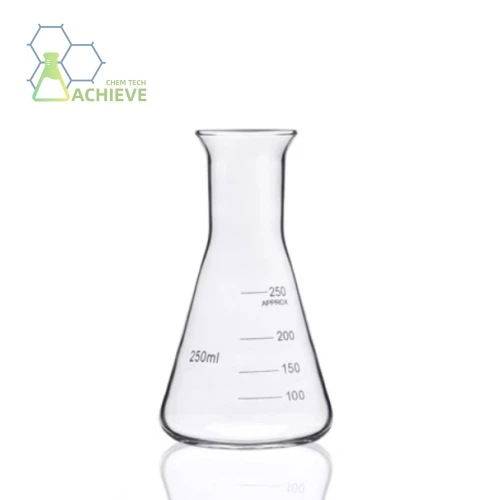
Bubble Flask Chemistry
1) Narrow-mouth Bottle: 50ml~10000ml;
2) Big B Bottle: 50ml~3000ml;
3) Horn Mouth: 50ml~5000ml;
4) Wide-mouth Bottle: 50ml/100ml/250ml/500ml/1000ml;
5) Conical Flask With Cover: 50ml~1000ml;
6) Screw Conical Flask:
a. Black Lid (General Sets): 50ml~1000ml
b. Orange Lid (Thickening Type): 250ml~5000ml;
2. Single and Multi-mouth Round Bottom Flask:
1) Single Mouth Round Bottom Flask: 50ml~10000ml;
2) Inclined Three-mouth Flask: 100ml~10000ml;
3) Inclined Four-mouth Flask: 250ml~20000ml;
4) Straight Three-mouth Flask: 100ml~10000ml;
5) Straight Four-mouth Flask: 250ml~10000ml.
***Price List for whole above, inquire us to get
Description
Technical Parameters
In the realm of chemistry, the bubble flask stands as a versatile and indispensable tool, playing a crucial role in various experimental setups. This article delves into the intricacies of bubble flask chemistry, exploring its principles, applications, and the pivotal role it plays in advancing our understanding of chemical reactions and processes.
A bubble flask, also known as a gas washing bottle or a bubbler, is a laboratory glassware characterized by its unique design. Typically featuring a narrow neck and an enlarged base, this flask is designed to facilitate the introduction of a gas into a liquid, often resulting in the formation of bubbles. The primary function of a bubble flask is to provide a controlled environment for gas-liquid interactions, allowing for the precise manipulation and study of these reactions.
Bubble flasks come in various sizes and configurations, catering to the diverse needs of chemical experiments. Their versatility makes them suitable for a wide range of applications, from simple gas collection and purification to complex chemical reactions and analysis.
Specifications


Principles of Bubble Flask Chemistry
The effectiveness of bubble flasks in chemical experiments stems from their ability to control and manipulate gas-liquid interfaces. When a gas is introduced into the flask, it passes through the liquid, creating bubbles that increase the surface area for interaction. This interaction can lead to various chemical and physical processes, such as absorption, dissolution, reaction, and separation.
|
Gas Absorption and Dissolution Bubble flasks are commonly used for the absorption of gases into liquids. The formation of bubbles increases the surface area of the gas-liquid interface, enhancing the rate of absorption. This principle is particularly useful in the removal of impurities from gases or in the preparation of saturated gas solutions. Gas-Liquid Reactions Many chemical reactions involve gases and liquids. Bubble flasks provide a controlled environment for these reactions, allowing for precise control over the reaction conditions, such as temperature, pressure, and gas concentration. This precision is essential for obtaining accurate and reproducible results. |
|
|
|
Gas Purification Bubble flasks can also be used for the purification of gases. By passing the gas through a suitable liquid, impurities can be removed through absorption or chemical reaction. This process is often employed in laboratory settings to ensure the purity of gases used in experiments. Separation Techniques Bubble flasks play a role in separation techniques, such as distillation and gas chromatography. In distillation, for example, a bubble flask can be used to collect the distilled product, ensuring that it is free from contaminants. In gas chromatography, bubble flasks are used to introduce samples into the chromatographic column. |


Applications of Bubble Flasks in Chemistry
The versatility of bubble flasks makes them indispensable in various chemical applications. Here are some examples of how bubble flasks are used in different areas of chemistry:
◆ Analytical Chemistry
In analytical chemistry, bubble flasks are often used in gas chromatography for the separation and identification of compounds. They are also employed in titrations, where they serve as containers for the titrant or the reactant solution.
◆ Inorganic Chemistry
Inorganic chemistry often involves the synthesis and study of compounds containing metals and non-metals. Bubble flasks are used in these experiments to prepare gas solutions, collect gases, and study gas-solid reactions.
◆ Organic Chemistry
Organic chemistry deals with the study of carbon-based compounds. Bubble flasks are widely used in organic synthesis, where they facilitate reactions involving gases, such as hydrogenation, oxidation, and halogenation. They are also used in the purification of organic compounds through distillation and other separation techniques.
◆ Physical Chemistry
Physical chemistry focuses on the fundamental principles of chemistry, including thermodynamics, kinetics, and quantum mechanics. Bubble flasks are used in physical chemistry experiments to study gas-liquid equilibria, reaction rates, and the properties of gases and liquids.
◆ Biochemistry
Biochemistry is the study of chemical processes within living organisms. Bubble flasks are used in biochemical experiments to prepare solutions, collect gases, and study metabolic processes involving gases, such as respiration and fermentation.
Experimental Setup and Procedures
When using bubble flasks in chemical experiments, it is crucial to follow proper experimental setup and procedures to ensure the accuracy and reproducibility of results. Here are some key steps to consider:
|
Selection of the Appropriate Bubble Flask Choose a bubble flask that is suitable for the specific experiment. Consider factors such as size, material, and design to ensure that it meets the requirements of the experiment.
Preparation of the Experiment Prepare the necessary reagents and solutions according to the experimental protocol. Ensure that all equipment is clean and free from contaminants to avoid interference with the experiment.
Introduction of the Gas Carefully introduce the gas into the bubble flask using a suitable method, such as a gas cylinder, a gas generator, or a syringe. Control the flow rate of the gas to ensure that it is within the desired range. |
|
|
|
Observation and Data Collection Observe the reaction taking place within the bubble flask and record any changes in the appearance, color, temperature, or pressure. Collect necessary data using appropriate instruments, such as thermometers, pressure gauges, or spectrophotometers.
Analysis and Interpretation of Results Analyze the collected data to draw conclusions about the chemical reactions and processes taking place within the bubble flask. Compare the results with theoretical predictions and discuss any discrepancies.
|


Daily cleaning
Prepare cleaning tools and materials


Cleaning steps
Turn off and disconnect the air source
If the bubble bottle is connected to the air source, turn off the air source and disconnect the connection first to ensure safety.
Wipe the surface dirt
Dip a soft cloth or sponge into an appropriate amount of detergent and gently wipe the surface of the bubble bottle to remove dirt and residue. Be careful to wipe thoroughly, do not miss any corners.
Rinse detergent residue
Rinse the surface of the bubble bottle with clean water to ensure that the detergent is thoroughly rinsed. Can be rinsed several times until there is no detergent residue.
Dry the surface
Dry the surface of the bubble bottle with a dry cloth to avoid corrosion or rust caused by moisture residue.
Cleaning precautions
Avoid using improper cleaners
As mentioned earlier, avoid using cleaners that are easy to corrode the surface of the bubble bottle, such as strong acids, alkalis or organic solvents.
Avoid scratching the surface
During the cleaning process, avoid using rough cloth or brushes to avoid scratching the surface of the bubble bottle.
Regular cleaning
It is recommended to clean the bubble bottle regularly to maintain its good performance and extend its service life. The specific cleaning frequency can be determined according to the use and environmental conditions.
Handling of special cases
Blocked filter: If the filter of the bubble bottle is blocked, try rinsing it with water or gently scrubbing it with a soft brush. If the blockage is severe, it may be necessary to disassemble and clean or replace the filter.
Internal residue: If there is residue inside the bubble bottle that is difficult to remove, it can be rinsed with a diluted cleaner. Make sure to rinse well, then rinse again with water.
Application cases in the field of chemistry
Principle: Using the dissolution and release of gas in liquid, quantitative analysis is achieved through the change of bubble formation rate or volume.
Applications:
Gases that are denser than air (such as CO₂) : Collect by "long in and short out", the gas enters from the long tube, and the liquid is pressed into the short tube and discharged.
Gases with a density less than air (such as H₂) : using the "short in and long out" mode, the gas enters from the short tube and is discharged through the long tube.
Case: In a middle school chemistry experiment, hydrogen gas is collected through a bubble bottle and its volume is measured.
Principle: The gas passes through the liquid or desiccant to remove impurities or water.
Applications:
Purify the gas: Connect the bubble bottle after the gas generating unit, fill with desiccant (such as concentrated sulfuric acid) or absorbent (such as NaOH solution), remove impurities or moisture.
Safety bottle function: prevent liquid suction, protect subsequent equipment.
Principle: Carrier gas (such as N₂ or H₂) passes through a liquid precursor (such as a metal-organic compound), producing bubbles that carry precursor molecules into the reaction chamber.
Applications:
Thin film deposition: In semiconductor manufacturing, bubble bottles are used to transport the precursor and achieve uniform deposition of the film.
Temperature control: Prevents condensation of the precursor by heating the bubble bottle to ensure a stable gasification rate.
Solution to uneven foaming
Check and adjust raw materials
Check the quality of raw materials
Ensure the quality of foaming agent, forming agent, pigment and other raw materials is stable, no impurities or caking phenomenon.
Check whether the raw materials are within the expiration date and avoid using expired raw materials.
Adjust the ratio of raw materials
According to product requirements and process requirements, adjust the ratio of raw materials to ensure that the ratio between components is appropriate.
If the amount of blowing agent is insufficient or too much, it may lead to uneven foaming, so it is necessary to accurately control the amount of blowing agent.
Optimize the foaming process

Adjust foaming machine parameters
Check whether the pressure, temperature, time and other parameters of the foaming machine are reasonable.
These parameters are adjusted according to raw material characteristics and product requirements to ensure uniform foam colloid.
Improve the mixing process
Ensure that the raw materials are evenly mixed and there are no dead ends during the mixing process.
Control the mixing temperature and time to avoid too high or too low temperature resulting in raw material decomposition or inadequate mixing.

Check and maintain the equipment
Clean mold
Clean the mold on time to ensure that there is no residue or dirt inside the mold.
Improve the finish of the mold to reduce the resistance of the rubber material flow.
Check mold design
Ensure that the mold structure design is reasonable, no dead corners or poor exhaust problems.
If there is a problem with the mold design, you can consider modifying the mold or re-designing.
Maintenance of foaming equipment
Check the operation status of the foaming equipment regularly to ensure that the equipment is not broken or worn.
Perform necessary maintenance and maintenance on the equipment, such as replacing worn parts, cleaning pipes, etc.
Use internal lubricant
nder the action of the appropriate amount of internal lubricant, the fluidity of the material is better and the lubricity is stronger, so as to achieve a more uniform foaming effect. However, the following points should be noted:
Select the right internal lubricant: Select the right type and amount of internal lubricant according to the characteristics of raw materials and product requirements.
Ensure even mixing: the internal lubricant should be fully mixed with other raw materials to ensure the uniformity and stability of the processing.
Control quality stability: the quality of the internal lubricant should be stable to prevent uneven foaming caused by quality fluctuations.
Challenges and Limitations
Foaming: Excessive bubble formation leads to foam, reducing reactor volume and efficiency. Antifoaming agents or mechanical defoamers mitigate this issue.
Flooding: High gas flow rates cause liquid entrainment, disrupting two-phase flow. Optimal sparger design and flow control prevent flooding.
Mass Transfer Limitations: Poor bubble distribution or low gas solubility (e.g., CO₂ in water) slow reactions. Microbubble generators or co-solvents enhance transfer.
Scale-Up Complexity: Maintaining uniform mixing and gas dispersion at larger volumes requires computational fluid dynamics (CFD) modeling.
Contamination Risk: Open systems risk microbial contamination in bioprocesses. Closed or single-use bubble flasks address this concern.
Conclusion
Our Products


Bubble flasks are indispensable tools in the field of chemistry, providing a controlled environment for gas-liquid interactions and facilitating the study of various chemical reactions and processes. Their versatility makes them suitable for a wide range of applications, from simple gas collection and purification to complex chemical reactions and analysis. By understanding the principles and applications of bubble flask chemistry, researchers can harness the power of this versatile tool to advance our understanding of the chemical world.
In conclusion, bubble flasks are not just simple pieces of glassware; they are essential instruments that enable chemists to explore the intricacies of chemical reactions and processes. As we continue to uncover the mysteries of the chemical world, the role of bubble flasks in advancing our knowledge and understanding will undoubtedly remain crucial.
Hot Tags: bubble flask chemistry, China bubble flask chemistry manufacturers, suppliers, factory, Hydrothermal Reactor Autoclave, 1l Short Path Distillation Kit, Glass Reactor Laboratory, SS Reactor Manufacturer, Complete Short Path Distillation Kit, Short Path Vacuum Distillation
Previous
Chemistry Separating FunnelSend Inquiry


