




Erlenmeyer Flask in Laboratory
1) Narrow-mouth Bottle: 50ml~10000ml;
2) Big B Bottle: 50ml~3000ml;
3) Horn Mouth: 50ml~5000ml;
4) Wide-mouth Bottle: 50ml/100ml/250ml/500ml/1000ml;
5) Conical Flask With Cover: 50ml~1000ml;
6) Screw Conical Flask:
a. Black Lid (General Sets): 50ml~1000ml
b. Orange Lid (Thickening Type): 250ml~5000ml;
2. Single and Multi-mouth Round Bottom Flask:
1) Single Mouth Round Bottom Flask: 50ml~10000ml;
2) Inclined Three-mouth Flask: 100ml~10000ml;
3) Inclined Four-mouth Flask: 250ml~20000ml;
4) Straight Three-mouth Flask: 100ml~10000ml;
5) Straight Four-mouth Flask: 250ml~10000ml.
***Price List for whole above, inquire us to get
Description
Technical Parameters

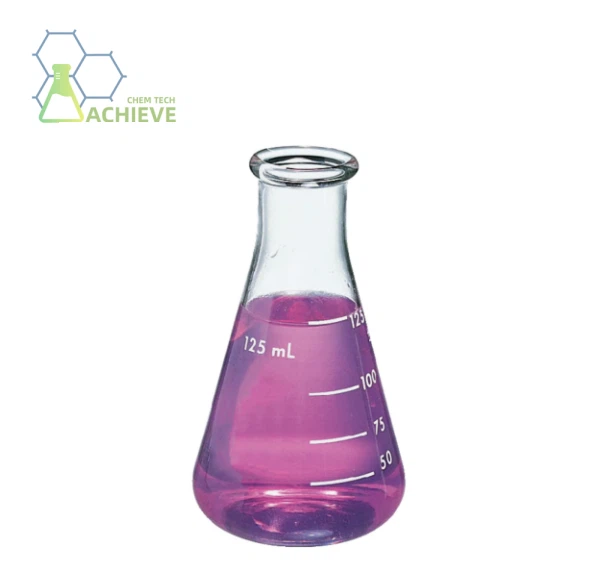
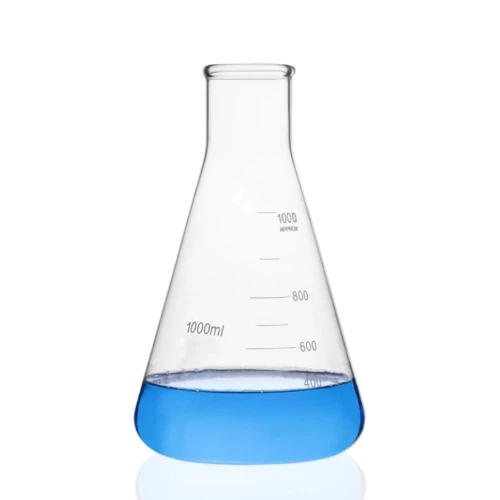
An erlenmeyer flask in laboratory, also known as a conical flask, is a type of laboratory glassware with a conical (wide-to-narrow) body and a flat bottom, with a short cylindrical neck.
Erlenmeyer Flask is named after the German chemist Richard August Carl Emil Erlenmeyer. Erlenmeyer has made a remarkable contribution to the field of chemistry, and his invention of this flask is widely praised for its unique design and practicality.
The Erlenmeyer flask was developed in 1861, during a time when chemical experiments often involved high temperatures generated by Bunsen burners. The existing glassware, such as beakers and flasks, were not designed to withstand such intense heat, leading to frequent breakage and accidents. Erlenmeyer, recognizing this need, set out to design a more stable and heat-resistant vessel.
The conical shape of the erlenmeyer flask was a significant improvement over traditional flasks. The narrow neck prevented splashing during mixing or stirring, while the wide base provided a larger surface area for even heating. Additionally, the flask's design made it easier to handle and less prone to tipping over, enhancing safety in the laboratory.
Parameter list
| Conical Flask ( narrow-mouth bottle ) | ||||
 |
||||
| Specification | Inside diameter of bottle mouth | Bottom diameter | Height | Suitable for silicone plug specifications |
| 50ml | 17mm | 52mm | 88mm | 16-18 |
| 100ml | 18mm | 65mm | 106mm | 18-22 |
| 150ml | 22mm | 69mm | 116mm | 18-22 |
| 200ml | 22mm | 76mm | 133mm | 18-22 |
| 250ml | 27mm | 81mm | 148mm | 24-28 |
| 300ml | 26mm | 90mm | 155mm | 24-28 |
| 500ml | 34mm | 107mm | 187mm | 33-38 |
| 1000ml | 35mm | 134mm | 228mm | 33-38 |
| 2000ml | 47mm | 168mm | 288mm | 44-49 |
| 3000ml | 49mm | 194mm | 345mm | 48-53 |
| 5000ml | 59mm | 230mm | 382mm | - |
| 10000ml | 64mm | 283mm | 448mm | - |
| Conical Flask ( big B bottle ) | ||||
|
|
||||
| Specification | Inside diameter of bottle mouth | Bottom diameter | Height | Suitable for silicone plug specifications |
| 50ml | 25mm | 54mm | 82mm | 24-28 |
| 100ml | 30mm | 66mm | 102mm | 27-31 |
| 150ml | 33mm | 75mm | 119mm | 30-34 |
| 200ml | 33mm | 79mm | 148mm | 30-34 |
| 250ml | 34mm | 85mm | 144mm | 33-38 |
| 300ml | 35mm | 89mm | 159mm | 30-34 |
| 500ml | 37mm | 103mm | 189mm | 37-41 |
| 1000ml | 45mm | 130mm | 215mm | 40-45 |
| 2000ml | 50mm | 168mm | 288mm | - |
| 3000ml | 51mm | 190mm | 310mm | - |

| Conical Flask ( horn mouth) | ||||
 |
||||
| Specification | Inside diameter of bottle mouth | Bottom diameter | Height | Suitable for silicone plug specifications |
| 50ml | 28mm | 54mm | 81mm | 30-34 |
| 100ml | 29mm | 75mm | 107mm | 30-34 |
| 150ml | 32mm | 75mm | 127mm | 33-38 |
| 200ml | 32mm | 79mm | 149mm | 33-38 |
| 250ml | 33mm | 84mm | 145mm | 33-38 |
| 300ml | 33mm | 88mm | 167mm | 33-38 |
| 500ml | 36mm | 103mm | 191mm | 37-41 |
| 1000ml | 45mm | 128mm | 216mm | 44-49 |
| 2000ml | 46mm | 167mm | 283mm | 48-53 |
| 3000ml | 51mm | 190mm | 315mm | 48-53 |
| 5000ml | 62mm | 235mm | 390mm | - |
| Conical Flask ( wide-mouth bottle ) | ||||
 |
||||
| Specification(ml) | Inside diameter of bottle mouth | Bottom diameter | Height | Suitable for silicone plug specifications |
| 50ml | 29mm | 50mm | 86mm | 27-31 |
| 100ml | 30mm | 65mm | 109mm | 27-31 |
| 250ml | 44mm | 86mm | 137mm | 40-45 |
| 500ml | 42mm | 108mm | 176mm | 40-45 |
| 1000ml | 48mm | 133mm | 226mm | 44-49 |
Design and Features
The Erlenmeyer flask in laboratory is characterized by its conical shape, with a narrow neck and a wide base. This design offers several advantages over other types of flasks:
◆ Stability: The wide base provides a stable foundation, reducing the risk of the flask tipping over during experiments.
◆ Heat Distribution: The conical shape ensures even heating, as the larger surface area allows for more efficient heat transfer.
◆ Splash Prevention: The narrow neck minimizes splashing during mixing or stirring, protecting the user and the laboratory environment.
◆ Versatility: The flask can be used for a wide range of experiments, including titrations, mixing solutions, and heating reactions.
The Erlenmeyer flask is typically made of borosilicate glass, which is known for its high resistance to thermal shock and chemical corrosion. This material ensures that the flask can withstand the rigors of laboratory use, including exposure to acids, bases, and other reactive chemicals.
Classification
Conical flask are divided into the following categories:


◆ Conical Flask ( horn mouth ): Horn mouth conical flask are designed to have a flat shape at the neck, similar to the shape of a flared mouth. This design makes it more convenient when pouring substances, and can smoothly guide the flow of liquid or powder, reducing the possibility of splashing.
◆ Conical Flask ( narrow-mouth bottle ): This design facilitates the reaction to be fully carried out while oscillating during the titration process and the liquid is not easy to splash out. The wide bottom can accommodate more solution, which is convenient for various chemical reactions and experimental operations.
◆ Conical Flask ( big B bottle ): The most notable feature of the large B-mouth conical bottle is its large mouth design, which makes it easier to add, pour out substances or stir, reducing the difficulty and time of operation. And this design not only makes the conical bottle more stable when placed, but also easy to hold more solution.
◆ Conical Flask ( wide-mouth bottle ): The wide mouth conical bottle is designed with a wider mouth, which greatly facilitates the experimental operation, such as adding solid reagents or pouring liquids more smoothly. And this shape design is not only conducive to holding more solution, but also allows the reactants to be fully mixed during the oscillation process, while maintaining the stability of the liquid.
Uses in the Laboratory
The Erlenmeyer flask in laboratory is a versatile tool that finds applications in various laboratory settings. Here are some of the most common uses:
◆ Titrations
Titrations are a common analytical technique used to determine the concentration of an unknown solution. In a titration, a known concentration of a standard solution (titrant) is gradually added to the unknown solution until a specific endpoint is reached. The Erlenmeyer flask is ideal for this purpose, as its narrow neck minimizes splashing and allows for precise control over the addition of the titrant.
◆ Mixing Solutions
The Erlenmeyer flask is often used to mix solutions, particularly when stirring or agitation is required. The wide base provides a stable platform for stirring, while the narrow neck prevents splashing. This makes the flask ideal for preparing solutions for subsequent experiments or analyses.
◆ Heating Reactions
The Erlenmeyer flask can be used to heat reactions, either directly over a heat source or in a water bath. The conical shape ensures even heating, reducing the risk of hotspots that can lead to uneven reactions or even explosions. Additionally, the flask's design makes it easy to handle and manipulate during heating procedures.
◆ Storage and Transport
Although not its primary purpose, the Erlenmeyer flask can also be used to store and transport solutions. Its sturdy construction and narrow neck make it suitable for short-term storage of chemicals, particularly when a secure closure is provided. However, it is important to note that the flask is not designed for long-term storage or for use with highly reactive or volatile chemicals.

Significance in Modern Science
The Erlenmeyer flask has become an essential tool in modern science, particularly in chemistry and related fields. Its versatility and durability have made it a staple in laboratories worldwide, where it is used for a wide range of experiments and analyses.
Moreover, the Erlenmeyer flask serves as a testament to the ingenuity and perseverance of its inventor. Richard Erlenmeyer's dedication to improving laboratory safety and efficiency led to the development of a tool that has revolutionized chemical experimentation. His legacy continues to inspire generations of scientists and researchers, who continue to push the boundaries of knowledge and discovery.
Maintenance and Care

Proper maintenance and care of the Erlenmeyer flask are essential to ensure its longevity and accuracy in experimental results. Here are some tips for maintaining your Erlenmeyer flasks:
◆ Cleaning
Erlenmeyer flasks should be cleaned thoroughly after each use to remove any residue or contamination. They can be washed with soap and water or, for more stubborn residues, with a mild acid or base solution. Ensure that the flask is rinsed thoroughly with water and dried before reuse.
◆ Storage
Store Erlenmeyer flasks in a clean, dry, and well-ventilated area. Avoid stacking them on top of each other, as this can cause scratches or cracks. Instead, use a rack or storage container designed specifically for flasks.
◆ Inspection
Regularly inspect your Erlenmeyer flasks for cracks, chips, or other signs of damage. Discard any flasks that are damaged or no longer suitable for use.
◆ Calibration
For Erlenmeyer flasks used in quantitative measurements, such as volumetric flasks, ensure that they are calibrated regularly to ensure accuracy. This involves comparing the flask's markings to a standard measurement and adjusting as necessary.
conclusion
The Erlenmeyer flask is a vital tool in chemistry and biology laboratories, thanks to its distinctive conical shape and versatility. Its design features, including increased stability, improved heat distribution, reduced splashing, and easy handling, make it an ideal vessel for various experiments. Whether you're mixing and reacting chemicals, heating reactions, performing titrations, or culturing cells and microorganisms, the Erlenmeyer flask is an essential piece of equipment that should be part of every laboratory's arsenal.
Proper maintenance and care of the Erlenmeyer flask are crucial to ensure its longevity and accuracy in experimental results. Regular cleaning, storage in a clean and dry environment, inspection for damage, and calibration for quantitative measurements are all essential steps in maintaining your Erlenmeyer flasks. By taking proper care of your flasks, you can ensure that they will continue to serve you well for years to come.
Hot Tags: erlenmeyer flask in laboratory, China erlenmeyer flask in laboratory manufacturers, suppliers, factory, SS Reactor, Hydrothermal Autoclave Reactor With Teflon Chamber 100ml, Hydrothermal Synthesis Autoclave Reactor, High Pressure Laboratory Reactor, 500ml Short Path Distillation Kit, Complete Short Path Distillation Kit
Previous
4 Liter Erlenmeyer FlaskSend Inquiry


