



Chemistry Separating Funnel
2.Big mouth Funnel:90mm/170mm/210mm/260mm
3.Wide-mouthed funnel: 150mm/200mm/250mm/300mm
***Price List for whole above, inquire us to get
Description
Technical Parameters
In the realm of chemistry, laboratory equipment plays a pivotal role in facilitating accurate and precise experiments. Among the myriad of instruments available, the separating funnel stands out as a versatile and indispensable tool, particularly in the realm of liquid-liquid extractions.
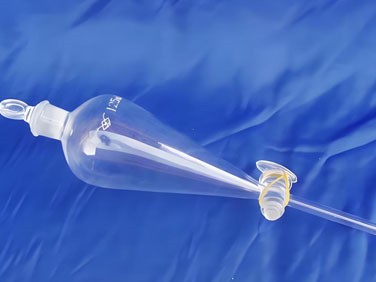
Chemistry separating funnel is a commonly used instrument in chemical experiments, mainly used to separate two kinds of insoluble liquid or extraction operations, it has a variety of types, including ordinary liquid separation funnel, pear shaped liquid separation funnel, spherical liquid separation funnel, etc., suitable for a variety of chemical experiments, especially involving liquid separation and extraction experiments.Because of its unique design and function, it has wide application value in chemical experiments. It can not only easily separate insoluble liquid and extract liquid separation operation, but also can be used in the preparation of gas liquid addition and need to accurately control the drop acceleration rate of experiments.
Parameters
|
Triangular Funnel
|


Big mouth Funnel


Wide-mouthed funnel

Materials
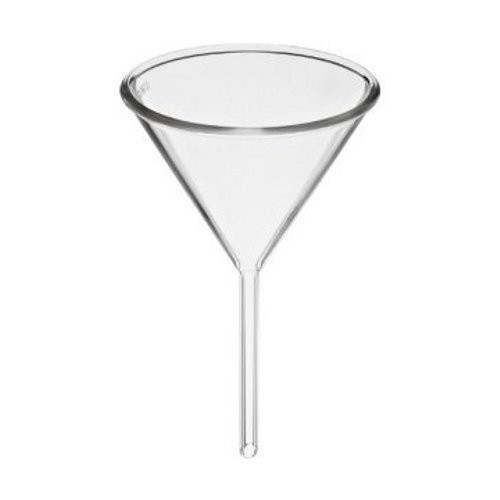
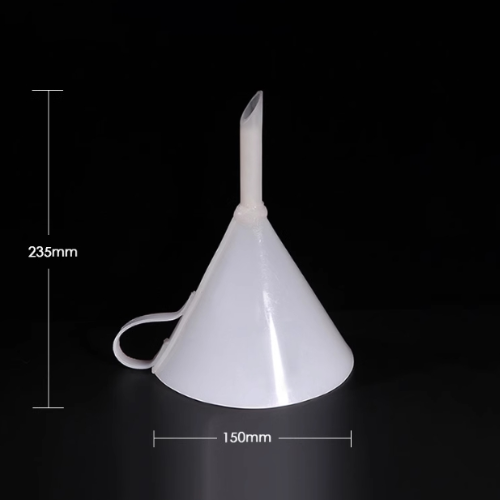
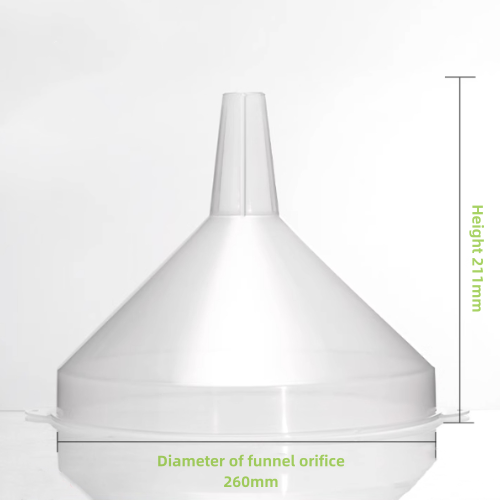
The choice of material for the separating funnel depends largely on the nature of the chemicals being handled:
◆ Glass: Glass separating funnels are highly durable and resistant to chemical corrosion. They provide clear visibility of the separation process, making them ideal for use with a wide range of chemicals. However, glass can be prone to breakage if dropped or subjected to extreme temperatures.
◆ Plastic: Plastic separating funnels offer a lighter and more shatter-resistant alternative to glass. They are particularly suitable for use with corrosive chemicals or those that react adversely with glass. However, plastic may not provide the same clarity as glass, and certain plastics may be susceptible to chemical degradation over time.
Applications in Chemistry
A chemistry separating funnel, also known as a separatory funnel, is a crucial piece of laboratory equipment used in chemistry for the separation of immiscible liquids based on their differing densities. This versatile tool is commonly employed in processes like liquid-liquid extractions, where a compound is transferred from one solvent to another. Its design features a conical shape with a stopcock at the bottom, allowing precise control over the release of the lower layer of liquid after phases have separated.
In practical applications, a separating funnel is indispensable in organic chemistry for purifying compounds or isolating specific substances from mixtures. For instance, it can separate an organic product from an aqueous waste layer after a reaction. The process involves adding the mixture to the funnel, shaking it with an appropriate solvent, and then allowing the layers to separate. The denser liquid settles at the bottom and can be drained off, while the less dense liquid remains above. This method is widely used in industries such as pharmaceuticals, petrochemicals, and environmental analysis, where the efficient separation and purification of substances are essential.
Liquid-Liquid Extraction
This is the most common application of the separating funnel. It allows for the separation of solutes from one solvent into another, based on their solubility differences. For example, in the extraction of caffeine from coffee beans, the caffeine is dissolved in a solvent such as dichloromethane, which is then separated from the aqueous phase using a separating funnel.
Purification and Isolation
The separating funnel is also used in the purification and isolation of compounds. By selectively extracting desired compounds into a different solvent, the separating funnel can help to separate impurities and purify the desired product.
Analytical Chemistry
In analytical chemistry, the separating funnel is used to prepare samples for analysis. For example, in the extraction of metals from environmental samples, the separating funnel can be used to separate the metal ions from the sample matrix, allowing for more accurate analysis.
Synthesis and Reaction Monitoring
In synthetic chemistry, the separating funnel is often used to monitor the progress of reactions and to separate reaction products. By periodically extracting and analyzing the reaction mixture, researchers can gain insights into the reaction mechanism and optimize reaction conditions.
Filtration experiment
Experimental purpose and principle
The main purpose of the experiment is to effectively separate the solid particles from the solid-liquid mixture by using a chemical separation funnel and a suction filter device, while allowing the liquid part to be collected. The principle of this process is reduced pressure filtration, that is, the use of the negative pressure of the pump, the air is taken away from the suction filter bottle, thereby reducing the pressure in the bottle. This pressure difference, formed in the Brinell funnel, accelerates the separation of solids and liquids and improves filtration efficiency.
Experimental instruments and reagents


Instrument
Brinell funnel: A funnel with a porous ceramic plate that supports the filter paper and guides the liquid down.
Filter bottle: used to collect the filtered liquid.
Vacuum pump: Provides a negative pressure environment to accelerate the filtration process.
Safety bottle: prevent water in the pump from spilling and pouring into the suction filter bottle.
Glass rod: for drainage and agitation.
Surface dish: used to hold dried solid material.
Reagent
Solid-liquid mixture to be filtered: can be any combination of solid and liquid that needs to be separated.
Filter paper: used to filter the solid-liquid mixture, the appropriate filter paper should be selected according to the nature of the substance to be filtered.
Detergent: Used to wash solid substances, which can be distilled water or other appropriate solvents.
Experimental steps
Install the Brinell funnel on the suction filter bottle and make sure the connection is tight.
Connect the safety bottle to the vacuum pump and check the tightness of the entire system to ensure that there are no air leaks.
According to the size of the Brinell funnel, cut a suitable size of filter paper.
Moisten the filter paper with a small amount of water and hold it close to the funnel to ensure that there are no bubbles between the filter paper and the ceramic plate.
Pour the solid liquid mixture to be filtered into the Brinell funnel along the glass rod, paying attention to control the pouring speed to avoid the mixture overflow.
Start the vacuum pump and start the vacuum filtration. As the liquid flows out, the solid material will gradually be trapped on the filter paper.
Observe the filtrate in the filter bottle to make sure it is clear and free of impurities.
When the filtrate quickly rises to the branch pipe of the extraction filter bottle, the latex tube on the extraction filter bottle should be removed, the funnel should be removed, and the filtrate should be poured out from the upper mouth of the extraction filter bottle, and then the extraction filter should continue.
Shut down the vacuum pump and stop pumping.
Wash slowly through the solid material with detergent to remove residual liquids and impurities attached to the solid.
After washing, restart the vacuum pump to filter until the washing liquid is clear.
Transfer the solid material from the filter paper to a clean paper or surface dish for drying.
Precautions for experiment
Safe operation
Appropriate personal protective equipment, such as lab coat, gloves and goggles, should be worn during the experiment. At the same time, avoid exposing the funnel directly to high temperatures or near fire sources.
01
Instrument selection and connection
Ensure that all instruments are cleaned and tightly connected. In particular, the connection sequence of the long tube and the short tube of the safety bottle should not be mistaken to prevent the suction phenomenon.
02
Filter paper selection and treatment
Select the appropriate filter paper according to the nature of the material to be filtered. For strongly acidic, strongly alkaline or strongly oxidizing solutions, glass fiber filter cloth or glass sand funnel should be used instead of ordinary filter paper. At the same time, the filter paper should completely cover all the small holes on the ceramic plate and moisten it with a small amount of water to keep it close to the funnel.
03
Filtration speed control
In the filtration process, the pumping speed of the vacuum pump should be adjusted as needed to control the filtration speed. Avoid excessive filtration speed resulting in liquid spillage or filter paper breakage.
04
Timely cleaning and maintenance
After the end of the experiment, the funnel and related instruments should be cleaned in time to remove residual liquids and impurities. Maintain the funnel regularly to ensure that it is in good working condition.
05
By following the above steps and precautions, we can successfully complete the chemical separation funnel extraction filtration experiment and achieve the effective separation of solid and liquid. This technology is not only widely used in chemical experiments and industrial production, but also provides us with an opportunity to deeply understand the principle and practical operation of solid-liquid separation.
Conclusion
A chemistry separating funnel, also known as a separatory funnel or sep funnel, is a essential piece of laboratory glassware used in chemistry for liquid-liquid extractions. Its primary function is to separate immiscible liquids with different densities, such as an organic solvent and an aqueous solution.
The funnel typically features a conical shape with a stopcock at the bottom, allowing controlled release of the lower layer. During use, the mixture is poured into the funnel, and after shaking (with venting to release pressure), the layers separate due to their differing densities. The denser liquid forms the lower layer and can be drained out, while the less dense liquid remains above.
This tool is widely employed in organic synthesis, analytical chemistry, and purification processes. Its design minimizes mixing of the layers during separation, ensuring efficient recovery of desired compounds. Common applications include extracting organic products from aqueous reactions, removing impurities, or isolating specific substances from complex mixtures.
Proper use requires caution to prevent emulsion formation and ensure complete separation. The separating funnel's simplicity and effectiveness make it indispensable in both educational and industrial laboratories, playing a critical role in chemical separation techniques.
Hot Tags: chemistry separating funnel, China chemistry separating funnel manufacturers, suppliers, factory, Laboratory Evaporators, 5l Glass Reactor, Single Press Tablet Machine, 50l Rotovap, 10l Rotovap, Rotovap Machine
Previous
Glass Separatory FunnelSend Inquiry


