



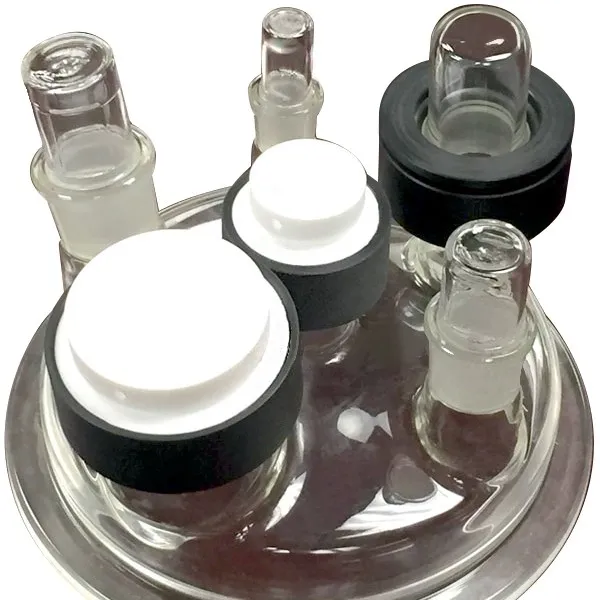


100l Glass Reactor
(1)1L/2L/3L/5L---Standard
(2)10L/20L/30L/50L/100L---Standard/EX-proof/Lifting Kettle
(3)150L/200L---Standard/EX-proof
***Price List for whole above, inquire us to get
2. Customization:
(1)Design support
(2)Directly supply the Senior R&D organic intermediate, shorten your R&D time and cost
(3)Share the advanced purifying technology with you
(4)Supply the high quality chemicals and analysis reagent
(5)We want to assist you on Chemical Engineering (Auto CAD, Aspen plus etc.)
3. Assurance:
(1)CE and ISO certification Registered
(2)Trademark: ACHIEVE CHEM(since 2008)
(3)Replacement parts within 1-year for free
Description
Technical Parameters
The 100l glass reactor is a kind of equipment for chemical reaction, with a capacity of 100 liters. Glass reactors are usually made of high-temperature and corrosion-resistant glass materials in order to withstand the effects of high temperature, high pressure and corrosive substances.
Glass reactors are often used in reaction experiments in synthetic chemistry, organic chemistry, inorganic chemistry, biochemistry and other fields, because they are transparent, easy to observe the reaction situation and will not pollute the reaction products. In laboratory or industrial production, the use of glass reactor can ensure the safety, accuracy and stability of the reaction process.
The volume of 100 liters is relatively large, which is suitable for large-scale reaction, pilot production or large-scale production of reaction products in research laboratories.

Product Introduction
The difference between the 100-liter single-layer glass reactor and the 100-liter double-layer glass reactor:
|
|
|


● Structure: Single-layer glass reactor has only one glass container, while double-layer glass reactor consists of two glass containers. In the double-layer reactor, the inner container is used to place reactants and catalysts, while the outer container plays the role of heat insulation and safety in preventing the glass container from breaking.
● Heat conduction: The jacketed glass reactor has good heat insulation performance because of the air layer or vacuum layer in the middle, which can effectively reduce the heat loss during the reaction and improve the temperature control accuracy of the reaction. However, the single-layer glass reactor is prone to heat conduction, and the temperature control is relatively difficult.
● Safety: The outer layer of the double-layer glass reactor can protect the inner glass container and prevent the fragments from splashing when it breaks. This can improve the safety of experimental operation and reduce the risk of environmental pollution.
● Scope of application: Double-glass reactors are usually suitable for situations requiring high temperature, high pressure, vigorous stirring or corrosive reactions, such as synthetic chemistry, catalytic reactions, hydrogenation reactions, etc. The single-layer glass reactor is suitable for general chemical reactions and experiments.
Product Features
The main function of glass reactor paddle in 100l glass reactor is to promote the mixing and uniform distribution of reaction materials, so as to achieve more efficient and repeatable reaction results.

● Types and shapes of paddles: There are many shapes and specifications of paddles in glass reactors, such as single impeller, double impeller, triple impeller and turbine. Different shapes of paddles have different dynamic characteristics and flow field distribution, which are suitable for different reaction types and scales.
● Mixing speed: The rotating speed of the paddle can be adjusted according to the reaction requirements to achieve different mixing effects. Generally speaking, increasing the stirring speed can increase the mixing uniformity of materials, but too high speed may lead to excessive heat generated by material friction and affect the reaction results.
● Shaft diameter and shaft length: Shaft diameter and shaft length are important parameters of glass reactor agitator, which affect the dynamic characteristics and mechanical strength of agitator. Generally speaking, the larger the shaft diameter, the greater the torque it can bear, which is suitable for materials that are difficult to mix; The longer the shaft length, the larger the bottom area of the reactor can be covered, which is suitable for large-scale reactions.
● Material and surface treatment: The commonly used materials of glass reactor paddles include stainless steel, PTFE, etc. Stirring paddles made of different materials have different performance characteristics such as corrosion resistance, wear resistance and thermal conductivity. In addition, the surface of some paddles will be plated to improve corrosion resistance and wear resistance.
● Installation mode: There are many installation modes of glass reactor agitator, such as hanging type and supporting type. Different installation methods will affect the dynamic characteristics and mechanical strength of the impeller, so it needs to be selected according to the specific situation.
● Energy consumption and noise: The glass reactor paddle will produce certain energy consumption and noise during use. Generally speaking, increasing the stirring speed will increase the energy consumption and noise level. Therefore, it is necessary to consider the influence of energy consumption and noise when selecting paddles in order to realize a more energy-saving and environmentally friendly reaction process.
Specfication of 100L Glass reactor
|
Products |
list |
Qty |
|
100L With Jacket
|
100L double glass reactor body |
1 Set |
|
100L glass reactor cover |
1 Set |
|
|
Double serpentine condenser |
1 Set |
|
|
Vacuum-pumping elbow |
1 pc |
|
|
Collecting bottle |
1 pc |
|
|
Feeding hopper |
1 pc |
|
|
Temperature probe PT100 |
1 pc |
|
|
Glass plug |
2 pcs |
|
|
Full PTFE mixing alloy sealing plug |
1 Set |
|
|
Teflon stirring paddle Rotation speed: 50-600 rpm |
1 pc |
|
|
Clamps of upper and lower covers |
1 Set |
|
|
Big reactor bottom and low tray |
1 Set |
|
|
Reactor cover clamp pieces |
1 Set |
|
|
Stainless steel support frame, fixed slider |
1 Set |
|
|
Motor, support frame and mixing rod rotating interface |
1 Set |
|
|
Digital speed regulation inverter, 50-600rpm |
1 Set |
|
|
Extension tubes of inlet and outlet on the reactor cover, each for one |
1 pc |
|
|
Bottom discharge vavle PTFE. can be easily demount and the inside reactor can be cleared conveniently. |
1 set |
|
|
Product packing list ,Product manual |
1 pc |
|
|
Hexagonal adjustment tool |
2 pcs |
|
|
Inverter spare fuse |
1 pc |

More Applications
● Steps of producing biodiesel by using a 100l glass reactor
1) Raw material preparation: Prepare raw materials suitable for biodiesel production. Common raw materials include vegetable oil (such as soybean oil and rapeseed oil) or animal fat. Ensure the quality and purity of raw materials to obtain high-quality biodiesel.
2) Pretreatment: raw materials are pretreated to remove impurities and components that cannot be converted into biodiesel. This step may involve treatment methods such as filtration, dehydration and esterification.
3) Esterification reaction: the pretreated raw materials react with esterifying agent, and glycerol and acid components in oil are separated under the action of catalyst to produce methyl ester (biodiesel). This reaction is usually carried out under appropriate temperature and pressure conditions and requires a certain reaction time.
4) Neutralization and washing: the catalyst residue in the produced methyl ester is neutralized and washed to remove excess catalyst and other impurities.
5) Dealcoholization: Dealcoholization of methyl ester to remove alcohol substances.
6) Refining: The biodiesel is further purified by distillation and other refining processes to meet the requirements of relevant standards.
● Applications of Biodiesel
Biodiesel is a kind of renewable energy, which can be used as a substitute for traditional petrochemical diesel. It has similar properties and usage with traditional diesel oil, so it is widely used in many fields. The following are the main uses of biodiesel:
1) Transportation: Biodiesel can be directly mixed with traditional diesel or completely replaced by traditional diesel for vehicles. It can be burned in a diesel engine to provide power and driving force, and is used in various types of vehicles such as public transport, long-distance trucks and agricultural machinery.
2) Industrial application: Biodiesel can be used in industrial applications that need fuel, such as generator sets and boiler fuel. By using biodiesel as industrial fuel, the demand for traditional fossil fuels can be reduced, and environmental pollution and carbon emissions can be reduced.
3) Agricultural use: Biodiesel can be used in agricultural machinery, such as tractors and harvesters. The use of biodiesel in agriculture has good environmental benefits, which can reduce the pollution of soil and air and reduce the dependence of agricultural production on fossil energy.
4) Home heating: Biodiesel can also be used as fuel for home heating system. It can be used for heating boilers or burners to provide comfortable heating for families.
5) Aviation field: Although the application of biodiesel in aviation field is relatively small, related research and attempts have been started. Biodiesel can be used as blended fuel for aircraft to reduce carbon emissions and environmental impact.
Hot Tags: 100l glass reactor, China 100l glass reactor manufacturers, suppliers, factory, Teflon Lined Autoclave, Short Path Vacuum Distillation, Stainless Steel Jacketed Reactor, Short Path Molecular Distillation, Autoclave For Hydrothermal Synthesis, High Pressure Batch Reactor
Previous
Electric Heating ReactorSend Inquiry


