



PTFE Lined Autoclave | Hydrothermal Synthesis Reactor

PTFE Lined Autoclave | Hydrothermal Synthesis Reactor

PTFE Lined Autoclave | Hydrothermal Synthesis Reactor

PTFE Lined Autoclave | Hydrothermal Synthesis Reactor

PTFE Lined Autoclave | Hydrothermal Synthesis Reactor

PTFE Lined Autoclave | Hydrothermal Synthesis Reactor
PTFE Lined Autoclave | Hydrothermal Synthesis Reactor
(1)25ml/50ml/100ml/150ml/200ml/250ml/300ml/400ml/500ml/1000ml---PTFE/≤ 220°C
(2)25ml/50ml/100ml/150ml/200ml/250ml/300ml/400ml/500ml/1000ml---PPL/≤ 280°C
***Price List for whole above, inquire us to get
2. Customization:
(1)Design support
(2)Directly supply the Senior R&D organic intermediate, shorten your R&D time and cost.
(3)Share the advanced purifying technology with you
(4)Supply the high quality chemicals and analysis reagent
(5)We want to assist you on Chemical Engineering (Auto CAD, Aspen plus etc.)
3. Assurance:
(1)CE and ISO certification Registered
(2)Trademark: ACHIEVE CHEM(since 2008)
(3)Replacement parts within 1-year for free
Description
Technical Parameters
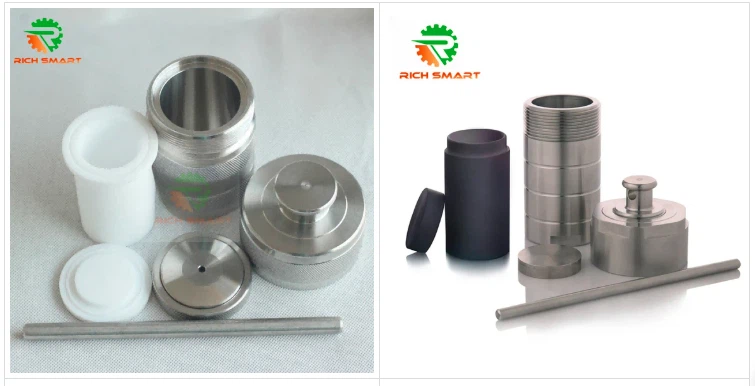
PTFE Lined Autoclave (also known as Teflon lined hydrothermal synthesis reactor) is a high-pressure reaction vessel with stainless steel shell and PTFE/PPL inner lining. It provides excellent corrosion resistance, chemical inertness and contamination-free reaction environment, widely used for lab hydrothermal synthesis, sample digestion, nanomaterial preparation and high-pressure chemical reactions.
The structure of PTFE lined hydrothermal synthesis reactor
The PTFE Lined Autoclave (also called PTFE Lined Hydrothermal Reactor) features a composite structure with high pressure resistance and excellent corrosion resistance.
The outer shell is made of high‑strength stainless steel, providing robust mechanical performance, pressure resistance, and structural stability. The inner lining is formed from food‑grade PTFE or high‑temperature PPL material, which offers outstanding chemical inertness, non‑stick performance, and heat resistance.
The reactor mainly consists of three core components: the pressure vessel body, the sealed reactor lid, and the PTFE/PPL liner insert.The smooth, non‑porous surface of the PTFE liner prevents contamination, ensures easy cleaning, and avoids reaction interference.
This integrated structure ensures stable performance under high temperature and high pressure, while providing a safe, sealed, and contamination‑free reaction environment for laboratory and industrial applications.

Key Features
- Stainless steel outer shell for high pressure resistance
- PTFE liner (max 220°C) or PPL liner (max 280°C)
- Excellent corrosion resistance to strong acids, alkalis and corrosive chemicals
- Smooth, non‑stick lining for easy cleaning and no cross‑contamination
- Built‑in safety valve and pressure gauge for real‑time monitoring
- Standard capacities from 15mL to 1000mL
- CE and ISO certified for safe laboratory use

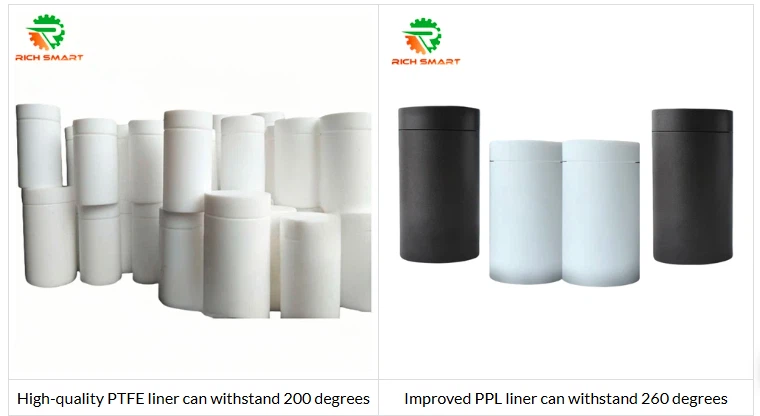
PTFE Liner vs PPL Liner Comparison
PTFE Liner
How is polytetrafluoroethylene(PTFE)made?
The manufacturing of PTFE is very similar to any other polymer. It is manufactured through free radical polymerization technology using TFE addition polymerization in an intermittent process in an aqueous medium.
The chemical structure of PTFE is the same as that of polyethylene; The only major difference is that the hydrogen atom is completely replaced by fluorine. However, the preparation methods of PE and PTFE are completely different.
The size of fluorine atoms is enormous, forming a uniform and continuous sheath around the carbon carbon bond, providing molecules with good chemical resistance, electrical inertness, and stability.
Max temperature: 220°C
Strong chemical resistance
Cost-effective for general lab use
Non‑stick and easy to clean
PPL Liner
How is polyphenylene(PPL)made?
PPL is commonly synthesized from p‑dihalogenated benzene or benzene derivatives using nickel‑based complex catalysts under inert atmosphere, with the help of Grignard reagents or reducing metal systems to form a rigid, fully aromatic carbon–carbon backbone structure.
The dense aromatic ring structure forms a rigid, stable conjugated system that delivers outstanding thermal stability, chemical inertness, and mechanical strength at high temperatures - properties that make PPL highly suitable for high‑performance liners in autoclaves and reactors.
Max temperature: 280°C
Higher temperature resistance
Suitable for high‑temperature hydrothermal synthesis
Stable performance under extreme conditions
Product Parameter
| Model | Capacity | Liner Material | Max Temperature | Max Pressure | Application |
|---|---|---|---|---|---|
| AC122-15 | 15 mL | PTFE | 220°C | 3 MPa | Lab |
| AC122-25 | 25 mL | PTFE | 220°C | 3 MPa | Lab |
| AC122-50 | 50 mL | PTFE | 220°C | 3 MPa | Lab |
| AC122-100 | 100 mL | PTFE / PPL | 220°C / 280°C | 3 MPa | Lab / Pilot |
| AC122-150 | 150 mL | PTFE / PPL | 220°C / 280°C | 3 MPa | Lab / Pilot |
| AC122-200 | 200 mL | PTFE / PPL | 220°C / 280°C | 3 MPa | Lab / Pilot |
| AC122-250 | 250 mL | PTFE / PPL | 220°C / 280°C | 3 MPa | Lab / Pilot |
| AC122-300 | 300 mL | PTFE / PPL | 220°C / 280°C | 3 MPa | Lab / Pilot |
| AC122-400 | 400 mL | PTFE / PPL | 220°C / 280°C | 3 MPa | Lab / Pilot |
| AC122-500 | 500 mL | PTFE / PPL | 220°C / 280°C | 3 MPa | Lab / Pilot |
| AC122-1000 | 1000 mL | PTFE / PPL | 220°C / 280°C | 3 MPa | Lab / Pilot |

All kinds of "Hydrothermal Synthesis Reactor", price list, you can choose online HERE
General Specifications
Shell material: Stainless steel
Liner material: PTFE or PPL
Max working pressure: ≤ 3 MPa
PTFE liner temperature: ≤ 220°C
PPL liner temperature: ≤ 280°C

Why Choose Achieve Chem PTFE Lined Autoclave
- Why Choose Achieve Chem PTFE Lined Autoclave
- CE and ISO certified quality assurance
- Professional lab and industrial reactor design
- Full size range from 15mL to 1000mL
- Customizable volume and liner material
- 1-year free replacement parts warranty
- Stable structure, safe operation, long service life
- Direct factory supply with competitive price


FAQs
Q1: What is the working temperature of PTFE and PPL liners?
A: PTFE liner max 220°C, PPL liner max 280°C.
Q2: What is the maximum pressure of PTFE lined autoclave?
A: Max working pressure is 3MPa.
Q3: What are the main applications?
A: Mainly used for hydrothermal synthesis, sample digestion, nanomaterial preparation and high-pressure reactions in labs.
Q4: Do you provide customization?
A: Yes, we offer custom capacities, liner materials and structure design.
Contact Us
For pricing, specifications, or customized solutions, please contact us directly.
Request a Quote | Download Specification | Talk to Engineer
Hot Tags: PTFE Lined Autoclave | Hydrothermal Synthesis Reactor, China PTFE Lined Autoclave | Hydrothermal Synthesis Reactor manufacturers, suppliers, factory, Short Path Distillation Kit, Stainless Steel Jacketed Reactor, High Pressure Stirred Reactor, High Pressure Lab Reactor, High Pressure Reactor Vessel, Short Path Distillation Equipment
Previous
Teflon Coated AutoclaveSend Inquiry


