


When To Use Different Chemical Reactor Models?
Sep 21, 2024
Leave a message
Chemical reactors are the heart of many industrial processes, playing a crucial role in the production of various substances we use in our daily lives.
Among the different types available, the stainless steel chemical reactor stands out for its versatility and durability. But when should you use different chemical reactor models? Let's dive into this topic and explore the various options available to chemists and engineers.
Understanding the Basics of Chemical Reactors

Before we delve into the specifics of when to use different reactor models, it's essential to understand what a chemical reactor is and its primary function. A chemical reactor is a vessel designed to contain and control chemical reactions. The choice of reactor depends on various factors, including the type of reaction, desired product, scale of production, and safety considerations.
Chemical reactors produced by ss reactor manufacturer are popular due to their resistance to corrosion, ability to withstand high temperatures and pressures, and ease of cleaning. These characteristics make them suitable for a wide range of chemical processes, from pharmaceutical manufacturing to food production.
Batch Reactors: When Time is on Your Side
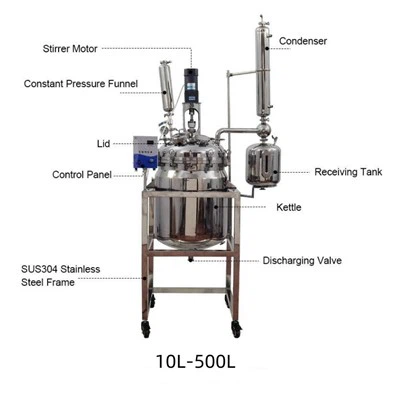
Batch reactors are one of the most common types of chemical reactors, and for good reason. These vessels are ideal when you're dealing with smaller quantities or when the reaction time is relatively long. Here are some scenarios where a batch reactor, particularly a stainless steel chemical reactor, would be the best choice:
● Product Development and Testing: When you're in the early stages of product development or need to produce small quantities for testing, batch reactors offer flexibility and control.
● Multi-Purpose Production: If your facility needs to produce various products using the same equipment, batch reactors allow for easy cleaning and reconfiguration between batches.
● Slow Reactions: Some chemical reactions take time to complete. Batch reactors provide a controlled environment for these slower processes.
● High-Value Products: For expensive or specialized products where quality control is paramount, batch reactors allow for closer monitoring and adjustment of reaction conditions.
Stainless steel batch reactors are particularly useful in these scenarios due to their durability and resistance to a wide range of chemicals. They can be easily cleaned between batches, reducing the risk of cross-contamination.
Continuous Flow Reactors: When Efficiency is Key

While batch reactors have their place, continuous flow reactors shine when it comes to large-scale production and efficiency. These reactors (like stainless steel chemical reactors), which can also be made from stainless steel, are ideal in the following situations:
● High-Volume Production: When you need to produce large quantities of a product consistently, continuous flow reactors offer unmatched efficiency.
● Fast Reactions: For reactions that occur quickly, continuous flow reactors can handle the rapid turnover of reactants to products.
● Exothermic Reactions: Continuous flow reactors are often better at managing heat generation in strongly exothermic reactions, improving safety and control.
● Consistent Quality: When product consistency is crucial, continuous flow reactors can maintain steady-state conditions more easily than batch reactors.
Stainless steel continuous flow reactors are particularly valuable in industries like petrochemicals, where corrosion resistance and the ability to handle high temperatures and pressures are essential.
Specialized Reactor Models: Tailoring to Specific Needs
Beyond the basic batch and continuous flow models, there are several specialized reactor types designed for specific applications. Here's when you might consider using these:
Fluidized Bed Reactors
Fluidized bed reactors, which can be constructed using stainless steel, are ideal for reactions involving a solid catalyst and fluid reactants. They're commonly used in:
● Petroleum Refining: For processes like fluid catalytic cracking.
● Biomass Gasification: Converting organic materials into syngas.
● Polymer Production: For processes like the production of polyethylene.
Packed Bed Reactors
Packed bed reactors, often made with a stainless steel shell, are filled with solid catalyst particles. They're suitable for:
● Gas-Phase Reactions: Such as the production of sulfuric acid or the synthesis of ammonia.
● Wastewater Treatment: For removing contaminants through catalytic processes.
● Hydrogenation Reactions: In the food industry for processes like hardening oils.
Membrane Reactors
Membrane reactors, which can incorporate stainless steel components, combine reaction and separation in a single unit. They're particularly useful for:
● Equilibrium-Limited Reactions: By removing products as they form, these reactors can drive reactions to higher conversion rates.
● Hydrogen Production: For processes like steam reforming of methane with in-situ hydrogen removal.
● Selective Oxidation: In the production of fine chemicals where product purity is crucial.
The choice of reactor model depends on various factors, including the nature of the reaction, scale of production, and specific process requirements. Chemical reactors produced by ss reactor manufacturer, whether in batch, continuous flow, or specialized configurations, offer a robust and versatile solution for many chemical processes.
When selecting a reactor model, consider factors such as: Reaction kinetics and thermodynamics; Heat transfer requirements; Mixing needs; Safety considerations; Scale of production; Flexibility for future needs.
By carefully evaluating these factors and understanding the strengths of each reactor model, you can make an informed decision that optimizes your chemical process.
Remember, the world of chemical reactors is vast and continually evolving. Stainless steel chemical reactors, with their durability and versatility, remain a cornerstone in many applications. However, new materials and designs are always being developed to meet the changing needs of the chemical industry.
Whether you're working on a small-scale research project or overseeing large-scale industrial production, choosing the right chemical reactor model is crucial for success. By understanding when to use different models, you can ensure optimal efficiency, safety, and product quality in your chemical processes.
If you're looking to learn more about stainless steel chemical reactors or need assistance in selecting the right model for your specific needs, don't hesitate to reach out to experts in the field. Companies like ACHIEVE CHEM, with their extensive experience and certifications, can provide valuable insights and high-quality equipment to support your chemical processing needs.
