


What Is The RPM Of A Rotary Evaporator?
Jul 26, 2024
Leave a message
Introduction to Rotary Evaporators
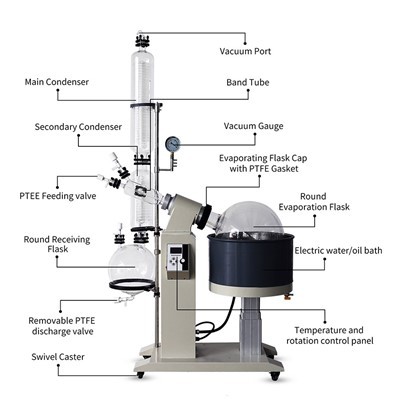
Rotary evaporators, or rotovaps, are essential tools in many laboratories, used primarily for the gentle removal of solvents from samples. They consist of several key components, including a rotating flask, a heating bath, a condenser, and a vacuum system. The RPM of the rotating flask is a critical parameter that influences the efficiency of the evaporation process.
Importance of RPM in Rotary Evaporators

The RPM of a rotary evaporator plays a vital role in the evaporation process. Here's why it's important:
● Increased Surface Area: Higher RPM increases the surface area of the sample exposed to heat, enhancing the evaporation rate.
● Uniform Heating: Rotation ensures that the sample is evenly heated, preventing localized overheating.
● Reduced Bumping: Proper RPM can reduce the occurrence of bumping, where the sample boils violently, potentially causing loss of material.
How RPM Affects Evaporation
To understand how RPM affects evaporation, let's consider the dynamics of the process:
● Evaporation Rate: Higher RPMs increase the evaporation rate by spreading the sample into a thin film. This maximizes the surface area exposed to heat and reduces the distance the solvent molecules need to travel to evaporate.
● Heat Distribution: As the flask rotates, it ensures uniform heat distribution, which is crucial for efficient evaporation. Uneven heating can lead to hotspots and incomplete solvent removal.
● Sample Consistency: The rotation helps maintain a consistent sample composition by preventing sedimentation and ensuring that the entire sample is evenly exposed to the evaporation process.
Determining the Ideal RPM
Determining the ideal RPM for a rotary evaporator depends on several factors:
● Sample Viscosity: More viscous samples may require lower RPMs to avoid splashing and ensure uniform heating.
● Solvent Properties: The boiling point and volatility of the solvent can influence the optimal RPM. Lower boiling point solvents may require higher RPMs for efficient evaporation.
● Flask Size: The size of the rotating flask can affect the ideal RPM. Larger flasks may require lower RPMs to prevent splashing and ensure effective evaporation.
Practical Guidelines for Setting RPM
Here are some practical guidelines for setting the RPM on a rotary evaporator:
● Start Low: Begin with a lower RPM and gradually increase it while monitoring the evaporation process. This helps prevent bumping and splashing.
● Observe the Process: Watch the sample as it evaporates. Adjust the RPM based on the appearance of the sample and the evaporation rate.
● Consult Manufacturer Recommendations: Always refer to the manufacturer's guidelines for recommended RPM settings based on your specific rotary evaporator model.
Case Study: Optimizing RPM for Different Applications
Let's explore how RPM can be optimized for different applications in a small laboratory:
Solvent Removal: For removing solvents with low boiling points, such as ethanol or methanol, higher RPMs (100-150 RPM) can be effective. This maximizes the surface area and speeds up the evaporation process.
Concentration of Solutions: When concentrating solutions, especially those with higher viscosity, moderate RPMs (60-100 RPM) are preferred. This ensures uniform heating and prevents splashing.
Purification of Reaction Products: For purifying reaction products, the RPM should be adjusted based on the solvent's boiling point and the sample's viscosity. Starting at 60 RPM and gradually increasing can help find the optimal setting.

Common Issues and Troubleshooting
Despite careful setting of RPM, issues can still arise. Here are some common problems and their solutions:
Bumping: If bumping occurs, reduce the RPM and check the vacuum level. Gradual application of vacuum and using bump traps can help.
Incomplete Evaporation: If the solvent is not fully removed, increase the RPM slightly and ensure the heating bath temperature is sufficient.
Sample Loss: If the sample is splashing out of the flask, reduce the RPM and check for any leaks in the vacuum system.
Advanced Techniques for RPM Optimization
For advanced users, the following techniques can further optimize RPM settings:
Automated Systems: Some rotary evaporators come with automated systems that adjust the RPM based on real-time feedback from the evaporation process. These systems can maintain optimal conditions and improve efficiency.
Stepwise Adjustment: Gradually increasing the RPM in steps can help find the ideal setting without causing bumping or splashing.
Custom Protocols: Developing custom protocols for different types of samples and solvents can streamline the evaporation process and ensure consistent results.
Environmental and Safety Considerations
Environmental and safety considerations play a crucial role in optimizing RPM settings for rotary evaporators. Beyond enhancing operational efficiency, careful RPM adjustment contributes significantly to sustainability efforts in laboratories. By reducing energy consumption and effectively minimizing exposure to potentially harmful solvents, these practices promote safer working conditions and align with environmental stewardship principles. Such measures not only improve overall process performance but also underscore a commitment to responsible resource management and health protection in chemical research and industrial applications.
Conclusion
In conclusion, the RPM of a rotary evaporator is a critical parameter that significantly affects the evaporation process. By understanding its importance and following practical guidelines for setting and optimizing RPM, small laboratories can achieve efficient and effective solvent removal, concentration, and purification. Continuous observation, troubleshooting, and advanced techniques can further enhance the performance of rotary evaporators, ensuring high-quality results.