


What Is The Difference Between Stainless Steel Reactor 304 And 316 And 316L?
Dec 14, 2023
Leave a message
Stainless steel reactor is an important chemical equipment, and the selection of its material has a significant impact on its performance and service life. Common stainless steel materials include 304, 316, 316L, etc., which have high corrosion resistance, high strength, wear resistance, and high temperature resistance. During the manufacturing process, strict quality control and special treatment measures are required to ensure that its quality and performance meet relevant standard requirements. At the same time, stainless steel reaction vessels have a wide range of applications and are of great significance for the development of chemical, pharmaceutical, food, environmental protection and other fields.
(Product link: https://www.achievechem.com/reactors)
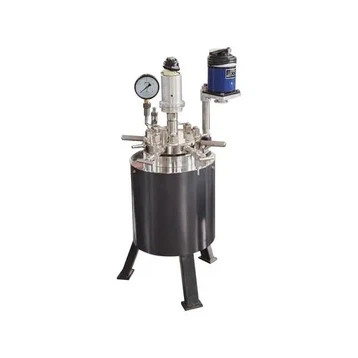
304 stainless steel reaction vessel, 316 stainless steel reaction vessel, and 316L stainless steel reaction vessel are three commonly used stainless steel reaction vessels, which have some differences in material, corrosion resistance, heat resistance, and other aspects, and have their respective applicable ranges.
1, 304 stainless steel reaction kettle
304 stainless steel is a universal stainless steel material with good corrosion resistance and heat resistance. Therefore, 304 stainless steel reaction vessels have been widely used in fields such as chemical, pharmaceutical, and food.
Material: 304 stainless steel is an austenitic stainless steel containing 18% chromium and 8% nickel, which has good corrosion resistance and heat resistance.
Corrosion resistance: 304 stainless steel has good corrosion resistance and can resist the corrosion of most chemical media. However, for some highly corrosive media such as strong acids and bases, the reaction kettle of 304 stainless steel may not meet the requirements for long-term stable operation.
Heat resistance: 304 stainless steel has good heat resistance and can maintain stable performance within a certain temperature range. However, for high-temperature reaction processes, the reaction kettle of 304 stainless steel may not meet the requirements.
Scope of application: 304 stainless steel reaction kettle is suitable for general chemical reaction processes, such as synthesis, decomposition, extraction, etc. For some highly corrosive and high-temperature reaction processes, it is recommended to choose stainless steel reaction vessels with higher corrosion resistance and heat resistance.
2, 316 stainless steel reaction kettle
316 stainless steel is a stainless steel material containing Mo element, which has higher corrosion resistance and heat resistance. Therefore, 316 stainless steel reaction vessels have been widely used in fields such as chemical, pharmaceutical, and food.
Material: 316 stainless steel is an austenitic stainless steel containing 18% chromium, 8% nickel, and 2% molybdenum, which has higher corrosion resistance and heat resistance.
Corrosion resistance: 316 stainless steel has higher corrosion resistance than 304 stainless steel and can resist corrosion from most chemical media. For some highly corrosive media such as strong acids and bases, the 316 stainless steel reactor can meet the requirements of long-term stable operation.
Heat resistance: 316 stainless steel has higher heat resistance than 304 stainless steel, and can maintain stable performance in a higher temperature range. For high-temperature reaction processes, the reaction kettle of 316 stainless steel can meet the requirements.
Scope of application: 316 stainless steel reactor is suitable for general chemical reaction processes, such as synthesis, decomposition, extraction, etc. For some highly corrosive and high-temperature reaction processes, it is recommended to choose stainless steel reaction vessels with higher corrosion resistance and heat resistance.

3, 316L stainless steel reaction kettle
316L stainless steel is a low-carbon version of 316 stainless steel, which has better processing and welding performance. Meanwhile, its corrosion resistance and heat resistance are also similar to 316 stainless steel. Therefore, 316L stainless steel reaction vessels have also been widely used in fields such as chemical, pharmaceutical, and food.
Material: 316L stainless steel is a low-carbon austenitic stainless steel containing 18% chromium, 8% nickel, and 2% molybdenum, which has better processing and welding performance.
Processing performance: 316L stainless steel has better processing performance than 316 stainless steel, making it easier to cut, weld, and process. This helps to reduce the scrap rate in the production process and improve production efficiency.
Welding performance: 316L stainless steel has better welding performance than 316 stainless steel, making welding operations easier. This helps to reduce defects and stress concentration during the welding process, improve equipment stability and safety.
Scope of application: 316L stainless steel reactor is suitable for general chemical reaction processes, such as synthesis, decomposition, extraction, etc. For some highly corrosive and high-temperature reaction processes, it is recommended to choose stainless steel reaction vessels with higher corrosion resistance and heat resistance. In addition, due to its better processing and welding performance, the 316L stainless steel reactor is also suitable for some situations that require finer processing and higher welding requirements.
4, Corresponding scope of application
(1) Scope of application of 304 stainless steel reaction kettle: Suitable for general chemical reaction processes, such as synthesis, decomposition, extraction, etc. For some highly corrosive media and high-temperature reaction processes, it is recommended to choose stainless steel reaction vessels with higher corrosion resistance and heat resistance. In addition, due to its good corrosion resistance and heat resistance, 304 stainless steel reaction vessels are also suitable for some situations where equipment performance is not required high.
(2) Scope of application of 316 stainless steel reaction kettle: Suitable for general chemical reaction processes, such as synthesis, decomposition, extraction, etc. For some highly corrosive media and high-temperature reaction processes, it is recommended to choose stainless steel reaction vessels with higher corrosion resistance and heat resistance. In addition, due to its higher corrosion and heat resistance, 316 stainless steel reaction vessels are also suitable for some situations that require high equipment performance.
(3) Scope of application of 316L stainless steel reaction kettle: Suitable for general chemical reaction processes, such as synthesis, decomposition, extraction, etc. For some highly corrosive media and high-temperature reaction processes, it is recommended to choose stainless steel reaction vessels with higher corrosion resistance and heat resistance. In addition, due to its better processing and welding performance, the 316L stainless steel reactor is also suitable for some situations that require finer processing and higher welding requirements. In addition, due to its low carbon content, it reduces the carbon content of the equipment and improves its strength and toughness, making it suitable for some situations that require high equipment strength and toughness.
There are some differences in material, corrosion resistance, heat resistance, and other aspects among 304 stainless steel reaction vessels, 316 stainless steel reaction vessels, and 316L stainless steel reaction vessels, and they have different applicable ranges. When choosing a stainless steel reactor, it is necessary to choose the appropriate material and model based on actual needs and reaction conditions. At the same time, in order to ensure the stability and safety of the equipment, attention should also be paid to factors such as processing performance, welding performance, and strength and toughness of the equipment.