


Rotary Evaporator And Asphalt Recovery
Dec 13, 2023
Leave a message
Asphalt is a petroleum product widely used in roads and building materials. In the process of production and use, it is often necessary to convert asphalt from one form to another, such as recovering pure asphalt from solution or concentrated asphalt. Rotary evaporator is a commonly used equipment for recovering asphalt and other chemicals.
Asphalt is a complex mixture, and its main components are hydrocarbons, including polycyclic aromatic hydrocarbons and aliphatic hydrocarbons. It is the residue produced in the process of petroleum refining and has special chemical properties.

Chemical properties
- High molecular weight: The compounds in asphalt usually have high molecular weight. Because of its complex structure, they appear as viscous liquid or semi-solid at room temperature.
- High asphalt content: Asphalt is obtained by distillation and other treatment steps of crude oil, so the asphalt content in asphalt is very high, usually exceeding 90%.
- Thermal stability: Asphalt has good thermal stability at high temperature, and can withstand high temperature environment in road paving or building construction without obvious changes.
- Viscosity and elasticity: Asphalt has high viscosity and elasticity, which makes it adhere to the road surface and has certain flexibility, and can cope with the stress and deformation caused by traffic and climate.
Function
Road construction: Asphalt is a common material in road construction, which is used for paving and repairing pavement. It can provide a smooth driving surface and increase the durability and bearing capacity of the road.
Waterproofing and anticorrosion: Because of its good adhesion and durability, asphalt is widely used in the fields of waterproofing and anticorrosion, such as roof waterproofing, basement moistureproofing and pipeline coating.
Construction materials: Asphalt can be used as a binder for building materials, and used to manufacture asphalt concrete, asphalt shingles, waterproofing membranes, etc.
Industrial application: Asphalt is also widely used in petrochemical industry, chemical production and petroleum processing, for example, as a binder, lubricant and insulating material for petroleum coke.
Based on the physical and chemical properties of asphalt, the rotary evaporator separates asphalt from the solution by using factors such as rotation, heating and vacuum. After heating, asphalt will volatilize into steam and return to liquid form through condenser under vacuum. This method can recover pure asphalt quickly and efficiently, and is also beneficial to saving resources and reducing environmental pollution.
Various solvents can be used to recover asphalt in rotary evaporator. The specific choice of solvent depends on the characteristics of asphalt and the goal of recycling.
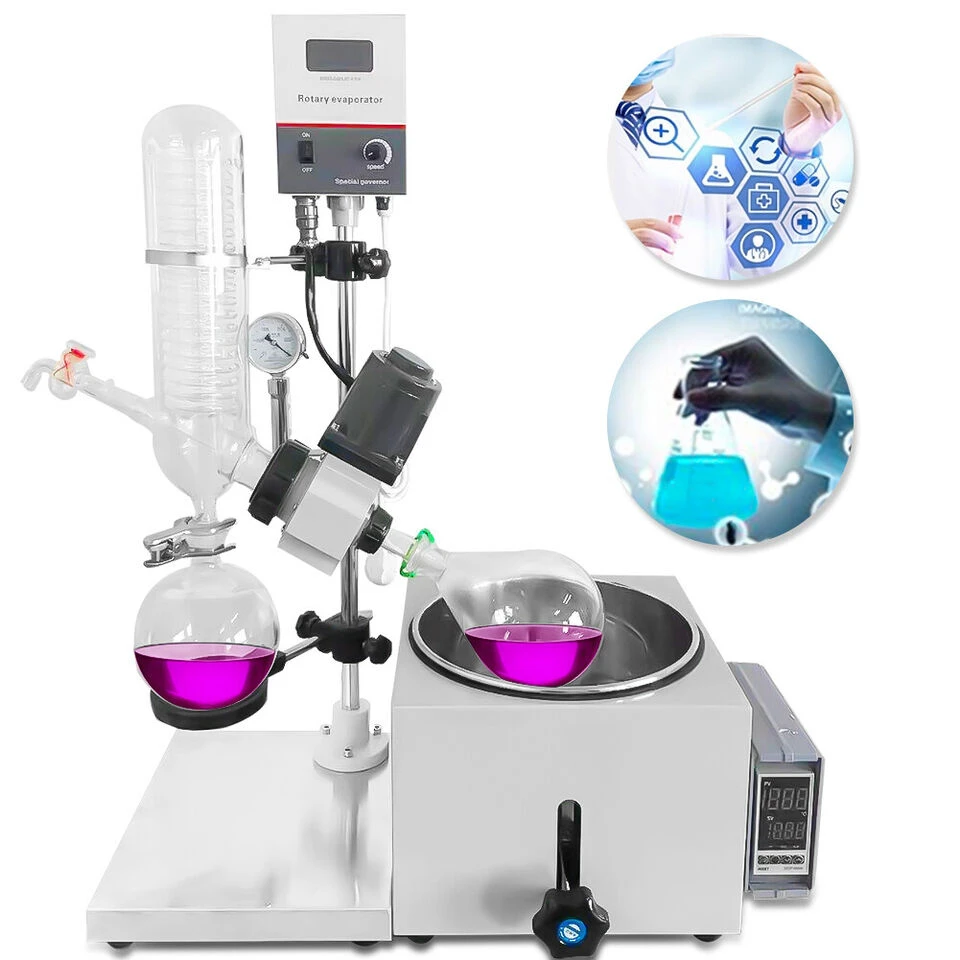
Selection of common solvents
Petroleum ether: Petroleum ether is a commonly used volatile solvent, which is suitable for recycling asphalt containing low molecular weight components. It has low boiling point and good solubility.
Mixed solvents: The volatility and solubility can be adjusted by mixing different solvents. For example, petroleum ether can be mixed with solvents such as acetone and toluene to improve solubility and recovery effect.
Chlorinated solvents: Some chlorinated solvents such as chloroform and dichloromethane are also used in recycling asphalt. They have good solubility and volatility, but they need to pay attention to the potential harm to the environment and human body.
Aromatic solvents: Aromatic solvents such as toluene and xylene can also be used to recover asphalt. They have good solubility and volatility, and are often used to dissolve high molecular weight components.
Factors to be considered when selecting solvents
- Solubility: The solvent should be able to effectively dissolve the target components in asphalt.
- Volatility: The volatility of the solvent should be moderate, so that it can be easily removed in the process of rotary evaporation.
- Safety: Choose a solvent with high safety and follow the relevant safety operation procedures.
- Environmental impact: Pay attention to selecting solvents that have little impact on the environment, and properly handle solvent waste liquid.
Specific operation steps of asphalt recovery by rotovap
1. Preparation: Install the rotary evaporation bottle (flask) on the equipment and connect the vacuum system and condenser.
2. Adding solution: Slowly add the solution containing asphalt into the flask.
3. Setting parameters: According to the characteristics of asphalt and experimental requirements, set operating parameters such as rotation speed, heating temperature and vacuum degree.
4. Start the vacuum pump: Start the vacuum pump to establish a negative pressure environment and ensure that the vacuum degree reaches the set value.
5. Start the rotation and heating: Start the rotation device and heating device through the control system, so that the flask starts to rotate and gradually heat up.
6. Condensation recovery: The evaporated asphalt is cooled by a condenser and re-condensed into a liquid state, and then collected and recovered.
7. Monitoring operation: During the whole operation process, the running state of the Rotary evaporator is monitored regularly, including parameters such as temperature, vacuum degree and solution amount.
8. Finish the operation: When the evaporation and extraction process of asphalt meets the expected requirements, turn off the heating and vacuum system and stop the rotation. After the equipment is cooled, the flask can be taken out for subsequent treatment.
If the residual trichloroethylene content is too high in the process of recovering asphalt, the following measures can be taken to solve it.

Solvent selection: When recycling asphalt, you can try to change or adjust the solvent used. Choose a solvent with low volatility and low residue content to reduce the residue of trichloroethylene.
Temperature control: By controlling the heating temperature in the recovery process, the evaporation rate and separation effect of solvent and asphalt can be affected. Adjusting the temperature properly can help to reduce the residue of trichloroethylene.
Vacuum control: In lab the rotary evaporator, increasing the vacuum degree can improve the evaporation rate and help to quickly extract volatile substances such as trichloroethylene. Increasing the vacuum degree properly can improve the residual problem in the treatment process.
Condenser optimization: check and optimize the condenser system in the rotary evaporator equipment to ensure that it can effectively cool and condense evaporated substances. Proper design and operation of condenser is helpful to reduce the content of harmful substances such as trichloroethylene.
What kinds of reaction you do with the rotary evaporator machine? Any specification, please contact us via sales@achievechem.com