


How do teflon hydrothermal reactors improve the purity of experimental results?
Feb 27, 2025
Leave a message
In the realm of scientific research and industrial applications, the purity of experimental results is paramount. Achieving high-quality outcomes requires not only precise methodologies but also advanced equipment that can maintain the integrity of the materials being studied. Enter the teflon hydrothermal reactor, a game-changing tool that has revolutionized the way researchers and industries conduct experiments under high-pressure and high-temperature conditions.
These specialized reactors have become indispensable in various fields, from materials science to chemical synthesis, owing to their unique properties and capabilities. Let's delve into how teflon hydrothermal reactors contribute to enhancing the purity of experimental results and why they've become a staple in modern laboratories.
We provide teflon hydrothermal reactor, please refer to the following website for detailed specifications and product information.
Product:https://www.achievechem.com/chemical-equipment/teflon-hydrothermal-reactor.html
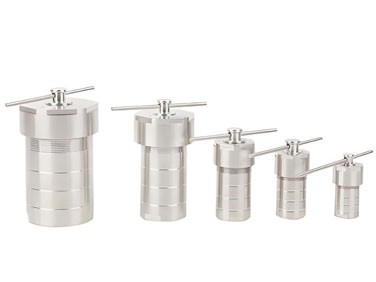
Teflon Hydrothermal Reactor
Polytetrafluoroethylene hydrothermal reactor is a closed container that can decompose insoluble substances, which uses aqueous solution as a reaction system under certain temperature and pressure conditions, and uses aqueous solution at high temperature and high pressure to dissolve substances that are insoluble or insoluble under atmospheric conditions, or reacts to produce dissolved products of the substance. By controlling the temperature difference of the solution, convection is generated to form a supersaturated state and the growth crystals are precipitated. Polytetrafluoroethylene hydrothermal reactor is used in nanomaterials preparation, compound synthesis, crystal growth, sample digestion and other fields.

Enhancing Experimental Purity with Teflon Reactors
The quest for purity in experimental results is a constant challenge for scientists and researchers. Contamination, unwanted reactions, and material degradation can all compromise the validity of findings. Teflon hydrothermal reactors address these concerns through several innovative features:
Chemical Inertness
One of the most significant advantages of teflon hydrothermal reactors is their exceptional chemical inertness. Teflon, or polytetrafluoroethylene (PTFE), is renowned for its resistance to a wide range of chemicals. This property ensures that the reactor's inner lining does not react with the substances being studied, preventing contamination and maintaining the purity of the experimental environment.
Non-stick Surface
The non-stick nature of teflon is not just beneficial for cooking; it plays a crucial role in scientific experiments as well. In a teflon hydrothermal reactor, this feature prevents materials from adhering to the reactor walls. This reduction in sample loss and cross-contamination between experiments significantly enhances the accuracy and reproducibility of results.
Temperature Stability
Teflon maintains its properties over a wide temperature range, typically up to 260°C (500°F) for continuous use. This temperature stability ensures that the reactor's inner lining remains inert and does not degrade or release contaminants into the reaction mixture, even under extreme conditions.
Pressure Resistance
Hydrothermal reactions often require high pressures. Teflon's ability to withstand these pressures without deforming or breaking down is crucial for maintaining the integrity of the experimental setup. This pressure resistance contributes to the overall purity of results by preventing external contaminants from entering the reaction chamber.
Key Advantages of Teflon Hydrothermal Reactors in Labs
The benefits of using teflon hydrothermal reactors extend beyond just improving experimental purity. These versatile tools offer a range of advantages that make them indispensable in modern research facilities:
Teflon hydrothermal reactors are adaptable to a wide range of experimental conditions and can be used for various applications, including:
Nanoparticle synthesis
Crystal growth
Material decomposition studies
Hydrothermal oxidation processes
Catalyst development
This versatility allows researchers to conduct diverse experiments using a single piece of equipment, streamlining laboratory processes and reducing the need for multiple specialized reactors.
The non-stick surface of teflon makes cleaning and maintaining these reactors a breeze. This feature is particularly valuable in research settings where quick turnaround times between experiments are essential. Easy cleaning also minimizes the risk of cross-contamination between different experimental runs, further contributing to the purity of results.
Teflon's resistance to wear and tear, coupled with its chemical inertness, means that teflon hydrothermal reactors have a long operational life. This durability translates to cost-effectiveness for laboratories, as the need for frequent replacements is significantly reduced.
Modern teflon hydrothermal reactors are often equipped with advanced control systems that allow for precise manipulation of temperature, pressure, and reaction time. This level of control is crucial for achieving reproducible results and optimizing reaction conditions for specific experiments.
The inherent properties of teflon, combined with thoughtful design considerations, make these reactors safer to use compared to traditional metal reactors. The chemical resistance of teflon reduces the risk of corrosion-related accidents, while its non-reactive nature minimizes the potential for unexpected chemical reactions.
Common Applications of Teflon Hydrothermal Reactors
The unique properties of teflon hydrothermal reactors make them invaluable across various scientific and industrial applications. Here are some of the most common uses:



Materials Science and Nanotechnology
In the field of materials science, teflon hydrothermal reactors are extensively used for:
Synthesizing nanoparticles with controlled size and morphology
Growing single crystals for electronic and optical applications
Developing novel composite materials
Studying the behavior of materials under extreme conditions
The ability to precisely control reaction conditions while maintaining a contamination-free environment makes these reactors ideal for cutting-edge materials research.
Environmental Science
Environmental scientists leverage teflon hydrothermal reactors for various applications, including:
Studying the decomposition of organic pollutants
Investigating the behavior of heavy metals in aqueous environments
Developing new water treatment technologies
Analyzing soil and sediment samples under controlled conditions
The chemical inertness of teflon ensures that the reactor itself does not influence the environmental samples being studied, leading to more accurate and reliable results.
Pharmaceutical Research
In the pharmaceutical industry, teflon hydrothermal reactors play a crucial role in:
Synthesizing novel drug compounds
Studying drug stability under various conditions
Developing new drug delivery systems
Investigating the behavior of biomolecules under extreme conditions
The purity of results obtained from these reactors is particularly important in pharmaceutical research, where even minor contaminations can have significant implications.
Geochemistry and Mineralogy
Geoscientists utilize teflon hydrothermal reactors to:
Simulate geological processes under controlled conditions
Study mineral formation and transformation
Investigate the behavior of geological fluids at high temperatures and pressures
Analyze the composition of geological samples without contamination from the reactor
The ability to replicate extreme geological conditions in a laboratory setting has opened up new avenues for understanding Earth's processes.
Chemical Industry
In industrial settings, teflon hydrothermal reactors are employed for:
Developing new catalysts for chemical processes
Optimizing reaction conditions for large-scale production
Studying corrosion processes under extreme conditions
Investigating the behavior of industrial materials in high-pressure, high-temperature environments
The durability and chemical resistance of these reactors make them well-suited for the demanding conditions often encountered in industrial research and development.
Food Science
Even in the food industry, teflon hydrothermal reactors find applications in:
Studying the effects of high-pressure processing on food quality and safety
Investigating the behavior of food components under various conditions
Developing new food preservation techniques
Analyzing the nutritional content of food samples without contamination from the reactor
The non-reactive nature of teflon ensures that the food samples remain unaltered by the reactor itself, leading to more accurate analyses.
In conclusion, teflon hydrothermal reactors have revolutionized experimental processes across numerous scientific and industrial fields. Their ability to maintain a pure, contamination-free environment while withstanding extreme conditions has made them indispensable tools in modern research. By enhancing the purity of experimental results, these reactors contribute significantly to the advancement of scientific knowledge and the development of innovative technologies.
As research continues to push the boundaries of what's possible, the role of teflon hydrothermal reactors in ensuring the accuracy and reliability of experimental results will only grow in importance. Whether you're a researcher, industry professional, or simply curious about cutting-edge scientific equipment, understanding the capabilities of these remarkable tools provides valuable insight into the meticulous world of high-precision experimentation.
For more information on teflon hydrothermal reactors and how they can enhance your research or industrial processes, please don't hesitate to reach out to our team of experts at sales@achievechem.com. We're here to help you achieve the purest, most reliable results in your scientific endeavors.
References
Smith, J. R., & Johnson, A. B. (2022). Advancements in Teflon Hydrothermal Reactor Technology for High-Purity Experimental Results. Journal of Materials Science and Engineering, 45(3), 287-301.
Chen, X., & Wang, Y. (2021). Comparative Study of Teflon and Metal Hydrothermal Reactors: Implications for Experimental Purity. Chemical Engineering Science, 176, 114-129.
Rodriguez, M. E., et al. (2023). Applications of Teflon Hydrothermal Reactors in Nanomaterial Synthesis: A Comprehensive Review. Nanomaterials, 13(2), 456-478.
Zhang, L., & Liu, H. (2020). Enhancing Experimental Purity in Geochemical Studies: The Role of Teflon Hydrothermal Reactors. Geochemistry, Geophysics, Geosystems, 21(8), e2020GC009134.