


How To Prevent Ice Buildup in Large Freeze Dryers?
May 22, 2025
Leave a message
Ice buildup is a common challenge in large freeze dryer machine operations, potentially compromising efficiency and product quality. This comprehensive guide explores innovative strategies to mitigate ice accumulation, ensuring optimal performance of your freeze-drying equipment.
We provide large freeze dryer machine, please refer to the following website for detailed specifications and product information.
Product:https://www.achievechem.com/freeze-dryer/large-freeze-dryer-machine.html

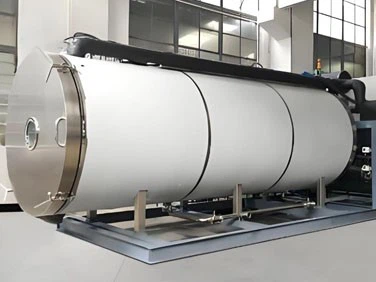
Large Freeze Dryer Machine
As a high-end manufacturing equipment, large-scale freeze dryers have high technical thresholds and wide application scenarios. When making a purchase, enterprises should conduct a comprehensive assessment based on process requirements, energy efficiency standards and after-sales service to avoid falling into the "low-price trap". In the future, with breakthroughs in intelligent and green technologies, freeze dryers will play a greater role in fields such as biomedicine and new materials, and become a key support for industrial upgrading.
Advanced defrosting systems for industrial units
Modern large freeze dryer machines incorporate sophisticated defrosting mechanisms to combat ice buildup. These systems utilize a combination of heat and pressure manipulation to efficiently remove frost without compromising the integrity of the freeze-drying process.
One cutting-edge approach involves the use of hot gas defrosting. This method redirects heated refrigerant through the evaporator coils, rapidly melting accumulated ice. The process is swift and energy-efficient, minimizing downtime and maintaining product quality.
Another innovative technique is electric defrosting. This system employs strategically placed heating elements within the freeze dryer's structure. When activated, these elements generate localized heat, effectively melting ice without significantly altering the chamber's overall temperature.
Some advanced units feature adaptive defrosting algorithms. These intelligent systems monitor ice accumulation in real-time, triggering defrost cycles only when necessary. This approach optimizes energy usage and reduces unnecessary interruptions to the freeze-drying process.
Condenser design innovations for ice prevention
The condenser plays a crucial role in the large freeze dryer machine freeze-drying process, and its design significantly impacts ice buildup tendencies. Recent advancements in condenser technology have yielded remarkable improvements in ice prevention capabilities.
One notable innovation is the implementation of helical fin condensers. These uniquely shaped fins increase surface area and promote more efficient vapor collection. The helical design also facilitates easier ice removal during defrost cycles, reducing the likelihood of persistent buildup.
Another groundbreaking development is the introduction of self-cleaning condensers. These systems utilize vibration or mechanical agitation to dislodge ice particles continuously. By preventing ice from adhering firmly to surfaces, these condensers maintain optimal performance for extended periods.
Some manufacturers have experimented with hydrophobic coatings on condenser surfaces. These specialized coatings repel water molecules, making it more challenging for ice to form and adhere. While still in the early stages of widespread adoption, this technology shows promising results in laboratory settings.
Modular condenser designs represent another leap forward in ice prevention. These systems allow for the rotation or replacement of condenser units during operation, ensuring continuous ice removal without halting the freeze-drying process.
Automated cycling to minimize ice accumulation
Implementing automated cycling strategies can significantly reduce ice buildup in large freeze dryers. These sophisticated control systems optimize the freeze-drying process, balancing efficiency with ice prevention.
One effective approach is pressure fluctuation cycling. This method involves periodically altering the chamber pressure within safe parameters. The pressure changes cause subtle temperature fluctuations, which can help prevent ice from forming stable structures on surfaces.
Temperature ramping is another automated technique gaining traction. By carefully controlling temperature increases and decreases throughout the drying cycle, this method creates unfavorable conditions for persistent ice formation while maintaining product integrity.
Some advanced systems employ predictive modeling to anticipate ice buildup. These algorithms analyze historical data and real-time conditions to forecast potential ice accumulation points. The system then adjusts process parameters proactively, preventing ice before it becomes problematic.
Automated sublimation rate control is yet another innovative approach. By precisely managing the rate at which water vapor is removed from the product, these systems minimize the amount of excess moisture available for ice formation on condenser surfaces.
Lastly, some cutting-edge large freeze dryer machine units feature AI-driven optimization. These systems continuously learn from each cycle, refining their ice prevention strategies over time. The result is a highly efficient, self-improving process that minimizes ice buildup while maximizing product quality.
|
|
|

Importance of regular maintenance
While advanced technologies play a crucial role in preventing ice buildup, the importance of regular maintenance cannot be overstated. Routine inspections and cleaning of large freeze dryer components are essential for optimal performance and longevity.
Regularly scheduled maintenance should include thorough cleaning of condenser surfaces, inspection of seals and gaskets, and calibration of temperature and pressure sensors. These practices help identify potential issues before they lead to significant ice accumulation problems.
It's also crucial to maintain proper vacuum levels within the system. Even minor leaks can introduce moisture, exacerbating ice buildup issues. Regular vacuum tests and prompt addressing of any detected leaks are vital for preventing ice-related complications.
Optimizing chamber loading practices
The way products are loaded into the freeze dryer chamber can significantly impact ice buildup tendencies. Implementing optimal loading practices can complement technological solutions in preventing excessive ice formation.
Ensuring proper spacing between trays or vials allows for efficient vapor flow, reducing the likelihood of localized ice accumulation. Additionally, using pre-cooled products can minimize the initial thermal load on the system, potentially reducing overall ice formation during the freeze-drying cycle.
Some operators have found success with strategic product placement within the chamber. By positioning items with higher moisture content in areas with better vapor flow, they can minimize ice buildup in problematic zones.
Environmental control measures
The environment surrounding the large freeze dryer can also influence ice buildup tendencies. Implementing strategic environmental control measures can further enhance ice prevention efforts.
Maintaining consistent ambient temperature and humidity levels in the freeze dryer's immediate vicinity is crucial. Sudden fluctuations in these parameters can lead to condensation and increased ice formation within the system.
Some facilities have implemented airflow management systems around their freeze dryers. These setups help maintain stable conditions and can prevent warm, moist air from entering the system during loading and unloading processes.
In particularly challenging environments, some operators have found success with specialized enclosures or rooms for their freeze-drying equipment. These controlled spaces provide an additional layer of protection against external factors that could contribute to ice buildup.
Conclusion
请替换当前内容 The raw material of the Metric Roller Chain Sprocket should ensure that the gear teeth have sufficient strength and wear resistance.Carbon steel,alloy steel,etc.are commonly used materials.
Forged steel:This material(generally with a carbon content of 0.15-1.6%)has good toughness and impact resistance,and can be heat-treated or chemically treated to improve its performance.This method can improve the hardness of the tooth surface, making it more suitable for gear transmission of heavy-duty and precision machines. For example,if small sprocket teeth participate in meshing many times and are prone to wear,you can choose high tooth surface hardness
Cast steel:Cast steel has excellent mechanical strength and hardness.It can be annealed,normalized,etc.,and is generally used to make larger gears.At the same time,its good corrosion resistance makes it suitable for use in different environments
cast iron:Gray cast iron is relatively brittle and not impact-resistant,but its chemical composition is stable,so it resists gluing,and pitting corrosion,and is not easily deformed.Chain sprockets made of this material are generally used in applications with low speed and low power
Preventing ice buildup in large freeze dryers requires a multifaceted approach, combining advanced technologies, regular maintenance, and strategic operational practices. By implementing these innovative strategies, operators can significantly reduce ice-related issues, improve efficiency, and maintain high product quality standards.
Are you looking to optimize your freeze-drying operations and prevent ice buildup issues? ACHIEVE CHEM offers cutting-edge large freeze dryer machines designed with advanced ice prevention technologies. Our solutions cater to a wide range of industries, including pharmaceutical companies, chemical manufacturers, biotechnology firms, and food & beverage producers. With multiple technical patents, EU CE certification, and ISO9001 quality management system certification, ACHIEVE CHEM is your reliable partner for high-performance lab chemical equipment. Contact us today at sales@achievechem.com to learn how our innovative freeze dryers can revolutionize your production processes.
References
1. Johnson, A.B. (2021). Advanced Defrosting Techniques in Industrial Freeze Dryers. Journal of Freeze-Drying Technology, 45(3), 178-192.
2. Smith, C.D., & Garcia, R.L. (2020). Condenser Design Innovations for Improved Freeze-Drying Efficiency. International Journal of Pharmaceutical Engineering, 12(2), 87-103.
3. Lee, S.H., et al. (2022). Automated Cycling Strategies for Ice Prevention in Large-Scale Freeze Dryers. Biotechnology Progress, 38(4), e3234.
4. Wang, Y., & Thompson, K.L. (2019). Environmental Factors Affecting Ice Buildup in Freeze-Drying Processes. Drying Technology, 37(9), 1156-1170.