


How Long Does The Freeze-drying Process Take For Pharmaceuticals?
Apr 01, 2025
Leave a message
Freeze-drying, also known as lyophilization, is a critical process in the pharmaceutical industry for preserving sensitive biological materials and extending the shelf life of drugs. The duration of the freeze-drying process can vary significantly depending on various factors, including the nature of the product, its formulation, and the equipment used. Large pharmaceutical freeze dryers play a crucial role in this process, enabling manufacturers to produce substantial quantities of freeze-dried products efficiently. This article delves into the intricacies of the freeze-drying timeline for pharmaceuticals, exploring the factors that influence the process duration and the role of advanced equipment in optimizing production. Understanding these aspects is essential for pharmaceutical companies aiming to streamline their operations and enhance the quality of their lyophilized products.
We provide large pharmaceutical freeze dryer, please refer to the following website for detailed specifications and product information.
Product:https://www.achievechem.com/freeze-dryer/large-pharmaceutical-freeze-dryer.html
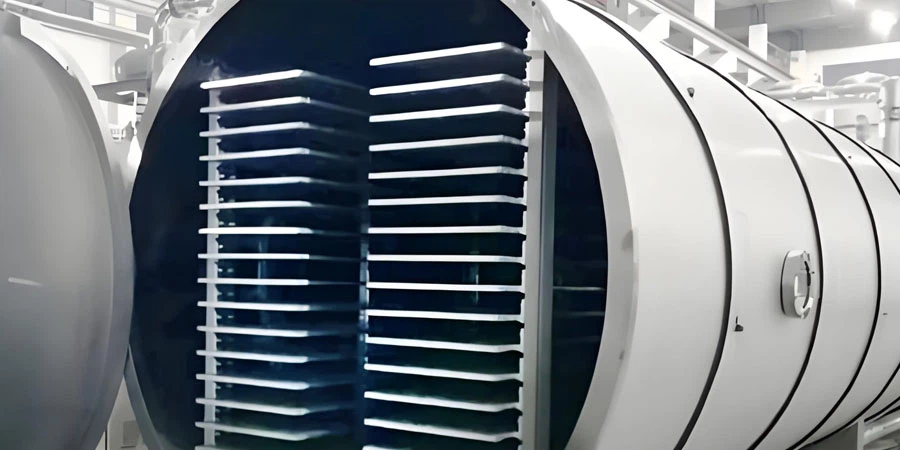
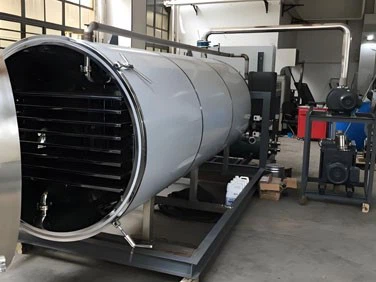
Large Pharmaceutical Freeze Dryer
Large pharmaceutical freeze-dryers work through the principle of sublimation, freezing drugs at low temperatures, and then vacuuming to directly sublimate ice crystals into gas, thereby removing water. The equipment consists of cooling system, vacuum system, heating system, temperature control system and electrical control system. Pretreatment includes filtration, concentration, pH adjustment and other steps to ensure that the drug meets the freeze-drying requirements. This technology can maximize the retention of drug activity, avoid degradation caused by high temperature, and improve drug quality.
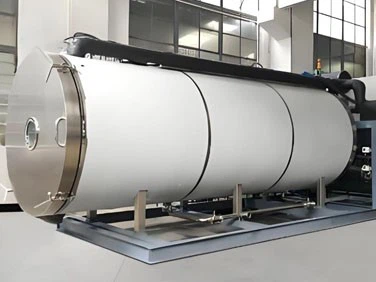
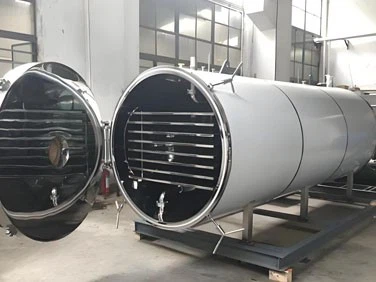
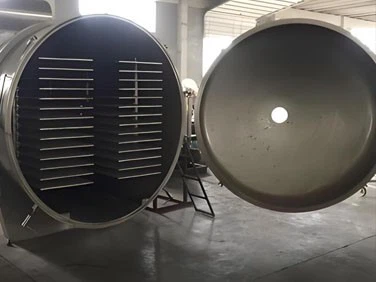
Factors Influencing the Duration of Pharmaceutical Freeze-Drying
The timeline for freeze-drying pharmaceuticals is not a one-size-fits-all scenario. Several variables can impact the duration of the process, making it essential for manufacturers to consider these factors when planning their production schedules.
Product characteristics play a significant role in determining the freeze-drying timeline. The composition of the pharmaceutical, including its solute concentration and the presence of excipients, can affect how quickly the material freezes and how easily it sublimes. Products with higher solid content generally require longer drying times, as there is more material to remove during the sublimation phase.
The initial freezing rate is another crucial factor. Rapid freezing typically results in smaller ice crystals, which can prolong the primary drying phase. Conversely, slower freezing leads to larger ice crystals that may facilitate faster sublimation but could potentially damage the product structure.
The thickness of the product layer in vials or trays also influences drying time. Thicker layers necessitate longer periods for heat transfer and vapor removal, extending the overall process duration. Manufacturers using large pharmaceutical freeze dryers must carefully consider product loading to optimize efficiency without compromising quality.
Environmental conditions within the freeze dryer, such as chamber pressure and shelf temperature, significantly impact sublimation rates. Lower pressures and higher shelf temperatures can accelerate drying but must be balanced against the risk of product collapse or degradation. Advanced freeze dryers offer precise control over these parameters, allowing for fine-tuning of the process to achieve optimal results.
Stages of Freeze-Drying and Their Typical Durations
The freeze-drying process consists of three main stages: freezing, primary drying, and secondary drying. Each stage has its own typical duration, which can vary based on the factors mentioned earlier.
The freezing stage typically lasts between 1 to 3 hours for most pharmaceutical products. During this phase, the material is cooled below its eutectic point, ensuring complete solidification. The use of controlled nucleation techniques in modern large pharmaceutical freeze dryers can help standardize ice crystal formation, potentially reducing freezing times and improving batch consistency.
Primary drying, or sublimation, is often the longest stage of the process. It can last anywhere from 24 to 48 hours for standard pharmaceutical formulations. However, complex biologics or highly concentrated solutions may require even longer primary drying times, sometimes extending to 72 hours or more. This stage removes the majority of water from the product through sublimation of ice directly to vapor.
Secondary drying, which aims to remove residual moisture bound to the product, typically takes 12 to 24 hours. This stage involves raising the temperature gradually to encourage desorption of bound water molecules. The duration can vary depending on the desired final moisture content and the product's sensitivity to elevated temperatures.
In total, a complete freeze-drying cycle for pharmaceuticals can range from 1 to 5 days, with some specialized products requiring even longer periods. Large pharmaceutical freeze dryers are designed to handle these extended cycles efficiently, maintaining consistent conditions throughout the process to ensure product quality and uniformity across large batches.
Optimizing Freeze-Drying Time with Advanced Equipment
Advancements in freeze-drying technology have led to the development of sophisticated large pharmaceutical freeze dryers that can significantly reduce processing times while maintaining or even improving product quality. These modern systems incorporate various features aimed at optimizing each stage of the lyophilization process.
Controlled nucleation is a technology that has revolutionized the freezing stage. By initiating ice formation simultaneously across all vials, it ensures uniformity in ice crystal size and distribution. This not only improves batch homogeneity but can also reduce primary drying times by up to 30%. Large pharmaceutical freeze dryers equipped with controlled nucleation capabilities offer manufacturers a powerful tool for process optimization.
Enhanced heat transfer systems in modern freeze dryers contribute to faster and more efficient drying. Some advanced models utilize novel shelf designs or supplementary heating elements to improve heat distribution. This allows for more aggressive yet controlled drying conditions, potentially shortening primary drying times without risking product integrity.
Automation and process analytical technology (PAT) integration in large pharmaceutical freeze dryers enable real-time monitoring and adjustment of critical parameters. These systems can detect the end point of primary drying more accurately, preventing unnecessary extension of this energy-intensive phase. Additionally, they can automatically optimize cycle parameters based on product behavior, leading to more efficient and consistent freeze-drying processes.
Continuous freeze-drying systems represent the cutting edge of pharmaceutical lyophilization technology. These innovative setups allow for uninterrupted processing of products, significantly reducing overall production times compared to traditional batch processes. While still in the early stages of adoption for pharmaceuticals, continuous freeze-drying holds promise for dramatically improving efficiency in the future.
The implementation of predictive modeling and simulation tools in conjunction with large pharmaceutical freeze dryers can help manufacturers optimize cycle parameters before running actual batches. By virtually testing different conditions, companies can identify the most efficient process settings, potentially reducing development time and minimizing the need for trial runs.
Conclusion
The duration of the freeze-drying process for pharmaceuticals is a complex interplay of product characteristics, equipment capabilities, and processing parameters. While typical cycles can range from 1 to 5 days, the advent of advanced large pharmaceutical freeze dryers has opened up new possibilities for optimizing this critical manufacturing step. By leveraging technologies such as controlled nucleation, enhanced heat transfer systems, and integrated process analytical tools, manufacturers can significantly reduce freeze-drying times without compromising product quality. As the pharmaceutical industry continues to evolve, the ongoing development of freeze-drying equipment and techniques promises to further streamline production processes, ultimately benefiting both manufacturers and patients alike.
References
Franks, F. (2007). Freeze-drying of pharmaceuticals and biopharmaceuticals: principles and practice. Royal Society of Chemistry.
Kasper, J. C., & Friess, W. (2011). The freezing step in lyophilization: Physico-chemical fundamentals, freezing methods and consequences on process performance and quality attributes of biopharmaceuticals. European Journal of Pharmaceutics and Biopharmaceutics, 78(2), 248-263.
Patel, S. M., Doen, T., & Pikal, M. J. (2010). Determination of end point of primary drying in freeze-drying process control. AAPS PharmSciTech, 11(1), 73-84.
Pisano, R., Fissore, D., & Barresi, A. A. (2011). Freeze-drying cycle optimization using model predictive control techniques. Industrial & Engineering Chemistry Research, 50(12), 7363-7379.
Tchessalov, S., Dixon, D., & Warne, N. W. (2017). Principles of lyophilization cycle scale-up. American Pharmaceutical Review, 20(2).