


How Does The Agitator Work in A High Pressure Laboratory Reactor?
Jan 20, 2025
Leave a message
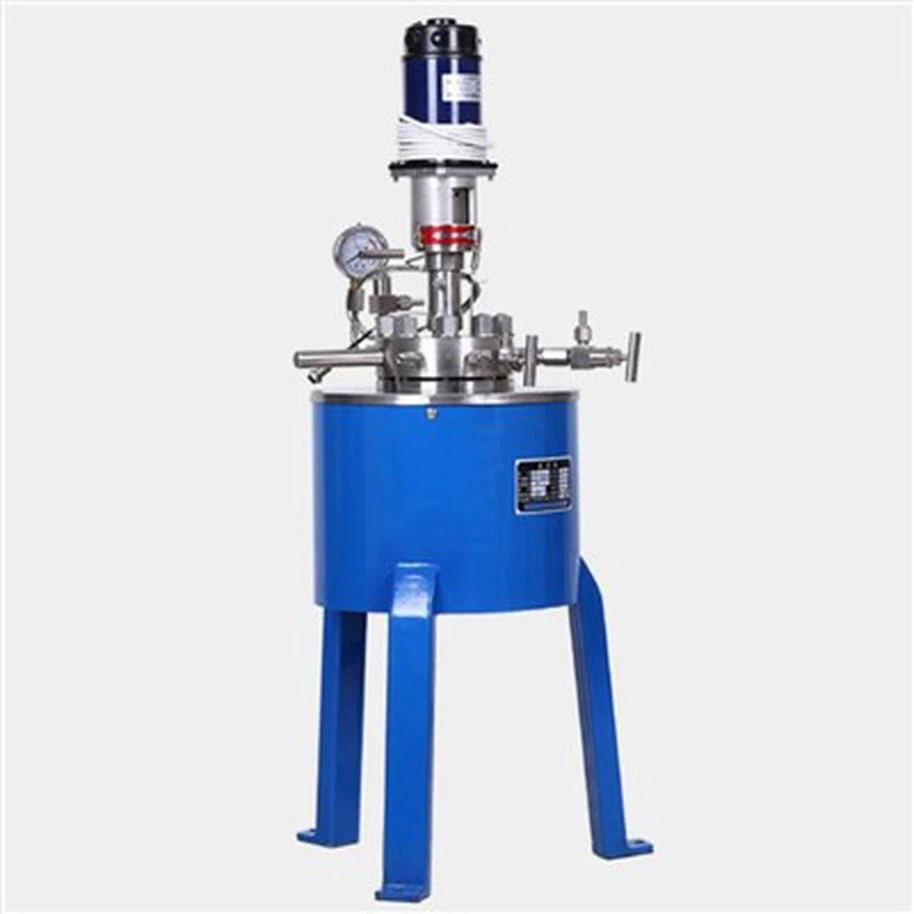
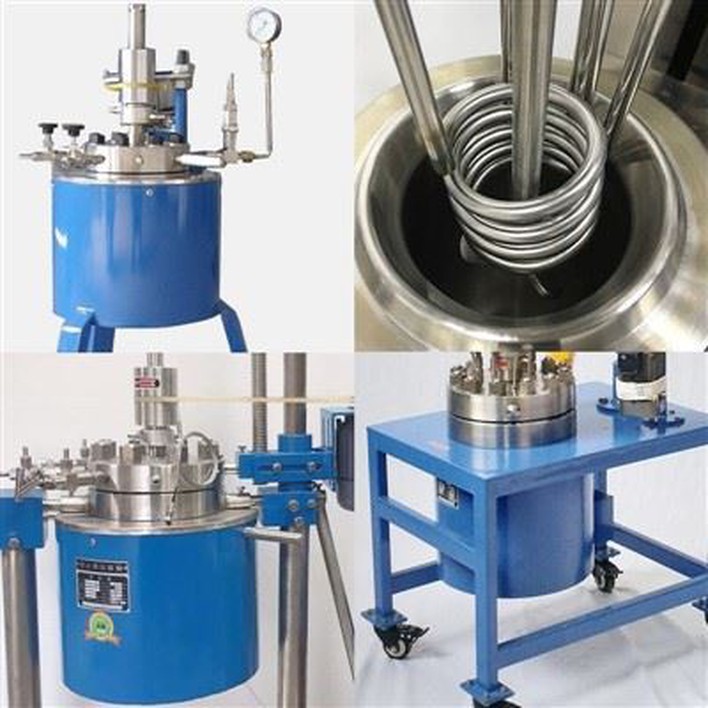
In a high pressure laboratory reactor, the agitator ensures efficient mixing and heat transfer by creating turbulent flow, promoting uniform distribution of reactants and catalysts. Typically consisting of a rotating shaft with impellers or blades, the agitator is designed to withstand high pressures and temperatures while maintaining optimal performance. It enhances mass transfer, accelerates reaction rates, and improves process efficiency through vortices and shear forces. Precise control over agitation speed and patterns allows researchers to fine-tune reaction conditions, ensuring reproducible results and scalability in chemical synthesis and process development.
Top Benefits of Using Agitators in Laboratory Reactors
|
|
● Enhanced Reaction Kinetics and YieldAgitators in laboratory reactors play a crucial role in enhancing reaction kinetics by promoting intimate contact between reactants, which accelerates the reaction rate and often leads to higher product yields. The turbulent flow generated by the agitator helps break down concentration gradients, ensuring that reactants are uniformly distributed throughout the reaction medium. This uniform distribution is particularly advantageous in multiphase reactions, where efficient mass transfer between solid, liquid, and gas phases is essential for achieving optimal performance. By maintaining consistent homogeneity within the high pressure laboratory reactor, agitators minimize the formation of local concentration hotspots, which can otherwise lead to unwanted side reactions. This improves the overall selectivity of the desired products, making the process more efficient and yielding higher-quality outcomes in both single-phase and complex multiphase systems. |
● Improved Heat Transfer and Temperature ControlOne of the significant benefits of using agitators in laboratory reactors is their ability to significantly enhance heat transfer efficiency. The agitation creates a continuous movement of the fluid, which facilitates better convective heat transfer between the reaction mixture and the reactor walls or any surrounding heating or cooling jackets. This enhanced heat transfer ensures more precise temperature control, which is crucial for reactions that are sensitive to temperature fluctuations or those that require very specific thermal profiles for optimal performance. By improving the thermal management of the system, agitators allow for faster heating and cooling of the reaction mixture, offering better control over the reaction's thermal environment. This level of control not only helps to fine-tune reaction rates but can also shorten process times, improving overall efficiency. As a result, reactions can be completed more quickly, which can potentially reduce energy consumption by minimizing the time needed to reach the desired temperature, thus improving the overall cost-effectiveness of the process. |
|
Common Agitator Types in High Pressure Reactors
● Magnetic Drive Agitators
Magnetic drive agitators are highly favored in high pressure laboratory reactors due to their exceptional sealing capabilities and reliable performance. These agitators use a magnetic coupling system to transmit torque from an external motor to the internal impeller, eliminating the need for a mechanical shaft penetration through the reactor wall. This unique design greatly reduces the risk of leaks, which is crucial in high-pressure applications or when handling volatile or hazardous chemicals. The absence of a direct shaft seal ensures minimal risk of failure, making magnetic drive agitators particularly well-suited for demanding conditions. Additionally, their design leads to reduced maintenance requirements since there are no dynamic seals that can wear out under pressure, resulting in enhanced reliability, longevity, and lower operational costs over time.
● Gas-Inducing Impellers
Gas-inducing impellers are specialized agitator designs used in high-pressure reactors, particularly for gas-liquid reactions or processes that require efficient gas dispersion. These impellers are engineered with hollow shafts and blades featuring carefully designed openings, allowing gases to be drawn from the reactor's headspace and effectively dispersed into the liquid phase. The high-speed rotation of the impeller generates a low-pressure zone, which enhances gas induction and ensures uniform dispersion throughout the liquid. This promotes optimal gas-liquid mass transfer, improving the efficiency of the reaction. Gas-inducing impellers are particularly beneficial in processes like hydrogenation, oxidation, and fermentation, where maximizing the gas-liquid contact area is crucial for accelerating reaction rates and achieving high yields. Their design helps ensure consistent, efficient performance in high-pressure, gas-intensive applications.
How to Maintain Agitator Efficiency in Lab Reactors
● Regular Inspection and Cleaning
Maintaining agitator efficiency in high pressure laboratory reactor requires a proactive approach to equipment care. Regular inspection of the agitator components, including the shaft, impellers, and seals, is essential to identify signs of wear, corrosion, or damage. Any issues should be addressed promptly to prevent performance degradation or potential failures. Cleaning the agitator after each use is crucial, especially when working with corrosive or fouling-prone materials. Proper cleaning helps prevent buildup on the impeller surfaces, which can affect mixing efficiency and potentially contaminate future reactions. For magnetic drive agitators, ensure that the magnetic coupling is free from debris and that the magnets are in good condition to maintain optimal torque transmission.
● Optimizing Agitation Parameters
To maintain and improve agitator efficiency, it's essential to regularly assess and optimize agitation parameters. This process involves adjusting factors such as the impeller speed, positioning, and geometry to meet the specific needs of each reaction or process. Key performance indicators like mixing time, power consumption, and reaction yield should be closely monitored to evaluate the effectiveness of the current agitation setup. In high-pressure laboratory reactors, special attention must be given to the agitator's ability to handle the increased viscosity and density of fluids under pressure. Ensuring that the agitator speed and power are adequate to overcome these challenges is crucial. Advanced tools such as computational fluid dynamics (CFD) simulations and experimental techniques like particle image velocimetry (PIV) can be used to optimize agitation parameters. These methods help refine the system for optimal mixing and performance across a range of operating conditions, ensuring both efficiency and consistency in the reactor's output.

We provide high pressure laboratory reactor, please refer to the following website for detailed specifications and product information.
Product: https://www.achievechem.com/chemical-equipment/high-pressure-reactor.html
Conclusion
Understanding and optimizing the agitator's role in a high pressure laboratory reactor is crucial for achieving efficient and reproducible chemical processes. From enhancing reaction kinetics to improving heat transfer, the benefits of proper agitation are numerous and impactful. By selecting the appropriate agitator type and maintaining its efficiency through regular care and optimization, researchers and industry professionals can significantly improve the performance and reliability of their high-pressure reactions.
For more information on high-quality laboratory reactors and agitation systems, please contact us at sales@achievechem.com.