


How Does Temperature Affect The Reaction in An SS 304 Reactor?
Dec 10, 2024
Leave a message
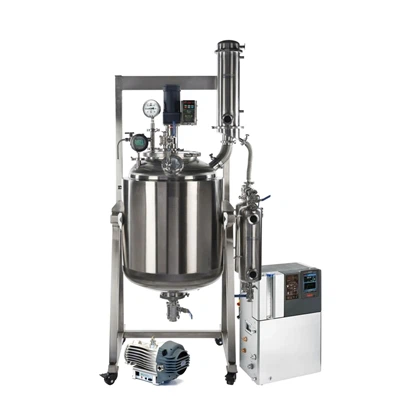
Temperature plays a crucial role in chemical reactions occurring within an SS 304 reactor. The stainless steel 304 (SS 304) reactor is a versatile and widely used piece of equipment in various industries, including pharmaceutical, chemical manufacturing, and biotechnology. Understanding the impact of temperature on reactions in an SS 304 reactor is essential for optimizing processes and ensuring efficient outcomes. Temperature affects reaction rates, equilibrium constants, and the overall yield of chemical processes. In an SS 304 reactor, increasing temperature generally accelerates reaction rates by providing more kinetic energy to reactant molecules, enabling them to overcome activation energy barriers more readily.
However, the specific effects can vary depending on the nature of the reaction, the reactants involved, and the desired products. It's important to note that while higher temperatures can speed up reactions, they may also influence selectivity and potentially lead to unwanted side reactions. Additionally, the temperature range must be carefully controlled to maintain the integrity of the SS 304 reactor material, as extreme temperatures can affect its mechanical and chemical properties. Balancing these factors is key to achieving optimal reaction conditions and maximizing the efficiency of processes conducted in an SS 304 reactor.
How does increasing temperature influence the reaction rate in an SS 304 reactor?
● Accelerated Molecular CollisionsIncreasing temperature in an SS 304 reactor significantly impacts the reaction rate by enhancing molecular motion and collisions. As temperature rises, molecules gain more kinetic energy, moving faster and colliding more frequently. This increased collision frequency directly translates to a higher probability of successful reactions occurring. In the controlled environment of an SS 304 reactor, this phenomenon is particularly pronounced due to the reactor's excellent heat distribution properties. The Arrhenius equation, a fundamental principle in chemical kinetics, quantifies this relationship between temperature and reaction rate. It demonstrates that the reaction rate constant (k) increases exponentially with temperature (T), following the equation: k = A * e^(-Ea/RT), where A is the pre-exponential factor, Ea is the activation energy, and R is the gas constant. This exponential relationship means that even small temperature increases can lead to substantial rate enhancements in an SS 304 reactor. |
|
|
|
● Overcoming Activation Energy BarriersTemperature elevation in an SS 304 reactor also helps reactant molecules overcome activation energy barriers more easily. The activation energy is the minimum energy required for a chemical reaction to occur. By increasing the temperature, a larger proportion of molecules attain the necessary energy to surpass this threshold. This effect is particularly beneficial for endothermic reactions or those with high activation energies, which might proceed slowly or not at all at lower temperatures. In an SS 304 reactor, the precise temperature control allows for fine-tuning of this effect. Operators can adjust the temperature to provide just enough energy for the desired reaction while minimizing unwanted side reactions. This level of control is crucial in industries like pharmaceuticals, where product purity and yield are paramount. The SS 304 reactor's excellent heat transfer characteristics contribute to maintaining uniform temperatures throughout the reaction mixture, ensuring consistent kinetics across the entire batch. |

What is the optimal temperature range for reactions in an SS 304 reactor?
● Balancing Reaction Kinetics and Thermodynamics
Determining the optimal temperature range for reactions in an SS 304 reactor involves a delicate balance between kinetics and thermodynamics. While higher temperatures generally accelerate reaction rates, they can also shift equilibrium positions and affect product selectivity. The ideal temperature range depends on the specific reaction type, desired products, and process goals. For many organic synthesis reactions, temperatures between 50°C and 150°C are common in SS 304 reactors. However, some processes may require lower temperatures for selective product formation or higher temperatures for breaking strong chemical bonds.
It's crucial to consider the reaction's thermodynamics when setting the temperature in an SS 304 reactor. For exothermic reactions, moderately elevated temperatures may be sufficient to initiate and sustain the process. Conversely, endothermic reactions might require higher temperatures to overcome unfavorable energy barriers. The Le Chatelier's principle also comes into play, as temperature changes can shift the equilibrium of reversible reactions. In an SS 304 reactor, precise temperature control allows for manipulation of these equilibria to maximize yield and selectivity.
● Material Considerations and Safety Limits
The optimal temperature range in an SS 304 reactor is not solely determined by reaction requirements but also by the material properties of the reactor itself. SS 304 is known for its excellent corrosion resistance and mechanical strength over a wide temperature range. Typically, SS 304 reactors can safely operate between -50°C and 300°C for most applications. However, prolonged exposure to temperatures near the upper limit may affect the material's long-term durability and corrosion resistance.
Safety considerations also play a crucial role in defining the optimal temperature range. Reactions that generate gaseous products or involve volatile compounds may require lower operating temperatures to maintain safe pressure levels within the SS 304 reactor. Additionally, the autoignition temperatures of reactants and products must be taken into account to prevent unintended combustion. The thermal expansion of SS 304 at higher temperatures should also be considered in reactor design and operation to ensure proper sealing and prevent leaks. By carefully balancing these factors, operators can determine a safe and effective temperature range that optimizes reaction outcomes while preserving the integrity of the SS 304 reactor.
What are the effects of high temperature on the material properties of SS 304 reactors?
● Microstructural Changes and Mechanical Properties
High temperatures can induce significant microstructural changes in SS 304 reactors, affecting their mechanical properties. As temperatures increase, particularly above 500°C, the austenitic structure of SS 304 may begin to transform. This transformation can lead to the formation of carbides at grain boundaries, a process known as sensitization. Sensitization can reduce the material's corrosion resistance and potentially lead to intergranular corrosion. Additionally, prolonged exposure to high temperatures can cause grain growth, which may decrease the material's strength and toughness.
The yield strength and tensile strength of SS 304 generally decrease with increasing temperature. While SS 304 maintains good mechanical properties up to about 500°C, significant reductions in strength can occur at higher temperatures. This temperature-dependent behavior is crucial to consider when designing and operating SS 304 reactors for high-temperature applications. The creep resistance of SS 304 also becomes a critical factor at elevated temperatures, as the material may experience time-dependent deformation under constant stress. Engineers must account for these changes when determining the safe operating limits and expected lifespan of SS 304 reactors in high-temperature environments.
● Corrosion Resistance and Surface Alterations
High temperatures can significantly impact the corrosion resistance of SS 304 reactors. While SS 304 is renowned for its excellent corrosion resistance under normal conditions, elevated temperatures can accelerate corrosion processes and alter the protective oxide layer on the material's surface. At temperatures above 800°C, the chromium in SS 304 can form chromium carbides, depleting the chromium content in areas near grain boundaries. This chromium depletion can lead to a phenomenon called sensitization, making the material more susceptible to intergranular corrosion.
Surface alterations due to high temperature exposure can also affect the performance of SS 304 reactors. Thermal cycling, especially in the presence of reactive chemicals, can lead to the formation of scale or oxide layers on the reactor's inner surface. These layers may impact heat transfer efficiency and potentially contaminate the reaction medium. In extreme cases, high-temperature oxidation can cause pitting or localized corrosion, compromising the reactor's integrity. To mitigate these effects, proper material selection, surface treatments, and regular maintenance are essential for SS 304 reactors operating at elevated temperatures. In some high-temperature applications, alternative materials or protective coatings may be necessary to ensure long-term reliability and performance.

We provide SS 304 reactor, please refer to the following website for detailed specifications and product information.
Product: https://www.achievechem.com/chemical-equipment/stainless-steel-reactor.html
Conclusion
Understanding the intricate relationship between temperature and reactions in an SS 304 reactor is crucial for optimizing chemical processes across various industries. Temperature not only affects reaction rates and equilibria but also impacts the material properties of the reactor itself. By carefully considering these factors, engineers and operators can harness the full potential of SS 304 reactors while ensuring safety and longevity. As technology advances, the development of more sophisticated temperature control systems and material improvements will further enhance the capabilities of SS 304 reactors, opening up new possibilities for efficient and sustainable chemical processing.
For more information on SS 304 reactors and their applications, please contact us at sales@achievechem.com.