


How Does A Rotary Freeze Dryer Enhance The Drying Process Compared To Static Models?
Apr 17, 2025
Leave a message
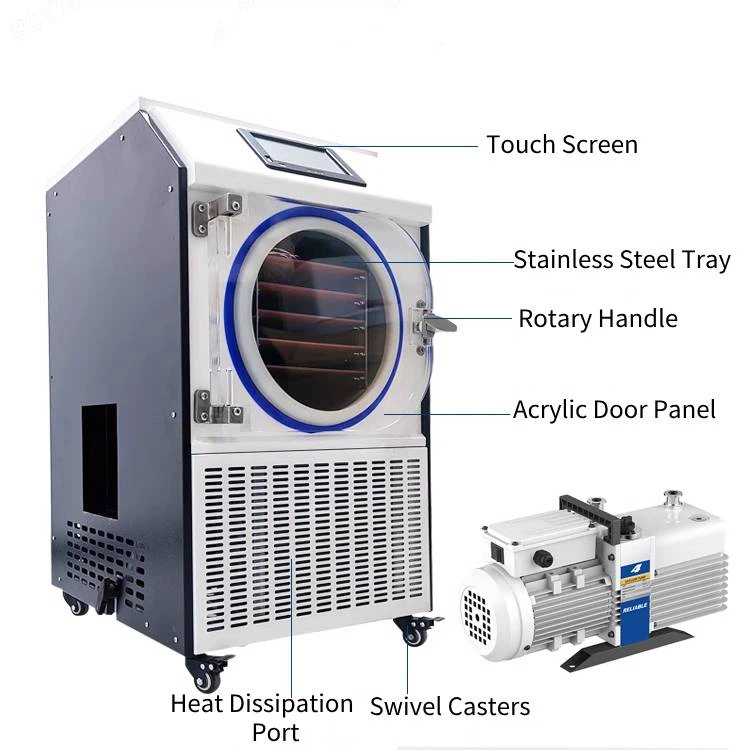
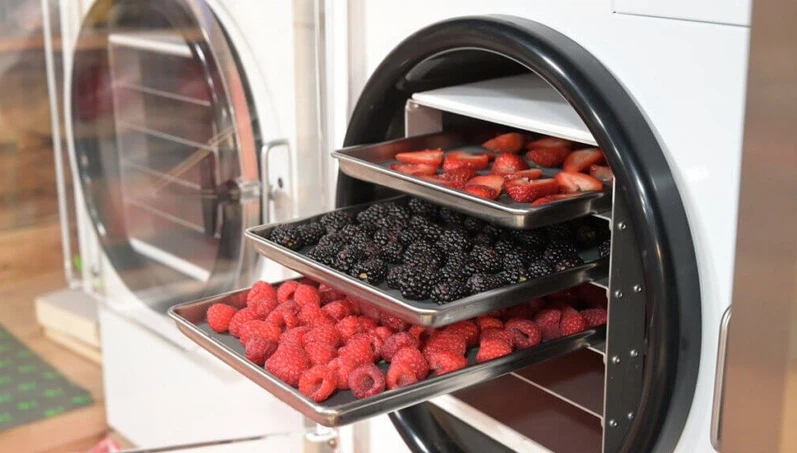
Freeze-drying, also known as lyophilization, is a crucial process in various industries, including pharmaceuticals, food production, and biotechnology. As technology advances, innovative equipment like the rotary freeze dryer has emerged to enhance the efficiency and effectiveness of this critical drying method. In this comprehensive guide, we'll explore how rotary freeze dryers elevate the drying process compared to their static counterparts, delving into their unique features and benefits.
Faster drying times with rotational sublimation
|
One of the most significant advantages of a rotary freeze dryer is its ability to expedite the drying process through rotational sublimation. Unlike static models, where the material remains stationary throughout the drying cycle, rotary systems introduce continuous motion, dramatically improving heat and mass transfer rates. The rotational movement in a rotary freeze dryer creates a dynamic environment where the frozen material is constantly exposed to new surfaces. This perpetual repositioning allows for more uniform heat distribution and facilitates rapid sublimation of ice crystals. As a result, the drying time can be reduced by up to 30-50% compared to static freeze dryers, depending on the specific material and operating conditions. Moreover, the enhanced heat transfer in rotary systems allows for more precise temperature control. This is particularly crucial for temperature-sensitive materials, such as biologics or certain food products, where even slight temperature fluctuations can impact the final product quality. The improved temperature management in rotary freeze dryers ensures that the material remains within the optimal drying range throughout the process, further contributing to faster drying times without compromising product integrity. |
|
|
|
The accelerated drying process offered by rotary freeze dryers also translates to increased productivity and energy efficiency. With shorter cycle times, manufacturers can process larger volumes of material in the same timeframe, potentially reducing operational costs and improving overall output. This efficiency boost makes rotary freeze dryers an attractive option for industries seeking to optimize their production processes and meet growing demand. |
Preventing sample clumping through continuous motion
Another significant advantage of rotary freeze dryers over static models is their ability to prevent sample clumping during the drying process. In static freeze dryers, materials, especially those with high moisture content or sticky consistency, can form agglomerates or clumps as they dry. These clumps not only hinder uniform drying but can also affect the quality and consistency of the final product.
The continuous rotational motion in a rotary freeze dryer effectively mitigates this issue. As the drum or chamber rotates, it gently agitates the material, breaking up any potential clumps and ensuring that each particle is exposed to the drying conditions. This constant movement prevents the formation of aggregates and promotes even drying throughout the batch.
The prevention of clumping is particularly beneficial for materials that are prone to caking or those that require a specific particle size distribution in the final product. Industries such as pharmaceuticals, where powder flowability and uniformity are critical, can greatly benefit from this feature of rotary freeze dryers.
Furthermore, the continuous motion in rotary systems can help maintain the original structure of delicate materials. For instance, in the freeze-drying of probiotics or certain enzymes, preserving the cellular structure is crucial for maintaining viability and activity. The gentle agitation provided by rotary freeze dryers can help protect these sensitive structures while ensuring thorough drying.
By preventing clumping and promoting uniform drying, rotary freeze dryers contribute to improved product quality and consistency. This can lead to reduced post-processing requirements, such as milling or sieving, further streamlining the production process and potentially reducing costs associated with additional processing steps.
Comparison of end-product porosity: Rotary vs. static drying
The porosity of freeze-dried products is a critical quality attribute that can significantly impact rehydration properties, texture, and overall product performance. When comparing rotary freeze dryers to static models, one notable difference lies in the end-product porosity and structure.
In static freeze dryers, the material remains in a fixed position throughout the drying process. This can sometimes lead to the formation of a dense "skin" on the surface of the product, especially in materials with high solids content. This skin can impede the escape of water vapor from the interior of the product, potentially resulting in non-uniform drying and varying degrees of porosity throughout the sample.
Rotary freeze dryers, on the other hand, offer a more dynamic drying environment that can lead to improved porosity in the final product. The continuous movement of the material during the drying process helps prevent the formation of a dense surface layer. Instead, it promotes the development of a more open, porous structure throughout the entire product.
This enhanced porosity in products dried using rotary freeze dryers can have several benefits:
Improved rehydration: The more open structure allows for faster and more complete rehydration, which is particularly important for instant food products or rapidly dissolving pharmaceuticals.
Enhanced texture: In food applications, the improved porosity can contribute to a lighter, more desirable texture in products such as freeze-dried fruits or vegetables.
Increased surface area: The higher porosity translates to a larger surface area, which can be advantageous in applications where surface-dependent properties are important, such as in catalyst materials or adsorbents.
Better uniformity: The continuous motion ensures that all parts of the material experience similar drying conditions, leading to more uniform porosity throughout the batch.
It's worth noting that while rotary freeze dryers generally produce products with higher porosity, the specific outcomes can vary depending on the material properties and process parameters. Some materials may benefit more from the enhanced porosity offered by rotary systems, while others may perform adequately in static dryers.
The ability to control and optimize porosity in freeze-dried products is a significant advantage in many applications. For instance, in the pharmaceutical industry, porosity can affect drug release rates and bioavailability. In the food industry, it can influence reconstitution times and sensory properties. By offering greater control over end-product porosity, rotary freeze dryers provide manufacturers with a powerful tool to tailor their products to specific performance requirements.

We provide freeze dryer, please refer to the following website for detailed specifications and product information.
Product: https://www.achievechem.com/freeze-dryer/pilot-freeze-dryer.html
Conclusion
Rotary freeze dryers represent a significant advancement in freeze-drying technology, offering numerous benefits over traditional static models. From faster drying times and prevention of sample clumping to enhanced end-product porosity, these innovative systems provide solutions to many of the challenges faced in freeze-drying processes across various industries.
The advantages of rotary freeze dryers make them particularly well-suited for applications where product quality, consistency, and efficiency are paramount. Industries such as pharmaceuticals, biotechnology, and food production can leverage these benefits to improve their processes and deliver superior products to market.
As technology continues to evolve, we can expect further refinements and innovations in rotary freeze-drying systems, potentially opening up new possibilities for product development and process optimization.
Are you looking to enhance your freeze-drying capabilities and take advantage of the benefits offered by rotary freeze dryers? ACHIEVE CHEM is your trusted partner in laboratory and industrial equipment. With our extensive experience serving pharmaceutical companies, chemical manufacturers, biotechnology firms, and food industry leaders, we understand the unique challenges you face and can provide tailored solutions to meet your specific needs.
Our rotary freeze dryers are designed with cutting-edge technology and adhere to the highest quality standards, backed by our EU CE certification and ISO9001 quality management system certification. Whether you're in pharmaceuticals, food production, or environmental research, our team of experts is ready to help you optimize your freeze-drying processes.
Don't let outdated equipment hold back your potential. Upgrade to a rotary freeze dryer from ACHIEVE CHEM and experience the difference in drying efficiency, product quality, and overall productivity. Contact us today at sales@achievechem.com to learn more about how our rotary freeze dryers can revolutionize your drying processes and give you a competitive edge in your industry.