


How Does A Double Glass Reactor Improve Chemical Synthesis?
Jun 26, 2024
Leave a message
Understanding Double Glass Reactors
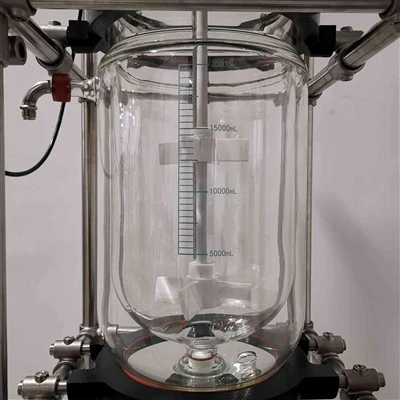
Double glass reactors, also known as jacketed glass reactors, are versatile and essential pieces of equipment designed to facilitate controlled chemical reactions in laboratory environments. These reactors are constructed with two layers of borosilicate glass, with an insulating layer in between, which allows for efficient and precise temperature control during chemical processes. This innovative design ensures the safety of researchers by effectively containing potentially hazardous reactions, thereby minimizing the risk of exposure to harmful chemicals.
The dual-layer structure enables the circulation of heating or cooling fluids within the jacket, maintaining the desired reaction temperature accurately. This precise temperature management is crucial for conducting various chemical reactions that require specific thermal conditions to achieve optimal results. Furthermore, double glass reactors provide the ability to adjust other critical reaction parameters such as pressure and agitation speed, offering researchers greater control over the experimental conditions. This adaptability makes double glass reactors indispensable tools for a wide range of applications, including chemical synthesis, polymerization, and material science, enhancing the overall efficiency and safety of laboratory operations.
Advantages of Double Glass Reactors
1. Enhanced Thermal Control
One of the primary advantages of using a double glass reactor is its superior thermal control capabilities. The jacketed structure allows for the circulation of heating or cooling fluids, which can rapidly adjust the temperature within the reactor. This feature is crucial for conducting exothermic or endothermic reactions that require strict temperature management to achieve desired reaction rates and product quality.
2. Improved Reaction Visibility
Transparency is another key benefit offered by double glass reactors. Unlike traditional reactors made of metal or opaque materials, glass reactors provide visibility of the reaction process. This transparency enables researchers to visually monitor changes such as color, phase separation, or formation of precipitates in real-time. Such observation is invaluable for assessing reaction progress and making timely adjustments if necessary.
3. Resistance to Corrosive Chemicals
Glass is inherently resistant to many corrosive chemicals, making glass reactors suitable for a wide range of reactions involving acids, bases, and organic solvents. This corrosion resistance minimizes contamination risks and extends the lifespan of the equipment compared to reactors made from metals or polymers. It ensures the integrity of experiments and the purity of synthesized products, which is crucial for research reproducibility.
4.Precise Agitation and Mixing
Double glass reactors often come equipped with advanced stirring mechanisms that allow for precise control over agitation and mixing speeds. This feature is essential for ensuring homogeneity within the reaction mixture, particularly in reactions where thorough mixing is critical to achieving high yields and consistent product quality. The ability to fine-tune the agitation speed helps optimize mass and heat transfer within the reactor, reducing the likelihood of hotspots or concentration gradients. By maintaining uniform conditions throughout the reaction vessel, researchers can achieve more consistent and reproducible results, enhancing the reliability of their experimental data.
Practical Applications in Small-Scale Laboratories
In small-scale laboratory settings, where space and resources are often limited, the compact size and versatility of double glass reactors make them indispensable tools for various applications:
1. Organic Synthesis
For organic chemists, double glass reactors facilitate the synthesis of complex molecules with high purity and yield. The ability to precisely control reaction parameters ensures reproducibility of results, crucial for developing new pharmaceuticals, fine chemicals, and materials.
2. Pharmaceutical Development
In pharmaceutical research and development, where safety and efficiency are paramount, glass reactors enable researchers to scale up reactions from initial synthesis to production trials. The transparency of the reactor facilitates process optimization and quality control, supporting the stringent regulatory requirements of the industry.
3. Chemical Engineering Education
In academic settings, double glass reactors serve as practical educational tools for teaching the principles of chemical engineering. Students can gain hands-on experience by observing and manipulating reactions under controlled conditions, which enhances their understanding of theoretical concepts. The transparency of the reactors allows students to visually follow the progress of chemical reactions, observe phase changes, and monitor the effects of varying parameters such as temperature and agitation speed. This practical experience is invaluable for learning about reactor design, operation, and safety protocols. By working with double glass reactors, students also learn about the importance of maintaining precise control over reaction conditions and the impact of these conditions on reaction outcomes, which prepares them for future work in research or industry settings.
4.Catalysis Research
In catalysis research, double glass reactors provide an excellent platform for studying the effects of various catalysts under controlled reaction conditions. Researchers can investigate the kinetics and mechanisms of catalytic reactions by precisely adjusting the reaction environment. The ability to visually monitor the reaction allows for the observation of changes in catalyst behavior and reaction intermediates, providing valuable insights into the catalytic process. This knowledge can lead to the development of more efficient and selective catalysts for industrial applications.
Conclusion
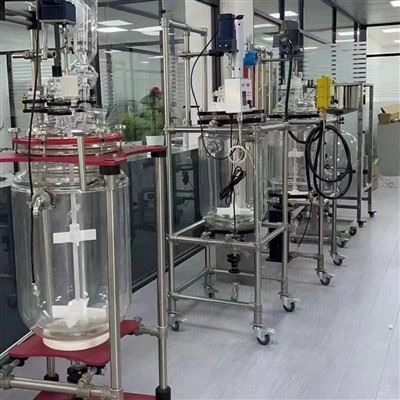
In conclusion, the double glass reactor represents a significant advancement in laboratory equipment for enhancing chemical synthesis. Its ability to provide precise temperature control, visibility of reactions, and resistance to corrosive substances makes it an ideal choice for researchers in small-scale laboratories.
By optimizing reaction conditions and ensuring product quality, double glass reactors contribute to the advancement of scientific knowledge and the development of innovative technologies. As chemistry continues to evolve, these reactors will remain indispensable tools for driving progress in both academic research and industrial applications