


How Do Stainless Steel Reactors Handle High-pressure And High-temperature Conditions?
Sep 30, 2024
Leave a message
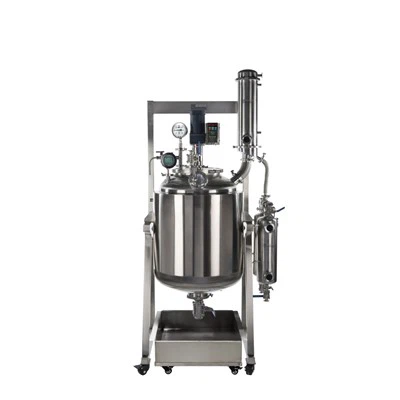
Stainless steel reactors, often referred to as SS reactors, are indispensable in various industrial processes that demand resilience under extreme conditions. These robust vessels are engineered to withstand the rigors of high-pressure and high-temperature environments, making them essential in chemical manufacturing, pharmaceutical production, and petrochemical refinement. The ability of SS reactors to maintain structural integrity and performance under such demanding circumstances is a testament to their advanced design and the inherent properties of stainless steel.
This article delves into the mechanisms and features that enable these reactors to operate efficiently and safely in conditions that would compromise lesser materials, exploring the science behind their durability and the technological innovations that have enhanced their capabilities over time.

The Composition and Properties of Stainless Steel in Reactor Design
Stainless steel is the material of choice for high-pressure and high-temperature reactors due to its unique combination of properties. The alloy's composition, typically including chromium, nickel, and sometimes molybdenum, contributes to its exceptional corrosion resistance and strength. This resistance is crucial in environments where reactants can be highly corrosive, especially at elevated temperatures.
The chromium content in stainless steel forms a passive layer of chromium oxide on the surface, which acts as a protective barrier against corrosion. This layer is self-healing, meaning that if it's scratched or damaged, it reforms quickly in the presence of oxygen. For SS reactors used in particularly aggressive environments, higher grades of stainless steel with increased chromium and nickel content, such as 316L or 904L, may be employed.
Moreover, the austenitic structure of many stainless steels used in reactor construction provides excellent toughness and ductility across a wide range of temperatures. This is particularly important for reactors that may experience thermal cycling, as it helps prevent brittle fracture and fatigue.
The high-temperature strength of stainless steel is another critical factor. Certain grades maintain their mechanical properties at temperatures exceeding 1000°C (1832°F), which is essential for reactors used in processes like steam reforming or high-temperature catalytic reactions. The material's low thermal expansion coefficient also helps minimize stress on the reactor structure during heating and cooling cycles.
Engineering Considerations for High-Pressure and High-Temperature Operation

Designing SS reactors for high-pressure and high-temperature conditions involves careful engineering considerations. The wall thickness of the reactor is a crucial factor, calculated based on the maximum operating pressure, temperature, and the specific grade of stainless steel used. Engineers often employ finite element analysis (FEA) to model stress distributions and identify potential weak points in the design.
The shape of the reactor also plays a significant role in its ability to handle extreme conditions. Spherical or cylindrical designs with rounded ends are often preferred as they distribute stress more evenly across the structure. This even distribution helps prevent localized stress concentrations that could lead to failure under high pressure.
Welding techniques and quality control are paramount in SS reactor construction. Advanced welding methods, such as electron beam welding or automated TIG welding, are used to ensure the integrity of joints. These welds are then subjected to rigorous non-destructive testing, including radiographic and ultrasonic inspections, to verify their strength and detect any potential flaws.
Thermal management is another critical aspect of SS reactor design for high-temperature applications. This may involve the incorporation of cooling jackets or external heating elements to maintain precise temperature control. In some cases, refractory linings may be used to protect the stainless steel from direct exposure to extreme temperatures, particularly in reactors used for processes like gasification or incineration.
Pressure relief systems are essential safety features in high-pressure SS reactors. These may include rupture disks, pressure relief valves, or a combination of both, designed to prevent catastrophic failure in the event of over-pressurization. The sizing and placement of these safety devices are carefully calculated to ensure they can adequately relieve pressure without compromising the reactor's integrity.
Innovations and Advancements in SS Reactor Technology
The field of SS reactor technology is continuously evolving, with new innovations enhancing performance and expanding capabilities. One significant advancement is the development of duplex stainless steels, which offer a combination of high strength and excellent corrosion resistance. These alloys allow for the construction of reactors with thinner walls, reducing weight and cost while maintaining or even improving performance under extreme conditions.
Surface modification techniques have also emerged as a way to enhance the properties of SS reactors. Processes like nitriding or carburizing can increase the surface hardness and wear resistance of stainless steel, extending the lifespan of reactors used in abrasive environments. Additionally, the application of specialized coatings can provide extra protection against specific types of corrosion or chemical attack.
Advanced manufacturing techniques, such as additive manufacturing or 3D printing, are opening new possibilities in SS reactor design. These methods allow for the creation of complex internal structures that can enhance heat transfer or mixing efficiency. While still in the early stages for large-scale reactor production, 3D printing is already being used to create prototypes and small-scale reactors for specialized applications.
The integration of smart sensors and monitoring systems is another area of innovation in SS reactor technology. These systems can provide real-time data on temperature, pressure, and even the structural health of the reactor. By enabling predictive maintenance and early detection of potential issues, these technologies help ensure the safe and efficient operation of reactors under extreme conditions.
Computational fluid dynamics (CFD) and advanced simulation tools are increasingly used in the design and optimization of SS reactors. These tools allow engineers to model complex reactions and fluid behaviors under various conditions, leading to more efficient and safer reactor designs. The ability to simulate extreme scenarios helps in pushing the boundaries of what's possible with SS reactor technology while maintaining a high degree of safety and reliability.
Conclusion
Stainless steel reactors have proven to be invaluable in industries requiring vessels capable of withstanding high-pressure and high-temperature conditions. Their success lies in the inherent properties of stainless steel, combined with advanced engineering design and continuous technological innovations.
As industries push the boundaries of chemical processes and energy production, SS reactors continue to evolve, incorporating new materials, manufacturing techniques, and smart technologies. These advancements not only enhance performance and safety but also open up possibilities for more efficient and sustainable industrial processes. The future of SS reactor technology looks promising, with ongoing research and development aimed at creating even more resilient and versatile vessels to meet the ever-growing demands of modern industry.