


Molecular Distillation Equipment
Sep 20, 2024
Leave a message
Introduction
Molecular distillation, also known as short-path distillation, is a specialized and highly efficient technique used for the separation and purification of heat-sensitive, high-boiling, and high-value compounds.
It is a unique distillation process that relies on the differences in the mean free paths of vapor molecules rather than their boiling points, making it ideal for handling materials that cannot withstand the high temperatures associated with conventional distillation methods. Molecular distillation equipment is designed to operate under low pressures and high temperatures, ensuring minimal thermal degradation of the processed materials.
In this article, we will delve into the intricacies of molecular distillation equipment, exploring its working principles, advantages, applications, and recent advancements in the field.
Working Principles
|
Molecular distillation operates on the principle of differential mean free paths of vapor molecules. At low pressures, the mean free path of vapor molecules increases significantly, allowing them to travel longer distances without colliding with other molecules.
This phenomenon is exploited in molecular distillation by creating a thin film of the material to be distilled on a heated surface. As the material evaporates, the lighter, faster-moving molecules travel further than the heavier, slower-moving ones, enabling their separation based on their molecular weights and vapor velocities. |
|

The molecular distillation process typically involves the following steps

● Feed Introduction: The raw material is introduced into the evaporator, where it is spread into a thin film on the heated surface.
● Evaporation: The heated surface causes the material to evaporate, generating a vapor that contains a mixture of different molecules.
● Separation: The vapor travels through a short distance (the "short path") to the condenser, where the lighter, faster-moving molecules condense first, while the heavier, slower-moving molecules continue their journey. This results in the separation of the components based on their molecular weights and vapor velocities.
● Collection: The condensed lighter components are collected, while the heavier components, along with any unevaporated residue, are removed from the system
Advantages of Molecular Distillation
Molecular distillation offers several advantages over conventional distillation methods, making it the preferred choice for the separation and purification of heat-sensitive, high-boiling, and high-value compounds. Some of its key advantages include:
● Low Operating Pressures: Molecular distillation operates at low pressures, which minimizes the risk of thermal degradation of the processed materials. This is particularly important for heat-sensitive compounds, such as essential oils, fragrances, and vitamins.
● Gentle Processing Conditions: The short residence time of the material in the evaporator and the low temperatures required for evaporation ensure gentle processing conditions that preserve the integrity and quality of the final product.
● High Separation Efficiency: The unique separation mechanism based on differential mean free paths of vapor molecules enables high separation efficiency, even for compounds with close boiling points.
● Energy Efficiency: The short distance traveled by the vapor molecules and the absence of large-scale agitation or mixing in the evaporator contribute to the energy efficiency of molecular distillation.
Versatility: Molecular distillation can be used for a wide range of materials, including those with high boiling points, low vapor pressures, and high viscosity.
Applications of Molecular Distillation
|
Molecular distillation equipment finds widespread applications in various industries, including pharmaceuticals, cosmetics, food and beverage, and chemical processing. Some of its key applications include: ● Pharmaceuticals: Molecular distillation is used to purify and separate active pharmaceutical ingredients (APIs), excipients, and other compounds used in the production of medications. It is particularly useful for heat-sensitive APIs, such as vitamins, hormones, and enzymes, which cannot withstand the high temperatures associated with conventional distillation methods.
● Cosmetics and Personal Care: Molecular distillation is widely used in the cosmetics industry for the purification and separation of essential oils, fragrances, and other active ingredients used in personal care products. It helps to remove impurities and unwanted compounds, resulting in higher-quality products with improved stability and efficacy.
● Food and Beverage: In the food and beverage industry, molecular distillation is used to purify and fractionate fats, oils, and flavor compounds. It is particularly useful for the removal of free fatty acids, peroxides, and other undesirable compounds from edible oils, improving their quality and shelf life.
● Chemical Processing: Molecular distillation is also used in the chemical processing industry for the separation and purification of various compounds, including polymers, resins, and dyes. Its high separation efficiency and gentle processing conditions make it an attractive option for the purification of high-value chemicals. |
|
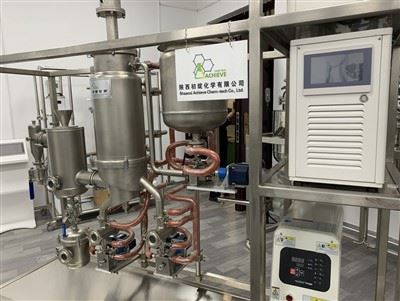
Recent Advancements in Molecular Distillation Equipment
In recent years, significant advancements have been made in molecular distillation equipment, leading to improved performance, increased efficiency, and broader applicability. Some of the key advancements include:
● Enhanced Heat Transfer: Improved evaporator designs with enhanced heat transfer capabilities have been developed to increase the evaporation rate and reduce the residence time of the material in the evaporator. This results in improved separation efficiency and product quality.
● Automation and Control Systems: The integration of advanced automation and control systems has made molecular distillation equipment easier to operate and maintain. These systems enable precise control of operating parameters, such as temperature, pressure, and feed rate, ensuring consistent and reproducible results.
● Scalability: Molecular distillation equipment has become more scalable, allowing for the processing of larger volumes of material. This has made molecular distillation a more viable option for industrial-scale production of high-value compounds.
● Hybrid Processes: Researchers have explored the combination of molecular distillation with other separation and purification techniques, such as membrane filtration and crystallization, to achieve even higher levels of purity and selectivity. These hybrid processes offer the potential for even more efficient and cost-effective separation and purification of complex mixtures.

Conclusion
Molecular distillation equipment is a highly specialized and efficient technology for the separation and purification of heat-sensitive, high-boiling, and high-value compounds. Its unique separation mechanism based on differential mean free paths of vapor molecules, combined with its gentle processing conditions and high separation efficiency, make it an attractive option for a wide range of industries.
With ongoing advancements in equipment design, automation, and scalability, molecular distillation is poised to play an increasingly important role in the production of high-quality, purified compounds for use in pharmaceuticals, cosmetics, food and beverage, and chemical processing.