



Small Lyophilizer
(a)10 series
Lab Scales Desktop(Freeze-dried material 1.5-2KG)
(b)12 series
Lab Scales Vertical(Freeze-dried material 2KG)
(c)18 series
Scientific Research Scales(Freeze-dried material 3KG)
2.Pilot Freeze Dryer:
0.2m²/0.3m²/0.5m²/1m²/2m²/---Pilot Scales(Freeze-dried material 3KG-20KG)
3.Industrial Freeze Dryer:
5㎡/10㎡/20㎡/30㎡/50㎡/100㎡/200㎡/300㎡(Freeze-dried Weight 5T~60T)
4.Customization: set up the specifications you need
(a)Freeze-dried Area
(b)Freeze-dried Weight
(c)Freeze-dried Material
(d)Interlayer Quantity/Size
(e)Cold Trap Temperature
Description
Technical Parameters
Small Lyophilizer is a device specifically designed for freeze-drying substances, characterized by compact structure, easy operation, and high dryig efficiency. It removes moisture or other solvents from the substance through sublimation through the collaborative work of refrigeration system, vacuum system, and heating system, thereby achieving dryig and preservation of the substance. In modern scientific research and industrial production, freeze-drying technology has received widespread attention due to its unique dryig method and good preservation effect. As an important application equipment of freezedryig technology, it plays an important role in multiple fields such as laboratory, medical, and food due to its small size, high efficiency, and easy operation.
When purchasing a small freeze-dryer, the following factors should be considered:
Usage: Select suitable small freeze-drying model number and specifications according to actual needs.
Performance: Pay attention to performance indicators such as the freeze-drying efficiency, vacuum degree, and heating temperature of the device.
Brand: Choose well-known brands and high-quality products to ensure the quality of equipment and after-sales service.
Price: Choose cost-effective products according to your budget.
Product Structure & Model
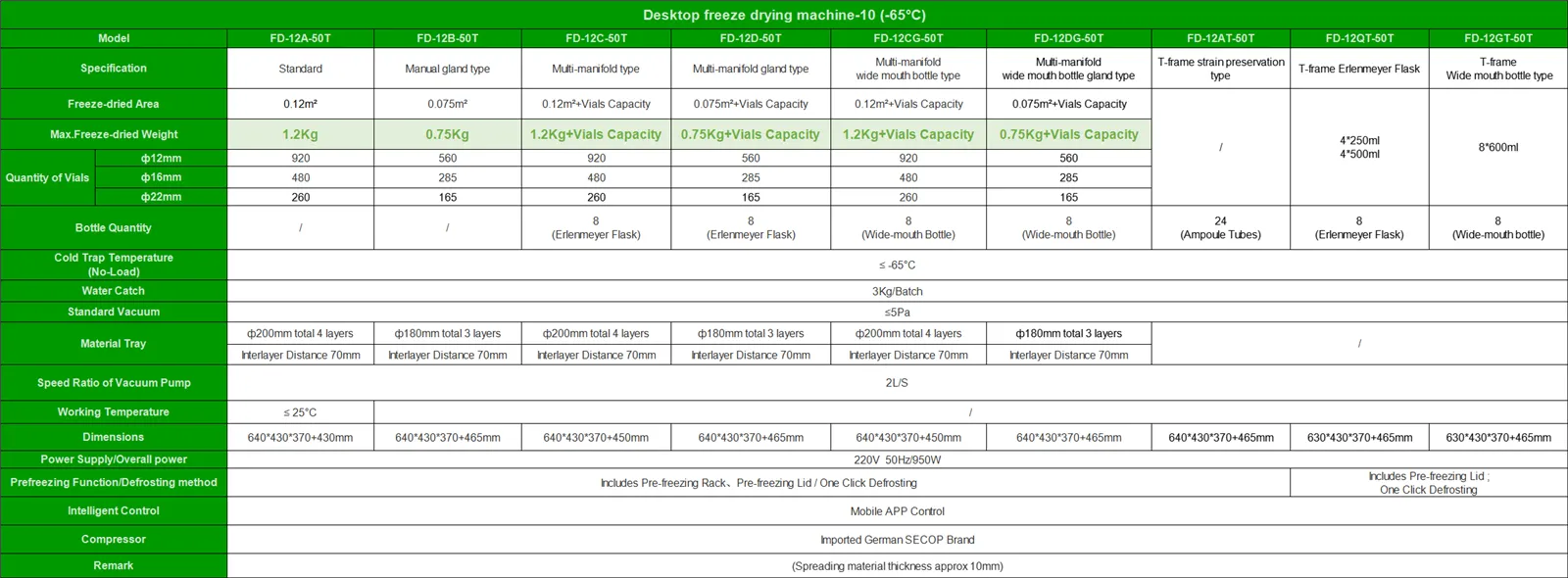
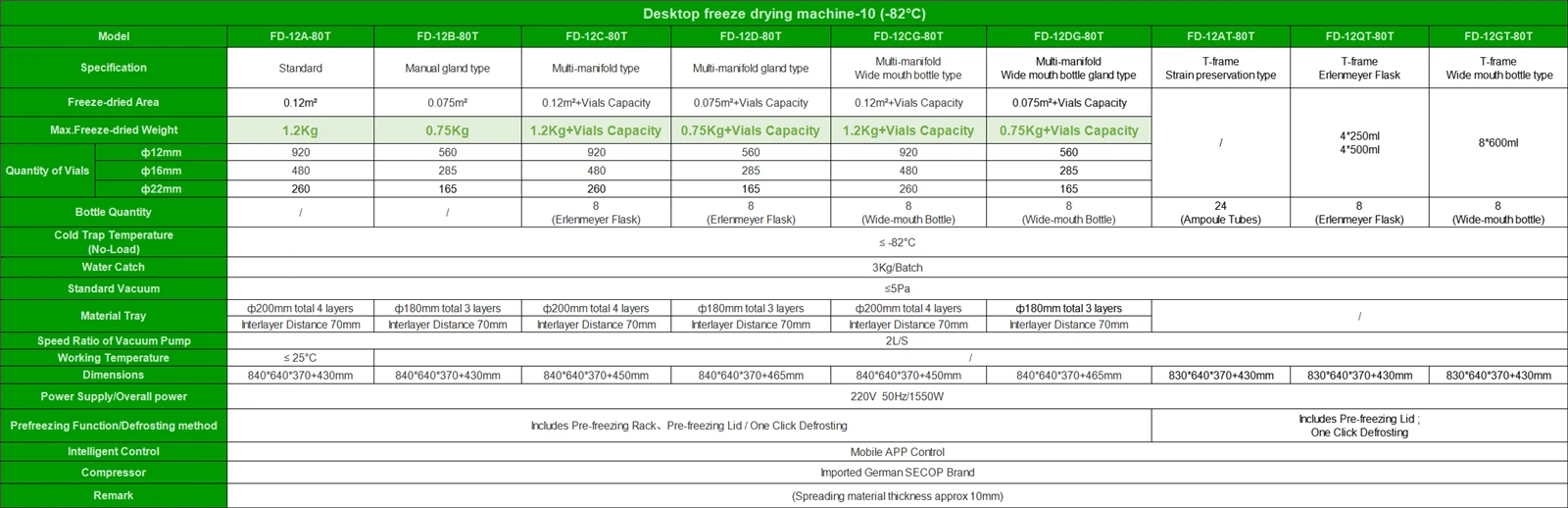
10 Series Laboratory Freeze Dryer
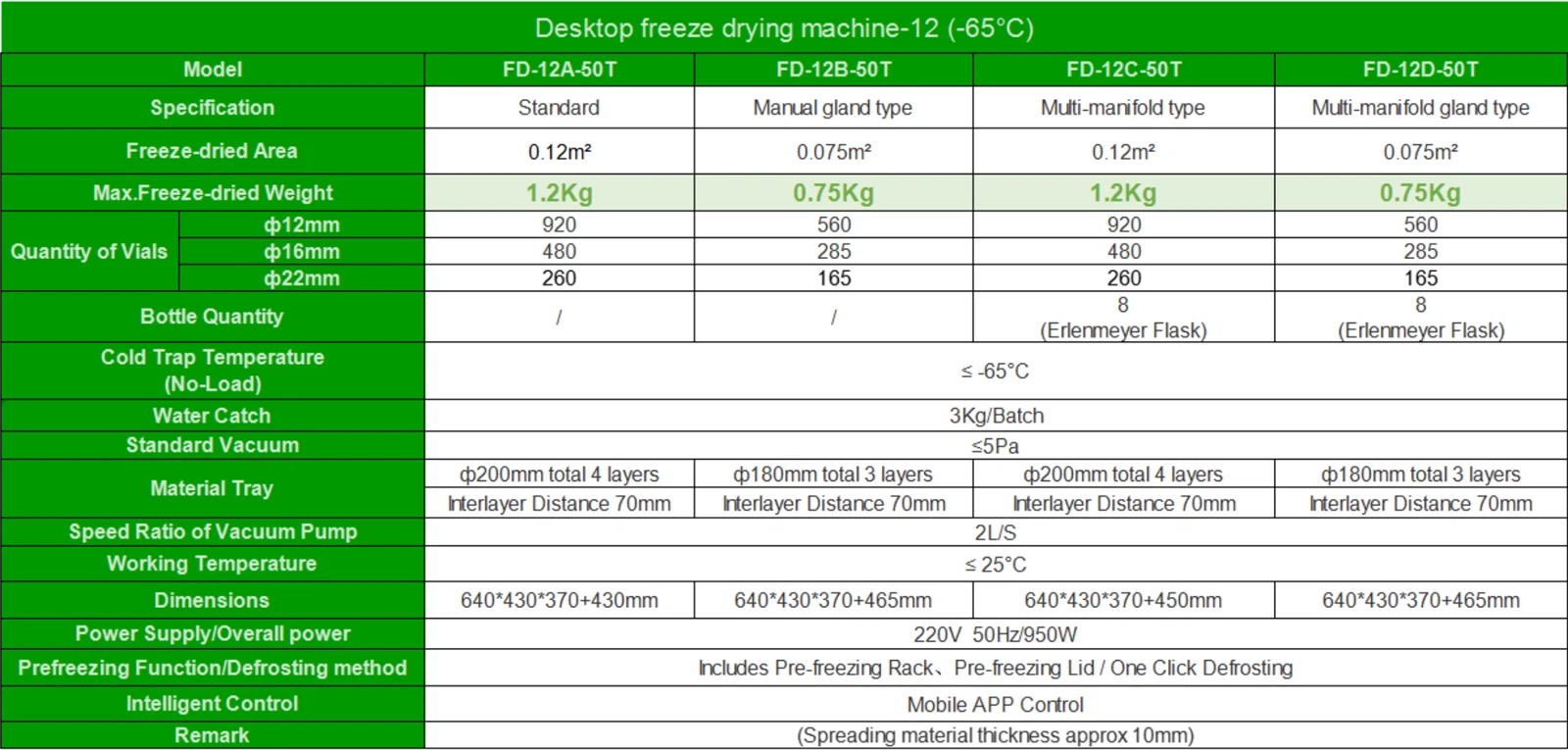
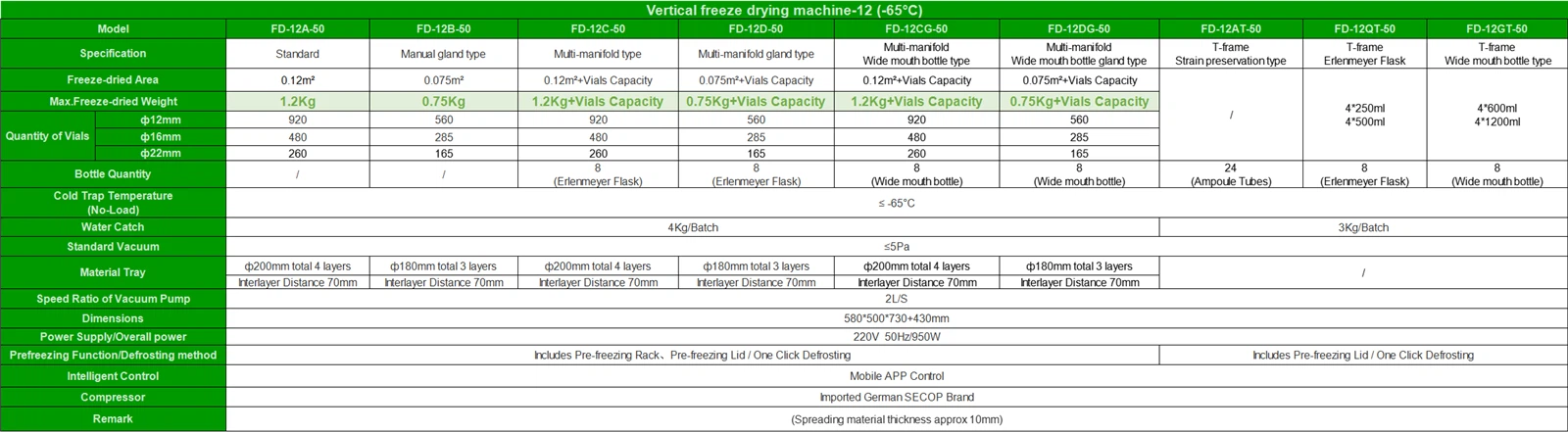
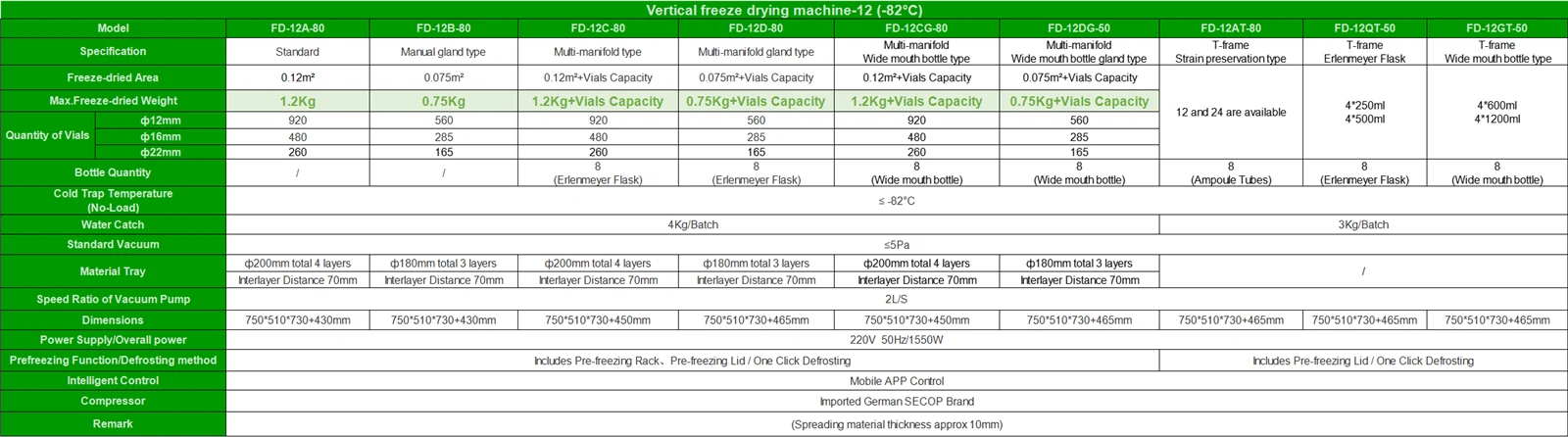
12 Series Laboratory Freeze Dryer

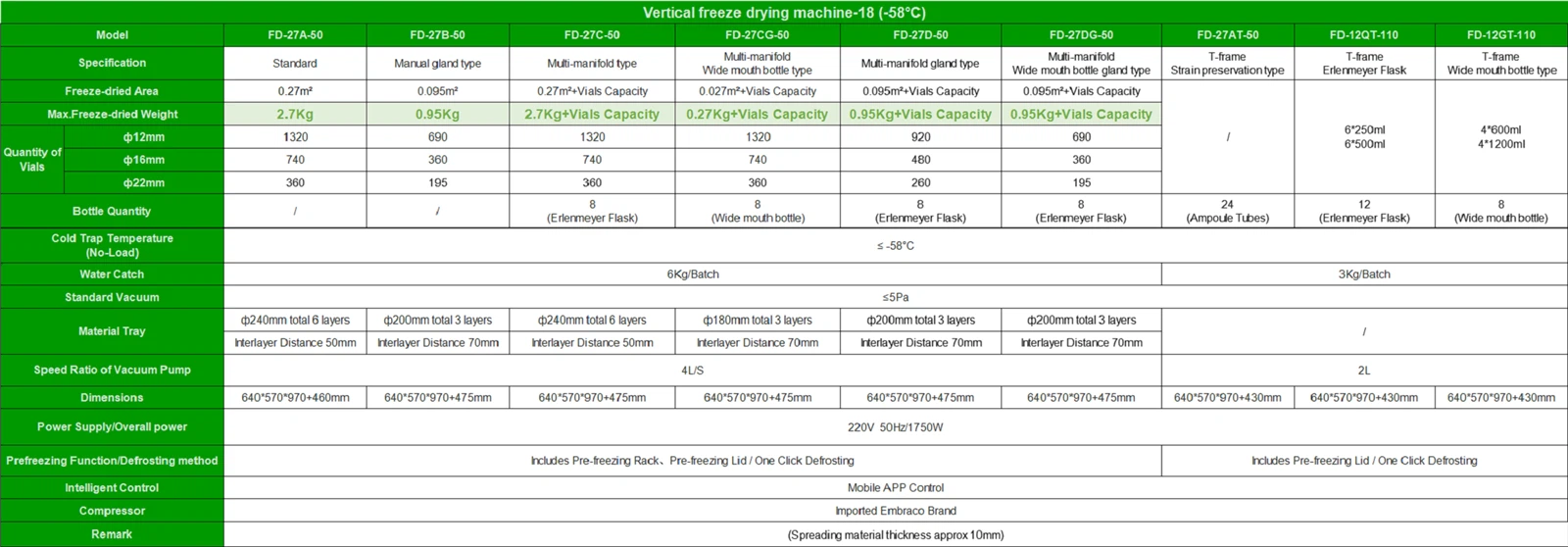
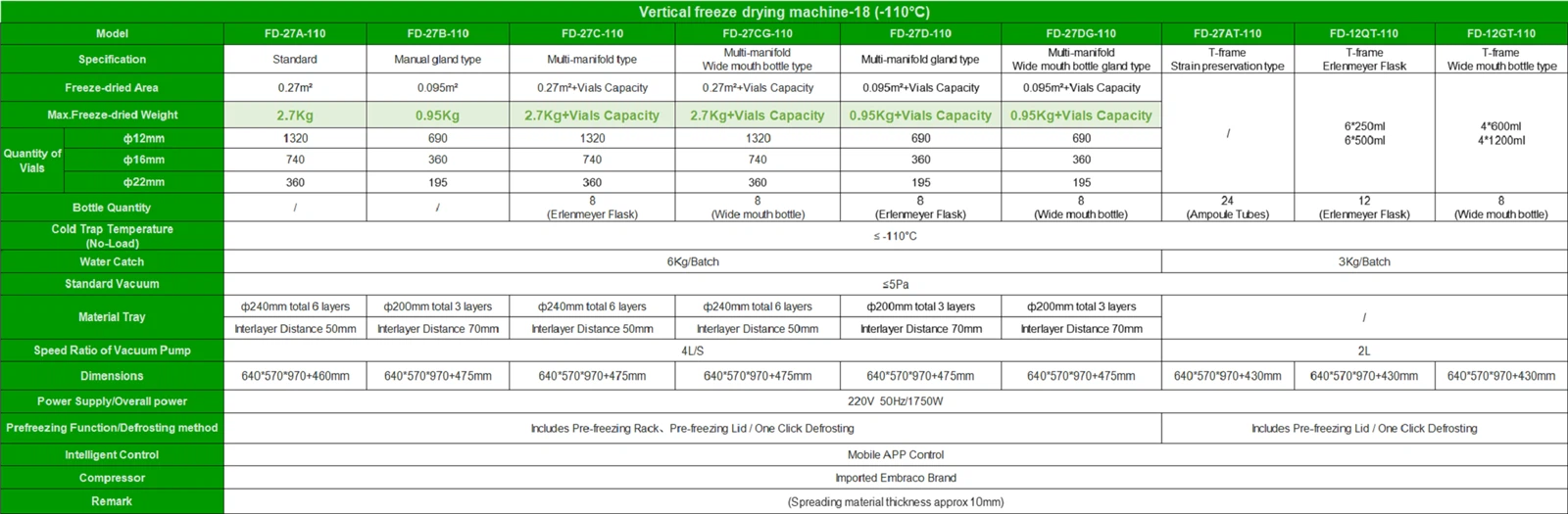
18 Series Laboratory Freeze Dryer

Operational Principle
In terms of working principle, Small Lyophilizer (also commonly known as household freeze dryers or desktop freeze dryers) mainly rely on advanced freeze drying technology, which is an effective method of removing moisture or other solvents from substances through physical processes under low temperature conditions, in order to achieve long-term preservation of items and maintain their original quality. The entire process is divided into three closely connected steps: freezing, primary dryig (sublimation), and secondary dryig (desorption), each of which plays an indispensable role.
Our Products


The specific execution steps are described as follows:
◆ Freezing stage: This step is the foundation of the entire freeze-drying process. Start the refrigeration system of the freeze dryer, which quickly and accurately lowers the temperature inside the dryig chamber to below freezing point, ensuring that the moisture or other solvents inside the substance freeze into solid ice crystals in a short period of time. This process not only helps to maintain the original structure of the substance, but also lays a solid foundation for the subsequent sublimation stage.
◆ Sublimation stage (primary drying): As the vacuum system is activated, the pressure inside the dryig chamber gradually decreases to an extremely low level, creating an ideal vacuum environment. At this stage, solid ice crystals undergo sublimation and transform into water vapor under low temperature and low pressure conditions without going through the liquid stage. These water vapors are then effectively expelled from the machine through carefully designed vacuum pipes, achieving the removal of most of the moisture in the material.
◆ Desorption stage (secondary drying): After the sublimation stage, although most of the water has been removed, there may still be a small amount of bound water or solvents that are difficult to sublime in the substance. At this point, the heating system of the freeze dryer begins to take effect, providing gentle and sustained heat that causes the residual moisture or solvent to desorb at higher temperatures and deeper vacuum levels, ultimately being completely expelled. This process ensures thorough dryig of the substance, further improving its shelf life and quality.
Through the above three carefully designed steps, a small freeze-drying machine can efficiently and safely remove moisture from substances, retain their original flavor, color, nutritional components, and structure, and become an ideal dryig tool for various occasions such as homes, laboratories, and small businesses.
Products Development


The performance parameters of Small Lyophilizer mainly include the following aspects:
Drying chamber capacity:
Refers to the size of space inside the dryig chamber that can be used to store the substance to be dried, usually expressed in liters (L).
Refrigeration temperature:
Refers to the minimum temperature that a refrigeration system can provide, usually expressed in degrees Celsius (℃). A lower refrigeration temperature helps to achieve better freezing effects.
Vacuum degree:
Refers to the pressure inside the drying chamber under the action of a vacuum system, usually expressed in pascals (Pa) or millimeters of mercury (mmHg). A higher vacuum degree helps to improve dryig efficiency.
Heating power:
Refers to the maximum heating power that a heating system can provide, usually expressed in watts (W). Sufficient heating power can ensure efficient dryig process.
Control system accuracy:
Refers to the control accuracy of the control system over parameters such as temperature and vacuum degree. A high-precision control system helps to improve dryig efficiency and product quality.
Technical specifications and parameters
Model and size:
Taking a certain model as an example, such as HFD-4 (for example only, the actual model may vary).
The size may be approximately 510700850mm, making it convenient for use in laboratory and other environments.
Material:
Mainly using stainless steel materials, such as 316L stainless steel, to ensure the corrosion resistance and durability of the equipment.
The dryig room may use transparent materials for easy observation of the dryig process.
Performance parameters:
Freeze drying area: For example, 0.4 square meters, suitable for experimental needs of different scales.
Vacuum degree: up to 15PA, ensuring efficient sublimation process.
Water capture capacity: 4-6 kg/24h, indicating its excellent dryig ability.
Drying capacity: Depending on the model and configuration, it may include multiple sample trays.
Power and voltage:
Usually, 220V voltage is used with a power of about 1.5KW to ensure stable operation of the equipment.
Important Indicator
The performance parameters of small lyophilizer are important indicators for measuring its drying efficiency and applicability. Below, we will provide a detailed introduction to the performance parameters of product from several key aspects.
The drying chamber capacity and freezedrying area of they are core parameters that reflect its processing capacity. Generally speaking, the larger the capacity of the dryig room and the wider the freezedrying area, the stronger the processing capacity of the equipment. The common Lyophilizer dryig chamber capacity usually ranges from a few liters to tens of liters, and the freezedrying area ranges from 0.1 square meters to several square meters. The selection of these parameters needs to be balanced based on actual application needs to ensure that the equipment can meet the needs of experiments or production.
Temperature is one of the crucial parameters in the freezedrying process. It typically have a wide temperature range to meet the drying needs of different substances. Generally speaking, the minimum temperature of the equipment can reach -80 ℃ or even lower to meet the drying requirements for low-temperature sensitive substances. At the same time, the temperature control accuracy of the equipment is also very important, which can ensure the accuracy and stability of temperature during the dryig process. High precision temperature control helps to avoid material damage during the dryig process due to excessive temperature changes.
Vacuum degree is another important performance parameter of product. A higher vacuum degree helps to accelerate the sublimation process and improve dryig efficiency. They are typically equipped with high-performance vacuum pumps to ensure the desired vacuum level is achieved during the dryig process. Common types of vacuum pumps include rotary vane vacuum pumps, oil seal vacuum pumps, etc. These vacuum pumps have the characteristics of fast pumping speed, high vacuum degree, and stable operation, which can meet different dryig needs.
Heating power and heating method are key factors affecting the dryig efficiency of product. Appropriate heating power can ensure sufficient heat is provided during the dryig process, promoting the sublimation of ice crystals. The common heating power range ranges from several kilowatts to tens of kilowatts, depending on the model and configuration of the equipment. In terms of heating method, itusually uses electric heating method, which heats the drying chamber through heating elements. This heating method has the advantages of fast heating speed and precise temperature control.
How to disinfect
Disinfection of small freeze-drying machines is an important step to ensure their hygiene and safety. Here are some disinfection methods suitable for small freeze-drying machines:
Physical disinfection method

Steam disinfection
Remove the removable parts (such as trays, condensers, etc.) from the small freeze-drying machine and place them in the steam sterilizer cabinet.
Through the high temperature steam disinfection, pay attention to control the temperature and pressure of the steam to ensure the disinfection effect.
After disinfection is complete, the parts are taken out to dry or blow dry, and then the freeze-dryer is reassembled.

Dry heat disinfection
High temperature oxidation is used to kill bacteria. Place the inside or removable parts of the freeze-dryer in a hot dry environment, such as an oven.
Set the appropriate temperature and time for heating disinfection.

Ultraviolet disinfection
Place the ultraviolet light tube inside the freeze-drying machine and turn on the ultraviolet light for irradiation disinfection.
The exposure time should be determined according to the intensity of ultraviolet light and the size of the freeze-drying machine, which generally takes 1-2 hours.
Chemical disinfection method

Alcohol disinfection
Use 70%-75% ethanol solution to spray or wipe the inside of the freeze-drying machine for disinfection.
Ethanol has a broad spectrum bactericidal effect, and will not cause corrosion to the steel of the freeze dryer.
After disinfection, the alcohol should be allowed to evaporate naturally without rinsing with water.
84 Disinfectant disinfection
After diluting the 84 disinfectant according to the instructions, spray or wipe the inside of the freeze-drying machine for disinfection.
84 Disinfectant can quickly and effectively kill common bacteria and viruses, but it is necessary to pay attention to its corrosiveness on steel, and it should be washed off in time after use.


Other chemical disinfectants
According to actual needs, other disinfectants suitable for pharmaceutical equipment can also be selected, such as ethylene oxide, formaldehyde, etc.
However, it should be noted that the selection of disinfectants should comply with relevant regulations and standards, and should not cause corrosion or damage to the equipment.
Precautions
Choose the appropriate disinfection method
Select the appropriate disinfection method according to the material, use requirements and disinfection standards of the freeze-drying machine.
01
Clean thoroughly
Before disinfection, the freeze-drying machine should be thoroughly cleaned to remove residual stains and dirt.
02
Personal Protection
During disinfection, operators should wear appropriate protective equipment, such as gloves, masks and overalls, to prevent damage to the skin and respiratory tract caused by chemicals or disinfectants.
03
Record and check
After each disinfection, the relevant records should be made and signed on the records after being confirmed by the relevant personnel.
Check and maintain equipment regularly to ensure it is in good condition.
04
Conclusion
In summary, the disinfection methods of small freeze-drying machines include physical disinfection and chemical disinfection. When selecting the disinfection method, it should be determined according to the actual situation and disinfection requirements of the freeze-drying machine. At the same time, attention should be paid to personal protection and records and inspections during the disinfection process.
Hot Tags: small lyophilizer, China small lyophilizer manufacturers, suppliers, factory
Previous
Large Pharmaceutical Freeze DryerNext
Deep Freeze DryerSend Inquiry


