



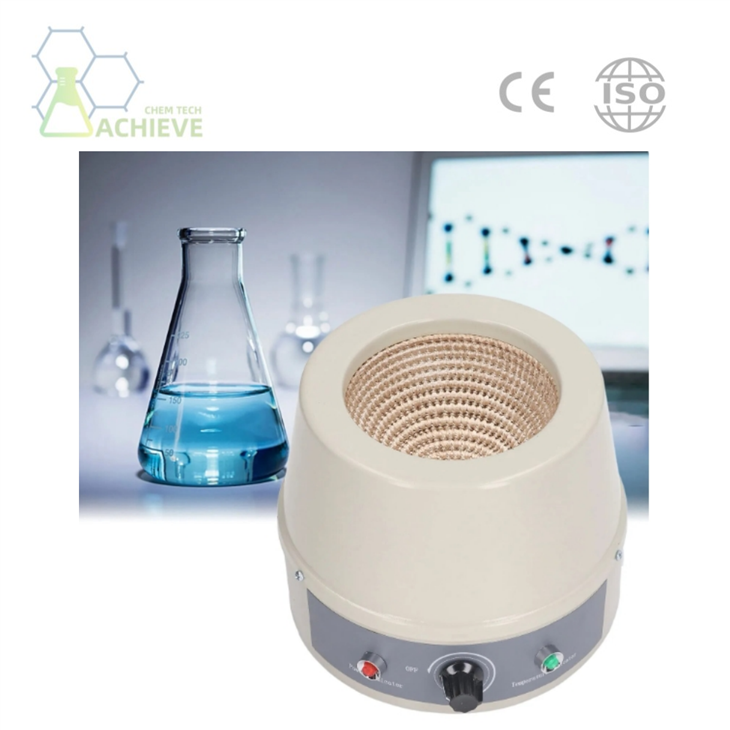
Digital Magnetic Heating Mantle
Feature: Heating Function
Capacity: 100ML/250ML/500ML/1,000ML/2,000ML/3,000ML/5,000ML/10,000ML/20,000ML
2.Digital Temperature Control Type
Feature: Heating Function, Temperature Display, Temperature Sensor
Capacity:100ML/250ML/500ML/1,000ML/2,000ML/3,000ML/5,000ML/10,000ML/20,000ML/50,000ML
3.Digital Magnetic Type
Feature: Heating Function, Temperature Display, Temperature Sensor, Magnetic Stirring
Capacity:100ML/250ML/500ML/1,000ML/2,000ML/3,000ML/5,000ML/10,000ML/20,000ML/50,000ML
4.Digital Display Constant Temperature Magnetic Force
Feature: Heating Function, Temperature Display, Time Display, Temperature Sensor, Magnetic Stirring, Timer
Capacity:100ML/250ML/500ML/1,000ML
Description
Technical Parameters
Digital magnetic heating mantle, also known as digital magnetic stirring electric heating sleeve, is an advanced laboratory and industrial heating equipment that combines digital display technology, magnetic stirring, and electric heating functions. It is mainly used for mixing liquids, as well as stirring or simultaneously heating and stirring low viscosity liquids or solid-liquid mixtures. This advanced device utilizes digital technology to enhance its functionality and accuracy. There are multiple models and specifications to choose from to meet different experimental and production needs. For example, the ZNCL-TS series intelligent digital magnetic stirring electric heating set can heat and stir 50-10000ml standard or non-standard reaction bottles. The shell is made of reinforced aluminum alloy shell, which is resistant to high temperature, corrosion and has good insulation performance. In addition, the device also has features such as infinite speed regulation, digital speed display function, and self-tuning function.
Technical parameter
The technical parameters of digital magnetic heating sleeves vary by brand and model, but usually include the following aspects:
Heating power: Depending on the size of the reaction vessel and heating needs, it is generally between tens of watts and several kilowatts.
Temperature control range: usually between room temperature and several hundred degrees Celsius, depending on the performance of the heating element and temperature control system.
Mixing capacity: It can be applied to reaction vessels with different capacities, such as 50ml, 100ml, 250ml, 500ml, 1000ml, etc.
Mixing speed: can be adjusted according to the needs of the experiment, generally between tens of RPM to thousands of RPM.
Power supply voltage: usually 220V or 380V AC, some devices also support a wide voltage range of input.
Specifications


The Digital magnetic heating mantle is a commonly used experimental equipment that combines magnetc stirring and electric heatig functions. It can mix and heat liquids simultaneously and is widely used in fields such as chemistry, medicine, and food in laboratories. The fundamental principle is Faraday's law, which is based on the principle of electromagnetc induction generating adhesive force. When the current passing through the wire changes, the formed magnetc field will cause a regular change in the magnetc core according to the strength of the magnetc field. At the same time, this change will also cause internal movement of conductive substances in the surrounding environment, promoting active exchange and mixing reactions between substance molecules in the liquid.
This equipment consists of two main parts: the casing and the heatig module. The casing is usually made of aluminum or plastic, and a magnetc core is wrapped around the heatig module at the bottom to generate a magnetc field. The magnetc field generated when electricity is applied acts on the internal magnetc particles, causing rotational motion and promoting the mixing of liquids. Meanwhile, there is also a layer of heat insulation between the heatig module and the casing, which can effectively prevent heat loss.


The use of digital magnetc stirring electric heatig sleeve is very convenient, just follow the following steps:
1. Place the test tubes, beakers, or flasks that need to be mixed and heated into the heatig module, ensuring that their bottom is in contact with the magnetc core;
2. Turn on the electric heatig sleeve through the electrical control panel and set the temperature according to the experimental requirements. Set the heatig temperature and time accordingly;
3. Adjust the strength and speed of the magnetc stirrer, and perform heatig operations while observing the mixing of substances;
4. After the experiment is completed, turn off the heater and remove the test tube and other containers. Do not directly pick up the heatig module with your hands or invert it on the table. Wait for an appropriate amount of time for the device to fully cool down, and then gently pat it with a cloth or thick tissue to remove any residual water droplets or other substances that may affect the quality.
The digital magnetc stirring electric heatig sleeve played a crucial role in the experimental process. Not only can it conveniently and quickly mix liquids, but it can also accurately control their temperature. Students and researchers can use this equipment in their laboratory work to improve experimental efficiency and reduce errors, making experimental results more accurate and reliable.
Classifications
Heating mantles are classified based on their material composition, temperature range, voltage and power ratings, sizes and compatibility, as well as additional features such as temperature control and magnetic stirring compatibility. By selecting the appropriate heatig mantle for a specific application, researchers can ensure precise and efficient heatig of their laboratory containers.
- Fiberglass Insulation: Many modern hating mantles are constructed with fiberglass insulation, which provides excellent heat retention and protection against high temperatures. This material also ensures even heat distribution across the surface of the container.
- Vinyl Exterior Cover: Some hating mantles feature a vinyl exterior cover, which is easily cleaned and resistant to spills and accidents.
- Low-Temperature Mantles: Designed for applications requiring temperatures up to around 200°C (392°F), these mantles are suitable for gentle hating processes.
- High-Temperature Mantles: Capable of reaching temperatures up to 482°C (900°F) or even higher, high-temperature mantles are ideal for demanding reactions and processes that require intense heat.
- 120V/240V Options: Hating mantles are available in different voltage ratings, typically 120V or 240V, to accommodate various electrical systems worldwide.
- Wattage Variations: The wattage of a hating mantle determines its hating capacity. Mantles with higher wattage ratings can heat larger containers or reach higher temperatures faster.
- Size Range: Heatig mantles come in a wide range of sizes, from small mantles designed for 50ml flasks to large mantles capable of accommodating 5000ml or larger containers.
- Form-Fitting Design: Many heatig mantles feature a form-fitting design that allows them to securely and evenly wrap around various shapes and sizes of laboratory glassware.
- Temperature Control: Some advanced hating mantles are equipped with temperature controllers, allowing users to set and maintain precise temperatures during experiments.
- Magnetic Stirring Compatibility: Some mantles are designed to allow for magnetic stirring, facilitating the mixing of solutions during heatig.
- Durability and Longevity: High-quality hating mantles are constructed to withstand repeated use and cleaning, ensuring a long service life.
Common Materials
Digital magnetic heating mantle is typically constructed with a combination of materials designed to optimize heat transfer, durability, and safety. Fiberglass insulation, silicone rubber coating, and high-performance reinforcement fibers like Kevlar® are commonly used in their construction. The hating elements themselves are typically made of heat-resistant alloys. Together, these materials enable hating mantles to safely and efficiently heat a wide range of laboratory and industrial equipment.
Fiberglass Insulation: Fiberglass is a popular choice for heting mantle insulation due to its excellent thermal resistance, lightweight nature, and good chemical stability. It effectively retains heat within the mantle, reducing energy loss and ensuring uniform hating of the contents. Fiberglass is also relatively inexpensive and easy to handle.
Silicone Rubber or Coating: High-temperature silicone rubber is often used as the outer layer or coating of hating mantles. This material is known for its excellent heat resistance, flexibility, and resistance to chemicals and moisture. Silicone rubber also provides a non-stick surface, making it easier to clean and maintain the hating mantle.
Kevlar® or Nomex® Reinforcement: For added strength and durability, some hating mantles incorporate materials like Kevlar® or Nomex® in their construction. These high-performance synthetic fibers are renowned for their exceptional resistance to heat, flames, and chemicals. They help the hating mantle maintain its structural integrity even under extreme conditions.
Metal Mesh or Foil: In some designs, a thin layer of metal mesh or foil (such as aluminum or stainless steel) may be incorporated into the hating mantle's structure. This acts as a reflective surface, helping to redirect heat back towards the vessel being heated, enhancing energy efficiency.
Heating Elements: While not strictly a material used for the mantle's structure, the hating elements within the mantle are typically made of nickel-chromium wire (NiCr wire) or other alloys that offer good resistance to heat and oxidation. These elements convert electrical energy into heat, evenly distributing it throughout the mantle.
Differences Between Digital & Manual
Digital magnetic heating mantles and manual hating mantles represent two distinct types of laboratory equipment, each with its own unique features and areas of application. Below is a comparison outlining the key differences between the two:
Digital:
- Precision and Control: Features digital temperature control with PID (Proportional-Integral-Derivative) circuitry, allowing for highly precise and stable temperature regulation. Accuracy can typically reach ±1°C or better.
- Dual Display: Many models display both the set temperature and the actual temperature, providing real-time feedback.
- Programming Capability: Some advanced models even allow for temperature programming, enabling automated hating profiles.
Manual:
- Less Precision: Manual controls may result in less precise temperature regulation, as adjustments rely on the user's estimation and visual indicators.
- Lack of Real-Time Feedback: Often lacks dual display capabilities, making it more challenging to achieve exact temperatures.
Digital:
- Integrated Magnetic Stirring: Incorporates a magnetic stirring mechanism, allowing for simultaneous heating and stirring of liquid samples. This eliminates the need for separate stirring equipment.
- Adjustable Speed: The stirring speed can be adjusted seamlessly, providing versatility for different experimental conditions.
Manual:
- No Stirring: Typically does not include stirring capabilities, requiring separate stirring equipment or manual stirring methods.
Digital:
- Touchscreen or Knob Interface: Offers a modern, intuitive user interface, often with a touchscreen or advanced knob controls.
- User-Friendly: Easy to set up and operate, with clear displays and controls.
Manual:
- Knobs or Switches: Relies on manual knobs or switches for temperature control, which can be less intuitive or more prone to errors.
- Limited Functionality: Offers basic heating capabilities but lacks the advanced features of digital models.
Digital:
- Advanced Safety Measures: Incorporates features like overheat protection, automatic shut-off, and internal/external thermocouple switches to ensure safe operation.
- Visual and Audible Alerts: Some models may provide visual and audible alerts for various safety conditions.
Manual:
- Basic Safety Measures: Typically includes basic safety features like heat-resistant materials and insulation, but may lack the advanced protection offered by digital models.
Digital:
- Wide Range of Applications: Suitable for a broad range of experiments requiring precise temperature control and stirring capabilities.
- Adaptability: Easily adjustable for different volumes and sample types, thanks to its advanced control systems.
Manual:
- Limited Applications: Typically used for simpler heating tasks that do not require precise temperature control or stirring.
- Less Versatile: Less adaptable to different experimental conditions or sample types.
Hot Tags: digital magnetic heating mantle, China digital magnetic heating mantle manufacturers, suppliers, factory, 10l Glass Reactor, Chemglass Jacketed Reactor, 20 Liter Rotary Evaporator, Molecular Distillation Unit, Double Jacketed Reactor, High Pressure High Temperature Reactor
Previous
Electrothermal Heating Mantle ManualSend Inquiry


