



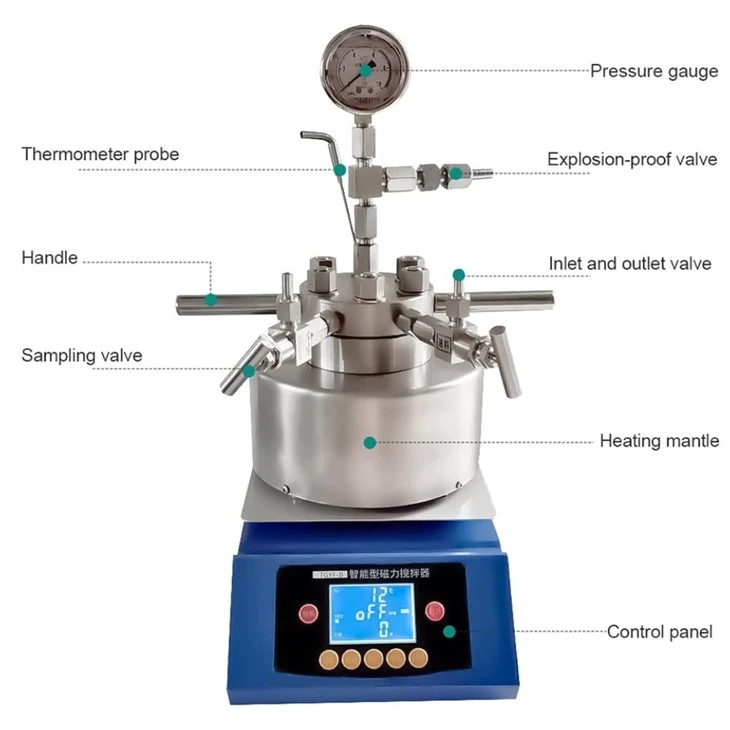
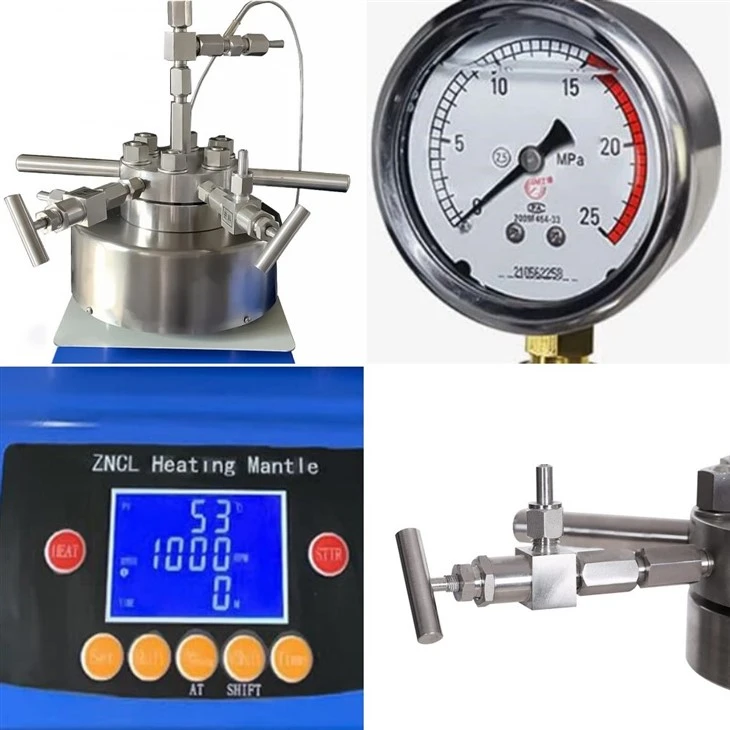


High Pressure Laboratory Reactor
2. Capacity: 0.1L-50L
3. Suitable for alkylation, amination, bromination, carboxylation, chlorination, and catalytic reduction
4. Stainless steel framework
5. Setting Temperature up to 350°C
6. Voltage: 220V 50/60Hz
7. Manufacturer: ACHIEVE CHEM Xi’an Factory
8. 16 years experiences on Chemical Equipment
9. CE and ISO certification
10. Professional shipping
Description
Technical Parameters
High pressure laboratory reactor is a highly specialized equipment designed to withstand extreme high pressue and high temperature conditions. The working principle of this device is based on using high pressue to create a specific reaction environment, which is essential for many chemical reactions. By applying high pressue, the process of chemical reactions can be significantly controlled and accelerated, which is of great significance in both chemical research and industrial applications.
Specifically, the high-pressure laboratory reactor, with its robust structure and precise control system, can ensure a stable high-pressure state during the reaction process. This high-pressure environment not only facilitates sufficient contact and mixing of reactants, but also changes the kinetic characteristics of the reaction, allowing certain chemical reactions that are difficult or extremely slow to proceed under normal or low pressue to proceed smoothly, and greatly improving the reaction rate.
structure
The structure of laboratory high-pressure reaction kettle generally includes kettle body, heating system, control system, pressur vessel and so on. The kettle body is the core part of the reaction kettle, usually made of stainless steel or alloy materials, which has certain compressive strength and thermal stability and can withstand harsh reaction environments such as high pressue and high temperature. The heating system is used to keep the reaction system at the specified reaction temperature, usually by electric heating or oil heating. The control system is used to accurately control the reaction temperature, pressur, time and other parameters to ensure the accuracy and repeatability of the reaction. The pressur vessel is used to bear the pressur of high-pressure reaction to ensure the safety of the reaction.
Products Introduction
Design:
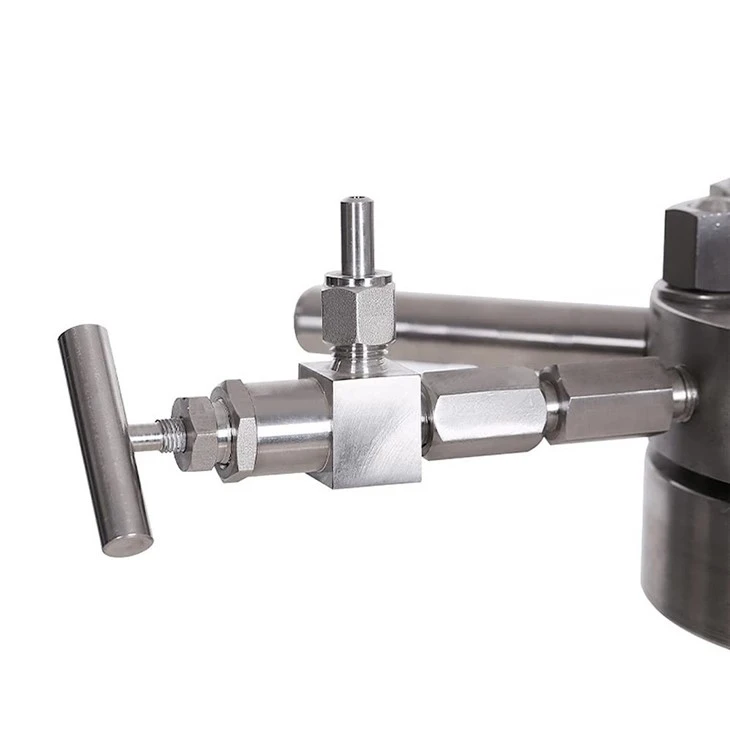
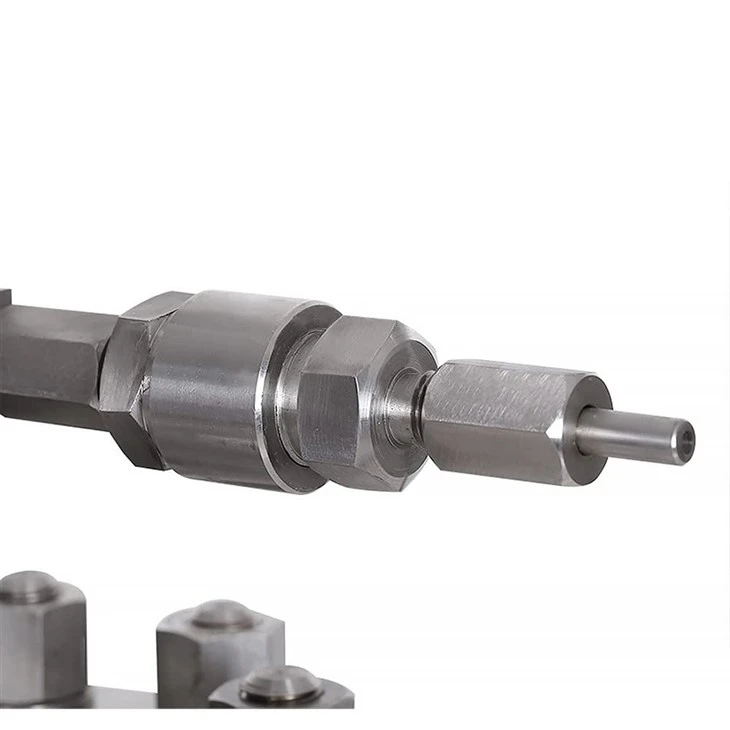
High pressure laboratory reactors typically consist of a robust pressur vessel, often made of stainless steel or other corrosion-resistant alloys, which can withstand the high pressurs and temperatures involved. The vessel is equipped with various ports, valves, and fittings to allow for the introduction of reactants, removal of products, and monitoring of the reaction conditions. Some reactors also have stirrers or agitators to ensure adequate mixing of the reactants.
Working Principle:
The key principle behind it is that by increasing the pressur of a system, the reaction rate and/or the yield of the desired product can be increased. At higher pressurs, gas molecules are more likely to collide with each other, increasing the rate of reactions. Additionally, high pressures can help drive reactions towards the formation of thermodynamically more stable products.

Products Parameter
TGYF Desktop High Pressure Reactor
|
Model |
AC1231-A0.05 |
AC1231-A0.1 |
AC1231-A0.25 |
AC1231-A0.5 |
AC1231-B0.05 |
AC1231-B0.1 |
AC1231-B0.25 |
AC1231-B0.5 |
AC1231-C0.05 |
AC1231-C0.1 |
AC1231-C0.25 |
AC1231-C0.5 |
|
Capacity (L) |
0.05 |
0.1 |
0.25 |
0.5 |
0.05 |
0.1 |
0.25 |
0.5 |
0.05 |
0.1 |
0.25 |
0.5 |
|
Stirring Method |
Magnetic Stirring |
Mechanical Stirring |
||||||||||
|
Setting Pressure (MPa) |
22 |
|||||||||||
|
Setting Temperature (°C) |
350 |
|||||||||||
|
Stirring Speed (r/min) |
0~2000 |
0~1800 |
1800 |
|||||||||
|
Heating Power (KW) |
0.6 |
0.6 |
0.8 |
1.5 |
0.6 |
0.6 |
0.8 |
1.5 |
0.6 |
0.6 |
0.8 |
1.5 |
Advantage and Disadvantage
Improved reaction conditions: it provide an environment with precise temperature and pressur control, enabling researchers to optimize reaction conditions and achieve higher yields and selectivities.
Enhanced safety: These reactors are designed with safety features such as pressue relief valves, temperature sensors, and automatic shutdown mechanisms. This helps prevent accidents and ensures safe operation.
Versatility: High pressue reactors can be used for a wide range of reactions, including hydrogenation, polymerization, oxidation, and many others. They are also suitable for both batch and continuous processes.
Data reproducibility: The controlled environment provided by high pressur reactors ensures reproducibility of experimental results, which is crucial for scientific research.
Acceleration of reaction rates: Some reactions that proceed slowly at lower pressurs can be accelerated under high pressur conditions. This allows for faster completion of experiments and saves time.

07
Complexity of operation:
Operating a high pressur reactor requires specialized training and knowledge to ensure safe and efficient operation. Improper handling can lead to accidents.
08
Maintenance requirements:
High pressur reactors require regular maintenance and calibration to ensure their accuracy and reliability. This adds to the overall cost of ownership.
09
Limited access to samples:
During the reaction process, samples inside the reactor may not be easily accessible for analysis or monitoring. This can limit the amount of information that can be obtained from the experiment.
10
Potential for contamination:
High pressur conditions can sometimes lead to contamination of samples due to leaching of materials from the reactor walls or seals. This requires careful cleaning and validation of the reactor before use.
Application
The application of supercritical fluid technology in high pressure laboratory reactor mainly changes substances into supercritical fluid state by adjusting temperature and pressur, thus realizing a series of special chemical reactions and controlling the properties of substances.
Supercritical extraction: Supercritical fluid can be used as an ideal solvent to extract target compounds from raw materials. In the laboratory high-pressure reactor, by controlling the temperature and pressur, the solvent (usually carbon dioxide) is adjusted to the supercritical state and then contacted with the substance to be extracted, which can effectively realize the efficient and selective extraction process.
Supercritical catalysis: The catalytic reaction under supercritical conditions has unique properties, which can change the reaction kinetics and equilibrium and improve the reaction rate and yield. The laboratory autoclave provides an environment for creating supercritical conditions. Researchers can add catalysts to supercritical fluids to carry out various catalytic reactions, such as hydrogenation and oxidation.
Supercritical synthesis: Under the condition of high pressur and high temperature, supercritical fluid can promote some difficult reactions, and can also regulate the structure, properties and yield of reaction substances. Laboratory high-pressure high temperature reactors are often used for supercritical synthesis of organic compounds and nanomaterials. By controlling supercritical conditions and reaction parameters, the synthesis of specific products can be realized.
Supercritical fluid combustion: Supercritical fluid combustion refers to the combustion reaction in supercritical state. Laboratory reactor can provide high-pressure and high-temperature conditions, adjust the combustion medium (such as oxygen) to supercritical state, and contact with fuel, so as to realize the combustion process of efficient energy release and pollutant reduction.
Application of high pressure laboratory reactor in energy field
Hydrogen energy preparation
High-pressure laboratory reactors play a key role in hydrogen energy preparation. Through photocatalytic reactions, high-pressure reactors are able to split water into hydrogen and oxygen, providing a sustainable method for the production of hydrogen for clean energy. This method not only helps to solve the energy crisis, but also reduces greenhouse gas emissions, which is of great significance for environmental protection. In addition, high-pressure conditions can also promote the safety and efficiency of hydrogen during storage and transportation.
Carbon dioxide reduction
High-pressure laboratory reactors can also be used for carbon dioxide reduction reactions. Under high pressure conditions, carbon dioxide can be reduced to fuels such as methanol and methane or other valuable chemicals to achieve the resource utilization of carbon dioxide. This will not only help mitigate the greenhouse effect, but also provide new renewable resources in the energy sector.
Energy storage material synthesis
High pressure laboratory reactors also show great potential in the synthesis of energy storage materials. By precisely controlling reaction conditions and pressure, high-pressure reactors can synthesize new materials with excellent energy storage properties. These materials have wide application prospects in energy storage devices such as batteries and supercapacitors, helping to improve energy efficiency and reduce energy waste.
Preparation of fuel cell materials
High pressure laboratory reactors can also be used for the preparation of fuel cell materials. For example, in the preparation process of catalyst layer of proton exchange membrane fuel cells, chemical deposition, impregnation and other reactions can be carried out by using high-pressure reactors, and the catalyst is uniformly loaded on the carbon carrier. This preparation method helps to improve the performance and stability of fuel cells, thus promoting the commercialization and wide application of fuel cell technology.
Biomass energy conversion
In addition, high-pressure laboratory reactors can also be used for biomass energy conversion. Through the high-pressure pyrolysis liquefaction process, biomass (such as wood, straw, etc.) can be converted into bio-oil, biochar and combustible gas. These bioenergies have the advantages of renewable and environmental protection, and are expected to become an important part of the future energy field. High-pressure reactors in this process can provide the necessary pressure and temperature conditions to facilitate the conversion of biomass and the extraction of energy.
Operation Tips

Safe operation: In the process of experimental operation, it is necessary to follow the correct operating rules and safe operating procedures. Operators should be specially trained and know how to use the experimental device and matters needing attention.
Environmental monitoring: The internal and external environment of the kettle should be monitored in real time during the experiment, including temperature, pressur and gas flow. This will help to find the abnormal situation in time and take corresponding measures.
Safety facilities: The laboratory high-pressure reaction vessel should be equipped with necessary safety facilities, such as safety valves, bursting discs and emergency stop buttons. At the same time, the laboratory should have special ventilation system and leakage treatment equipment to ensure the safety and controllability of the experiment.
Experiment record and communication: Make detailed experiment record, including operation process, parameter record and observation results. Communicate and exchange with the experimental team members in time to share the experimental experience and problems found.
Hot Tags: high pressure laboratory reactor, China high pressure laboratory reactor manufacturers, suppliers, factory, High Pressure Batch Reactor, Double Glass Reactor, Double Jacketed Glass Reactor, 50l Rotary Evaporator, Stainless Steel Reactor, High Pressure Reactor Vessel
Previous
50L Jacketed ReactorSend Inquiry


