



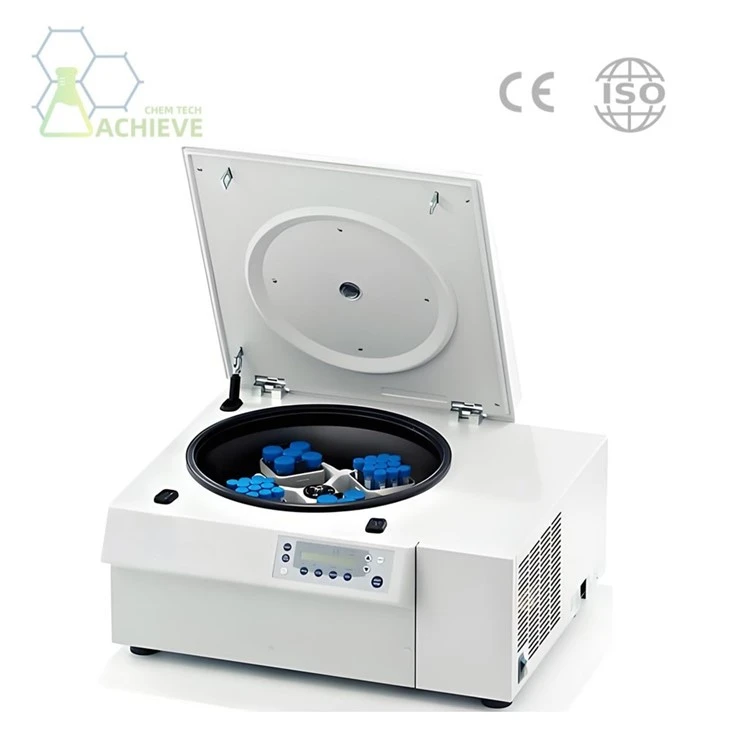


Basket Centrifuge Machine
Description
Technical Parameters
A basket centrifuge machine, as the name suggests, has a drum shape similar to a basket and is a mechanical device that uses centrifugal force to achieve solid-liquid separation. It is mainly used to separate solid particles from liquids in suspensions and is widely used in various fields such as chemical, petroleum, pharmaceutical, food, and environmental protection. With the continuous development of intelligence and automation technology, more attention will be paid to the application of intelligence and automation. By introducing advanced sensors, control systems, and actuators, remote monitoring, automatic adjustment, and fault diagnosis of centrifuges can be achieved, improving production efficiency and safety.
Our Products


Structural composition
The main structural components include the drum, filter screen (or filter cloth), feed pipe, discharge pipe, discharge device, transmission device, motor, and casing.
Drum:
It is the core component, usually cylindrical or conical in shape, with a filter or cloth inside for intercepting solid particles.
Filter (or filter cloth):
Covering the inner wall of the drum, used to filter liquids, allowing liquids to pass through while retaining solid particles.
Feed tube:
Used to introduce the suspension to be separated into the drum.
Liquid outlet pipe:
Used to discharge the separated liquid.
Unloading device:
Used to discharge solid particles from the drum. Depending on the design, the unloading method may vary, such as manual unloading, mechanical unloading, etc.
Transmission device:
Used to drive the rotation of a drum, usually including components such as a motor, pulley, reducer, etc.
Motor:
Provides power for the centrifuge, drives the transmission device and drum rotation.
Shell:
Protects the internal components of the basket centrifuge machine and prevents material leakage.
Working principle
The working principle is based on the action of centrifugal force. When the suspension enters the high-speed rotating drum through the feeding tube, due to the difference in specific gravity between the solid and liquid phases, they will produce different motion trajectories under the action of centrifugal force. Heavier solid particles will be subjected to greater centrifugal force, thrown towards the inner wall of the drum and deposited on the filter screen, while lighter liquid phase will be discharged outside the drum through the filter screen. As the drum continues to rotate, solid particles gradually form a filter cake on the filter screen. When the filter cake reaches a certain thickness or weight, it can be discharged through a discharge device.
Operation process
Biomedical field


The operation process usually includes the following steps:
Check whether the various components of the centrifuge are intact and ensure that the filter screen or cloth is clean and unobstructed. At the same time, adjust the operating parameters of the centrifuge as needed, such as speed and feed rate.
Load the suspension to be separated into the centrifuge drum through the feed tube. During the loading process, it is important to control the feeding speed and amount to avoid overloading or clogging of the centrifuge.
Monitoring the separation process: During the centrifugal separation process, it is necessary to closely monitor the operating status and separation efficiency of the centrifuge. If abnormal conditions such as excessive vibration or noise are found, the machine should be stopped in time for inspection and troubleshooting.
After the separation process is completed, stop the centrifuge and discharge the solid particles in the drum through the unloading device. During the unloading process, attention should be paid to controlling the unloading speed and amount to avoid material loss or blockage of the unloading port.
After unloading, the centrifuge should be cleaned and maintained to ensure its normal operation and extend its service life. When cleaning, pay attention to thoroughly removing residues and dirt from the filter or cloth, and regularly replace damaged or aging components.
Case Analysis
It played a key role in the catalyst solid-liquid separation process of the chemical enterprise. The following is a detailed analysis of the case:
Catalyst characteristics: The catalyst particles have small particle size, uniform distribution, and high specific surface area. This requires ensuring the fineness of the filter or cloth during the solid-liquid separation process to avoid the loss of catalyst particles.
Suspension concentration: The high concentration of catalyst suspension increases the difficulty of separation. High concentration suspensions may generate greater resistance during centrifugation, affecting separation efficiency.
Corrosivity: Some catalysts have corrosiveness, which puts higher demands on the material of centrifuges. It is necessary to choose corrosion-resistant materials such as stainless steel to ensure the long-term stable operation of the centrifuge.
Model selection: Based on the characteristics of the catalyst and the concentration of the suspension, the company has chosen a basket centrifuge with a fine filter and high rotational speed. Fine filters can ensure the retention of catalyst particles, while higher rotational speeds help improve separation efficiency.
Adjustment of operating parameters: In actual operation, the enterprise adjusts the operating parameters such as centrifuge speed, feed rate, and discharge method based on the properties of the catalyst and the concentration of the suspension. By continuously optimizing the operating parameters, the best separation effect has been achieved.
Automated control system: In order to improve production efficiency and safety, enterprises have equipped them with automated control systems. The system is capable of real-time monitoring of the operating status and separation efficiency of the centrifuge, and automatically adjusting according to preset parameters. At the same time, the system also has fault diagnosis and warning functions to ensure the stable operation of the centrifuge.
Separation effect: The recovery rate of the catalyst has been significantly improved through solid-liquid separation treatment using a basket centrifuge. Meanwhile, the separated liquid is clear and transparent, meeting the requirements of subsequent processes.
Economic benefits: The application has improved the utilization rate of catalysts and reduced production costs. At the same time, the introduction of automated control systems has improved production efficiency and reduced the risks and costs of manual operations.
Environmental benefits: The solid-liquid separation process achieves effective recovery and utilization of catalysts, reducing waste emissions. This helps to protect the environment and achieve sustainable development.
Selection of suitable models: When selecting, it is necessary to comprehensively consider factors such as the characteristics of the material and the concentration of the suspension, and choose the appropriate model and configuration.
Optimization of operating parameters: In actual operation, it is necessary to continuously adjust and optimize operating parameters to ensure the best separation effect and production efficiency.
Application of automation control system: The introduction of automation control system can improve production efficiency and safety, reduce the risk and cost of manual operation. Therefore, if conditions permit, basket centrifuge machine is recommended to equip the basket centrifuge with an automated control system.
Characteristic
Simple structure:
Compared to other types of centrifuges, the structure is relatively simple and easy to manufacture and maintain.
Easy to operate:
The operation of the basket centrifuge is relatively simple and easy to master. Meanwhile, some advanced basket centrifuges are also equipped with automated control systems that enable remote monitoring and operation.
Strong adaptability:
Basket centrifuges are suitable for processing various types of suspensions, including materials with larger or smaller particle sizes, materials with higher or lower concentrations, etc.
Good separation effect:
Due to the use of centrifugal force for solid-liquid separation in basket centrifuges, their separation effect is usually good, and the recovery rate of solid particles is relatively high.
Advantage
High separation efficiency:
Basket centrifuge uses centrifugal force for solid-liquid separation, with high separation efficiency, and can quickly separate solid particles from liquids.
Strong adaptability:
Able to handle various types of suspensions, including materials with different particle sizes and concentrations.
Easy to operate:
The operation of the basket centrifuge is relatively simple and easy to master. Meanwhile, some advanced basket centrifuges are also equipped with automated control systems that enable remote monitoring and operation.
Easy to maintain:
The structure of the basket centrifuge is relatively simple, making it easy to maintain and upkeep. Some key components such as filters and drums are easy to replace and clean.
disadvantage
Intermittent operation:
Some basket centrifuges (such as intermittent basket centrifuges) require manual or mechanical devices to unload materials regularly, which cannot achieve continuous operation and may affect production efficiency.
Sensitive to materials:
Basket centrifuges are more sensitive to changes in the properties and concentration of materials, and may need to adjust operating parameters according to the different materials to achieve the best separation effect.
High energy consumption:
basket centrifuge machines require a significant amount of energy during high-speed rotation, resulting in relatively high energy consumption.
Hot Tags: basket centrifuge machine, China basket centrifuge machine manufacturers, suppliers, factory, Hydrothermal Autoclave 100 Ml, Hydrothermal Reactor, Double Jacketed Reactor, High Pressure High Temperature Reactor, Rotovap Machine, High Pressure Reactor
Previous
Batch Centrifugal MachineSend Inquiry


