




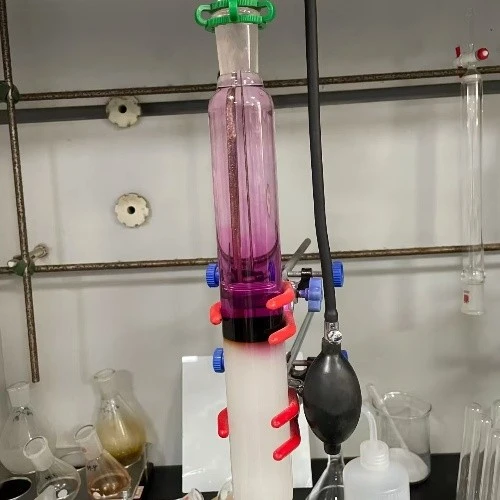
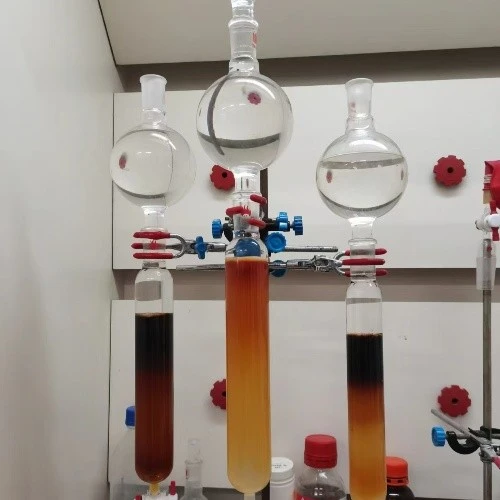
Low Pressure Chromatography Columns
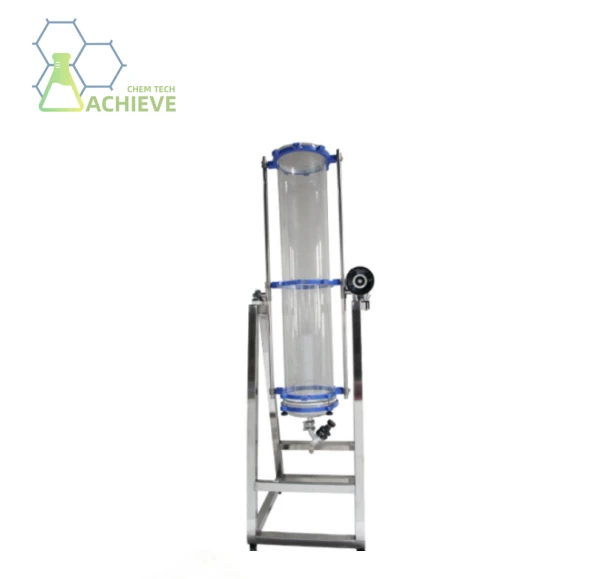
2.Chromatographic Column (Rotation Type)
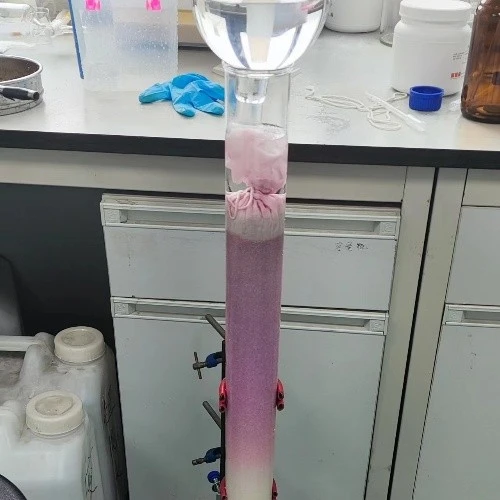
3.Chromatographic Column (Manual)
***Price List for whole above, inquire us to get
Description
Technical Parameters
Low Pressure Chromatography Columns are key components in liquid chromatography technology, widely used in biochemistry, biopharmaceuticals, biotechnology, and other fields that require separation and purification of substances. As an important component of liquid chromatography technology, it plays a significant role in fields such as biochemistry, biopharmaceuticals, and biotechnology. By selecting appropriate fillers, optimizing separation conditions, and proper operation and maintenance, effective separation and purification of different types of compounds can be achieved. With the development of new fillers, the application of intelligent technology, and the realization of multifunctional integration, the performance and application range of low-pressure chomatography coluns will continue to expand and improve.
Parameter


Basic principles
The chromatographic column is the core component of chromatographic technology, and its working principle is mainly based on the differences in interactions between substance molecules and the chromatographic column packing material (also known as the stationary phase). When the sample passes through the chromatographic colun, the affinity between different substance molecules and the stationary phase varies, resulting in different residence times in the colun, thus achieving separation. This separation process is achieved by repeatedly distributing the sample components between the mobile phase (gas or liquid) and the stationary phase under the propulsion of the carrier gas. In low-pressure chromatography, the mobile phase usually passes through the chomatography colun at a lower pressure, making the separation process smoother and more controllable.

Structure and Type

Low pressure chromatography columns are usually composed of three parts: column tube, column head, and packing. The colun tube is the main part of a chromatographic colun, usually made of glass or polymer material, with a length of 240440mm and an inner diameter of 1040mm. The colun head is located at both ends of the column tube and is used to connect components such as infusion pumps, injection valves, and detectors. The packing material is the core part of the chromatographic colun, which determines the separation performance and applicability of the column.
According to their different uses, low-pressure chromatogrphy columns can be divided into analytical chromatogrphy coluns and preparative chromatogrphy columns. Analytical chromatogrphy coluns are mainly used for sample analysis and detection, with high colun efficiency and good separation, but with small processing capacity. Preparation chromatogrphy coluns are used for sample preparation and purification, with large processing capacity and high separation efficiency, but colun efficiency and separation degree may be slightly inferior to analytical chromatogrphy columns.

Packing material

Packing is a key component in low-pressure chomatography columns, which determines the separation performance and applicability of the column. The packing of low-pressure chromatogrphy coluns is usually made of soft materials such as pectin, agarose, cellulose, synthetic polymers, or ion exchangers, with a particle size of 4060 μ m (some literature also mentions a particle size range of 40130 μ m). These fillers have different physical and chemical properties, such as polarity, hydrophobicity, charge, etc., and can interact with sample molecules in different ways to achieve separation.
The selection of fillers is crucial for the separation efficiency of low-pressure chromatogrphy coluns. Different fillers are suitable for different types of samples and separation requirements. For example, natural polysaccharide fillers such as pectin and agarose are suitable for the separation and purification of biomolecules; Cellulose based fillers are suitable for the separation of organic small molecule compounds; Synthetic polymer fillers have a wider range of applicability and can be used to separate different types of compounds.

Compare
To gain a more comprehensive understanding of the characteristics and advantages of low-pressure chromatogrphy columns, we can compare them with high-pressure liquid chromatogrphy columns.
(1) Operating pressure:
The operating pressure of low-pressure chromatogrphy columns is relatively low, generally within the range of 101000 psi (0.770 bar); The operating pressure of high-pressure liquid chromatogrphy columns is relatively high, usually carried out at pressures above 2000 psi (140 bar). This makes the low-pressure chomatography column more stable and controllable during operation, reducing the risk of instrument damage.
(2) Separation efficiency:
Although high-pressure liquid chromatogrphy colums have higher separation efficiency, low-pressure chromatogrphy columns have unique advantages in separating large molecule compounds and natural products. In addition, low-pressure chromatogrphy columns are more cost-effective, easy to operate, and flexible, making them suitable for fields such as laboratory and industrial scale biological product processing.
(3) Instrument configuration requirements:
High pressure liquid chromatogrphy columns need to be equipped with high-precision components such as high-pressure infusion pumps and high-pressure injection valves to ensure their normal operation; It have lower requirements for instrument configuration and can be driven by simple components such as peristaltic pumps. This makes low-pressure chromatogrphy columns more cost-effective in terms of instrument procurement and maintenance.
(4) Application scope:
Low pressure chromatography columns are suitable for separating and purifying natural products, proteins, nucleic acids, peptides and other biomolecules, as well as organic small molecule compounds; High pressure liquid chromatogrphy columns are more suitable for fields that require high separation efficiency and separation of trace components, such as drug analysis and environmental monitoring.
Operation and maintenance
Proper operation and maintenance are crucial for maintaining the performance and extending the service life of low-pressure chromatogrphy columns. Here are some key operational and maintenance recommendations:
Preparation before operation:
Ensure the correct connection between the chromatographic column and the liquid chromatography instrument.
Check whether the composition and pH value of the mobile phase meet the requirements.
Rinse the chomatography column with an appropriate solvent to remove residues.
Sample processing:
Ensure that the sample has undergone appropriate pretreatment, such as filtration, centrifugation, etc., before injection to remove impurities and particles.
Control the injection volume and concentration of the sample to avoid overloading that may cause a decrease in column performance.
Mobile phase control:
Monitor the flow rate and pressure of the mobile phase to ensure they are within the specified range.
Regularly check the composition and stability of the mobile phase to avoid contamination and deterioration.
Temperature control:
Control the temperature of the chromatographic column and mobile phase to reduce the impact of thermal effects on separation efficiency.
Ensure the stability and reliability of the temperature control system to avoid unstable separation caused by temperature fluctuations.
Cleaning and regeneration:
Regularly clean the chomatography column with appropriate solvents to remove residues and contaminants.
For chromatogrphy colums that have not been used for a long time, perform regeneration treatment to restore their performance.
Storage and maintenance:
When not in use, fill the chomatography column with an appropriate solvent and store it at an appropriate temperature.
Regularly check the status and performance of the chomatography column, and replace damaged or aged components in a timely manner.
Recording and analysis:
Record the operating conditions, separation efficiency, and chromatographic column status for each experiment.
Analyze experimental data, evaluate changes in the performance of chromatographic columns, and take timely measures for adjustment and optimization.
Case analysis


The following are some case studies of using low-pressure chomatography columns for separation and purification, aiming to demonstrate the application effects of low-pressure chomatography columns in different fields:
(1) Protein separation:
Separate protein mixtures using ion exchange chomatography columns. By adjusting the pH and ionic strength of the mobile phase, selective separation of different proteins was achieved.
The molecular weight of proteins was screened by gel filtration chomatography column. Different proteins were separated and purified based on their molecular weight.
(2) Nucleic acid isolation:
Use affinity chomatography columns for specific separation of nucleic acids. By introducing specific ligands, selective binding and separation of specific nucleic acid sequences have been achieved.
The nucleic acid mixture is further purified by ion exchange or gel filtration chomatography column to remove impurities and pollutants.
(3) Separation of small molecule compounds:
Separate small molecule compounds using a reverse phase chomatography column. By adjusting the composition and polarity of the mobile phase, the separation of small molecule compounds with different polarities was achieved.
Selective separation of small molecule compounds with specific functional groups using a normal phase chomatography column.
(4) Natural product separation:
Separation and purification of active ingredients in plant extracts using low-pressure chromatograhy columns. By optimizing separation conditions and selecting appropriate fillers, biologically active compounds were successfully extracted.
The use of low-pressure chomatography columns for the separation and identification of metabolites in microbial fermentation broth provides candidate molecules for new drug development.
These case studies demonstrate the widespread application and good performance of Low Pressure Chromatography Columns in different fields. By selecting appropriate chromatographic columns and optimizing separation conditions, effective separation and purification of different types of compounds can be achieved.
Hot Tags: low pressure chromatography columns, China low pressure chromatography columns manufacturers, suppliers, factory, Hydrothermal Reactor Autoclave, Single Press Tablet Machine, Short Path Distillation Equipment, Short Path Distillation, High Pressure High Temperature Reactor, Stainless Steel Chemical Reactor
Send Inquiry


