


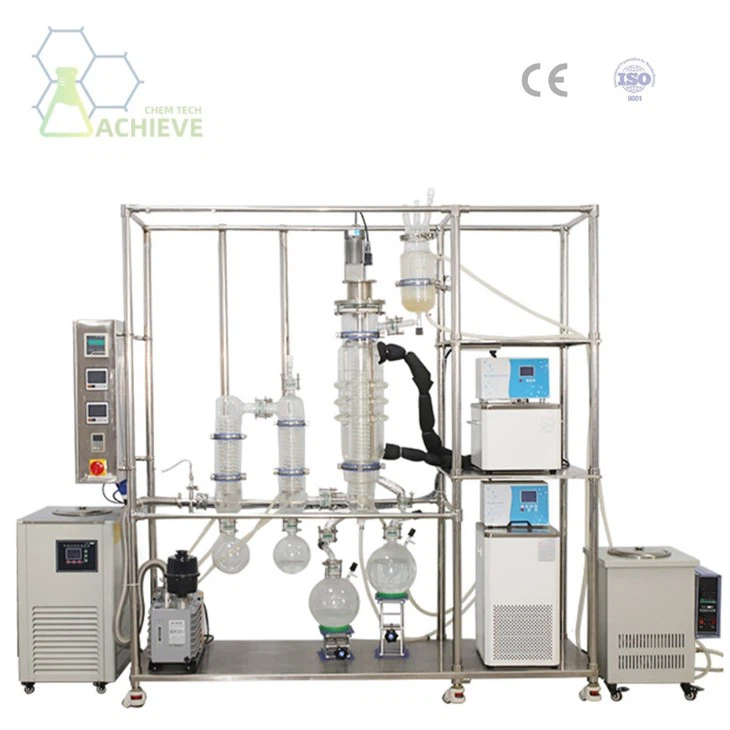

Molecular Distillation System 1-100L/h

Molecular Distillation System 1-100L/h

Molecular Distillation System 1-100L/h

Molecular Distillation System 1-100L/h
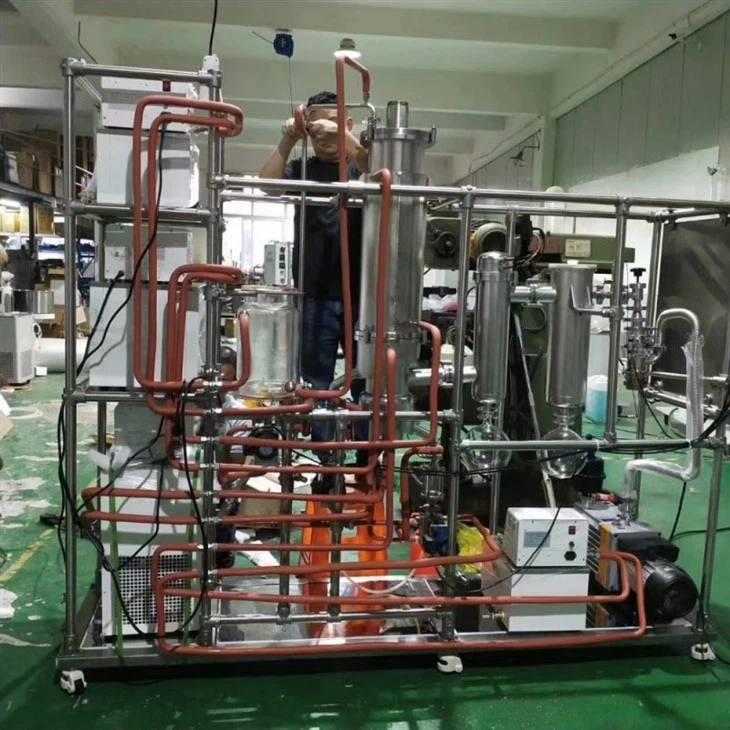
Molecular Distillation System 1-100L/h

Molecular Distillation System 1-100L/h

Molecular Distillation System 1-100L/h
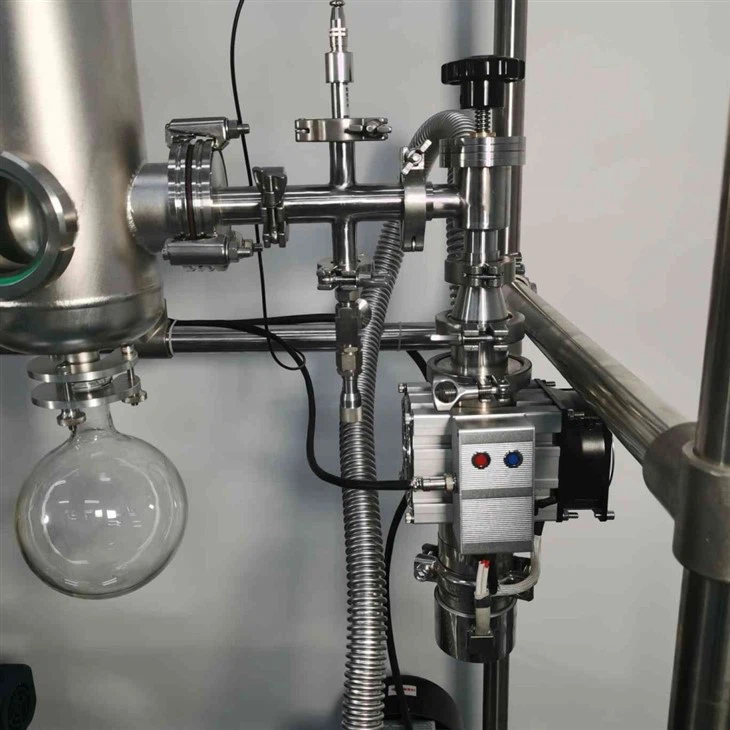
Molecular Distillation System 1-100L/h

Molecular Distillation System 1-100L/h
Molecular Distillation System 1-100L/h
CE/ISO certified
Turnkey solution
16 years factory experience,24/7 after-sales. Request a quote now!
Description
Technical Parameters
Molecular distillation system is a highly specialized technical method that finely purifies and separates liquid or solid mixtures based on their differences in physical and chemical properties. This technology is widely used in various fields such as chemical, pharmaceutical, food, and environmental protection to achieve efficient and precise mixture separation goals. The molecular distillation unit, commonly known as the distillation tower in the industry, is the core component of molecular distillation equipment and plays a crucial role.
The design of a distillation tower is intricate and complex, consisting of a series of carefully arranged trays or plates stacked together. These trays or plates not only provide a platform for step-by-step contact and reaction of the mixture, but are also the key to achieving separation. During the distillation process, after the mixture is heated to a certain temperature, the different components inside will gradually separate according to their respective boiling points and density characteristics. Lighter components (usually low boiling point substances) will preferentially evaporate and rise, while heavier components (usually high boiling point substances) will remain below or continue to flow downwards.
Through the step-by-step action of multi-stage trays or plates in the distillation tower, different components in the mixture can be effectively separated and purified. At the same time, the distillation tower is also equipped with an advanced condensation system to ensure that the evaporated components can be quickly cooled and condensed into liquid, thereby facilitating subsequent collection and processing.

Product Introduction
The heating source in the molecular distillation unit raises the temperature of the feed solution or solid material at the top of the distillation column. As the solution vaporizes, it passes through each tray or stage of the column, where it condenses into a distinct phase due to differences in boiling points and densities. The cooled vapor then enters a receiver vessel, where the separated components are collected.

Molecular distillation systems have many applications in various industries, including pharmaceuticals, materials science, food and beverage processing, and biotechnology. By using molecular distillation, it is possible to purify complex mixtures with high purity requirements, such as isolating pure compounds from plant extracts or separating essential oils from plant material. This results in improved product quality and increased yield, making molecular distillation an important tool for many industries.
Product Patterns


Several operating factors can affect the stability of a working molecular distillation system. These include:
Temperature control:
The temperature of the heating source must be carefully controlled to ensure that the feed solution is vaporized at the correct rate without exceeding its boiling point. Overheating can cause uneven vaporization and lead to instability in the distillation process.
Pressure control:
The pressure applied to the feed solution can also affect the stability of the molcular ditillation sytem. High pressure can cause over-condensation of the vaporized solution, leading to instability in the distillation process.
Condenser design:
The design of the condenser is important to ensure that the vaporized solution is cooled efficiently and does not overheat during its passage through the distillation column. A poorly designed condenser can lead to instability in the distillation process.
Feed concentration:
The concentration of the feed solution can also affect the stability of a molcular ditillation systm. High concentrations can cause over-vaporization and lead to instability in the distillation process.
Overall, proper control of these operating factors is essential to ensure that a mlecular dstillation systm operates smoothly and produces high-quality separated products.
All specification and price list, please click here to get
Product Features
Several operating factors can affect the stability of a working molecular distillation system. These include:
Temperature control:
The temperature of the heating source must be carefully controlled to ensure that the feed solution is vaporized at the correct rate without exceeding its boiling point. Overheating can cause uneven vaporization and lead to instability in the ditillation process.
Pressure control:
The pressure applied to the feed solution can also affect the stability of the molcular distillatin systm. High pressure can cause over-condensation of the vaporized solution, leading to instability in the ditillation process.
Condenser design:
The design of the condenser is important to ensure that the vaporized solution is cooled efficiently and does not overheat during its passage through the distillation column. A poorly designed condenser can lead to instability in the ditillation process.
Feed concentration:
The concentration of the feed solution can also affect the stability of a molcular ditillation systm. High concentrations can cause over-vaporization and lead to instability in the ditillation process.
Overall, proper control of these operating factors is essential to ensure that a molcular ditillation systm operates smoothly and produces high-quality separated products.

Applications
|
|
|


Molecular distillation system, as an advanced physical separation technology, plays an important role in many industries due to its efficient separation ability and wide application fields.
Crude oil separation and refining
In the petrochemical industry, the separation and refining of crude oil is one of the important applications of molcular ditillation systms. Crude oil is a complex mixture that contains a large number of hydrocarbon compounds, whose boiling points vary greatly. Traditional distllation methods often struggle to completely separate these compounds, while molecular distllation technology can accurately control temperature and pressure to achieve efficient separation of hydrocarbon compounds. Through molecular distilation, various components in crude oil such as gasoline, diesel, lubricating oil, paraffin, etc. can be separated to obtain high-quality petroleum products.
Refining of lubricating base oil
Lubricating base oil is another important product in the petrochemical industry. Through molecular distllation technology, high value-added components in petroleum, such as lubricating base oils, can be separated and purified. This technology can remove impurities and poor components from base oil, improve its quality and performance, and meet the high requirements of various high-end mechanical equipment for lubricating oil.
Recycling and reuse of waste plastics
With the rapid development of the plastic industry, the issue of recycling and reusing waste plastics is becoming increasingly prominent. Molecular distllation technology can be used to recover monomers from waste plastics and achieve resource reuse. Through molecular distllation, polymer compounds in waste plastics can be decomposed into small molecule monomers, which can be reused in plastic production, helping to reduce environmental pollution and save resources.
Purification and refinement of drugs
The pharmaceutical manufacturing industry has extremely high requirements for product purity and quality. Molecular distllation technology can remove impurities from drugs, improve their purity and efficacy. In the process of drug purification, molecular distilation technology can achieve efficient separation of drug components based on their boiling point differences. The drugs purified by molecular distilation have more significant efficacy and higher safety, which helps to improve the therapeutic effect on patients.
Extraction and Separation of Natural Medicines
Molecular distilation technology also has important applications in the extraction and separation of natural medicines. Natural medicines usually contain multiple active ingredients, which can easily interfere with each other during the extraction process, affecting the purity and efficacy of the medicine. Through molecular distilation technology, the active ingredients in natural medicines can be separated and purified to obtain high-purity pharmaceutical raw materials. For example, molecular distilation technology can be used to extract high-purity natural nutrients such as vitamin A, vitamin E, and carotenoids.
Separation and purification of bioactive substances
Bioactive substances are an important class of substances in the field of pharmaceutical manufacturing, with various biological functions such as antibacterial, anti-inflammatory, anti-tumor, etc. However, the separation and purification of bioactive substances have always been a difficult problem in pharmaceutical manufacturing. Molecular distilation technology can achieve efficient separation and purification of bioactive substances based on their boiling point differences and molecular motion characteristics. The bioactive substances separated by molecular distillation technology have higher purity and activity, which is helpful for the development and production of new drugs.
Oil refining and purification
In the food processing industry, the refining and purification of oils and fats is one of the important applications of molecular distillation systems. Through molecular distillation technology, oils and fats can be refined to remove impurities and undesirable components, thereby improving their quality and nutritional value. For example, in the refining process of fish oil, molecular distilation technology can separate and purify high-purity Omega-3 fatty acids (such as EPA and DHA), while removing fishy substances, cholesterol, and other impurities from fish oil.
Extraction and purification of food additives
Food additives are an indispensable part of food processing. Through molecular distllation technology, various food additives such as vitamin E and plant sterols can be extracted and purified. These food additives have multiple functions, such as antioxidant, preservative, and flavor enhancement. The food additives extracted through molecular distllation technology have higher purity and safety, which helps to improve the quality and safety of food.
Production of food spices
Food flavorings are another important substance in food processing. Through molecular distillation technology, various components of food flavorings can be extracted and purified, such as rose essential oil, peppermint essential oil, etc. These spices have a rich aroma and unique flavor, which can enhance the taste and quality of food. Meanwhile, molecular distilation technology can also remove impurities and unpleasant odor components from spices, improving the purity and aroma quality of spices.
Wastewater treatment and resource utilization
In the field of environmental protection treatment, molecular distilation technology can be used to treat organic wastewater and achieve the resource utilization of wastewater. Through molecular distilation technology, organic matter in wastewater can be separated and recovered to obtain valuable chemicals or resources. This technology not only helps reduce environmental pollution, but also enables the reuse of resources, with significant economic and environmental benefits.
Waste gas treatment and recovery
In addition to wastewater treatment, molecular distilation technology can also be used to treat industrial waste gases. Through molecular distilation technology, organic compounds in exhaust gases can be separated and recovered, reducing environmental pollution. Meanwhile, the recycled organic matter can also be reused as a resource, reducing production costs and improving economic benefits. This technology has broad application prospects in industries such as chemical engineering and pharmaceuticals.
In the field of new energy
In the field of new energy, molecular distilation technology can be used to extract effective components from biomass fuels and improve fuel utilization efficiency. Through molecular distllation technology, various chemical components in biomass can be separated and purified to obtain high-purity fuel raw materials. This technology helps promote the development and utilization of biomass energy, and facilitate the growth of the new energy industry.
Daily chemical industry
Molecular distillation technology is also widely used in the field of daily chemical industry. For example, in the manufacturing process of perfume, molecular distilation technology can separate different volatile components to ensure the durability and stability of perfume. In addition, molecular distilation technology can also be used to extract plant essence and manufacture high-quality skin care products and hair care products. These products have multiple benefits, such as moisturizing, anti-aging, and hair loss prevention, and are deeply loved by consumers.
Molecular biology research
In the field of molecular biology, molecular distilation technology can serve as a pretreatment technique for biological research. Through molecular distillation technology, the biological activity of the original tissue can be preserved and biological samples can be prepared. This technology has broad application prospects in fields such as biomedical research and genetic engineering.
Hot Tags: Molecular Distillation System 1-100L/h, China Molecular Distillation System 1-100L/h manufacturers, suppliers, factory, SS Reactor, High Pressure Reactor Vessel, Double Layer Glass Reactor, 50L Jacketed Reactor, PPL Lined Hydrothermal Autoclave, High Pressure Stainless Steel Reactor
Previous
Wiped Film Molecular DistillationSend Inquiry


