


Why Tablet Compression Machine Have Odd Number Of Station
Aug 03, 2024
Leave a message
Introduction
Tablet compression machines are essential for pharmaceutical manufacturing, playing a crucial role in the production of tablets. Among these machines, the 16 Station Tablet Compression Machine stands out for its unique design features. One intriguing aspect of these machines is the odd number of stations. In this blog, we'll explore why tablet compression machines, including those with 16 stations, have odd numbers of stations and the benefits that come with this design.
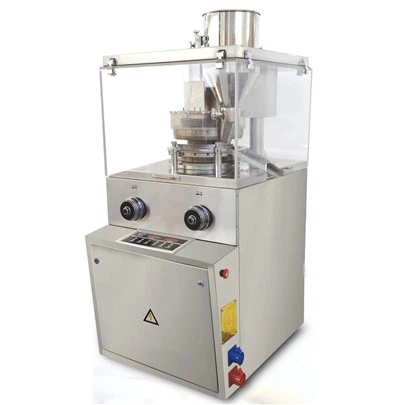
Understanding the Design Principles Behind Tablet Compression Machines
Tablet compression machines are critical in pharmaceutical manufacturing, and their design is essential for ensuring high-quality tablet production. These machines are designed with a specific number of stations, often with odd numbers, to optimize the compression process. Understanding the underlying design principles can help explain why odd-numbered stations are commonly used.
Balancing Production Efficiency and Quality
One of the key design principles is to balance production efficiency with quality control. Odd-numbered stations, such as 9, 11, or 13, help achieve this balance by reducing the potential for mechanical imbalance. With an odd number of stations, the compression force is distributed more evenly across the tablet punch, which minimizes wear and tear on the machinery and ensures a more uniform tablet weight and hardness. Of course, 16 Station Tablet Compression Machine can do this, too.
Additionally, odd-numbered stations allow for a more effective rotation and synchronization of the tablet punches. This configuration helps in evenly distributing the material across the compression dies, which is crucial for maintaining consistency in tablet quality. The rotational symmetry provided by odd-numbered stations also helps in reducing downtime and maintenance needs, as the wear is more evenly spread out over time.
Enhancing Operational Flexibility
Another important aspect of design is operational flexibility. Odd numbers of stations often allow for better flexibility in adjusting the compression settings. This is particularly useful in high-speed production environments where quick adjustments are necessary to accommodate different tablet formulations and sizes. By having an odd number of stations, manufacturers can more easily fine-tune the machine settings to achieve the desired tablet characteristics without compromising on production speed or efficiency.
What Are the Benefits of Odd Numbers of Stations in Tablet Compression Machines?
Improved Tablet Quality and Consistency
Having an odd number of stations in a tablet compression machine offers several benefits related to the quality and consistency of the tablets produced. Here's why:
Uniform Compression: In machines with odd numbers of stations, the compression force is distributed more evenly across the tablet dies. This helps in achieving uniform tablet hardness and density, which is crucial for maintaining tablet quality and ensuring dosage accuracy.
Reduced Stress on Components: Odd-numbered stations often result in a more balanced distribution of stress on the machine's components. This balanced load can reduce wear and tear, leading to longer machine life and fewer maintenance issues. For instance, a 16-station machine has a more balanced stress distribution compared to a 15-station machine, which might be more prone to uneven wear.
Enhanced Tablet Ejection: Odd-numbered stations can improve the efficiency of the tablet ejection process. With evenly spaced stations, the machine can eject tablets more smoothly and consistently, minimizing the risk of tablet breakage or damage.
Efficiency in Production and Maintenance
Odd-numbered stations compared to 16 Station Tablet Compression Machine can contribute to both production efficiency and ease of maintenance:
Continuous Operation: Machines with an odd number of stations, such as the 16-station model, often support continuous operation with fewer interruptions. This is because the even distribution of stations allows for a more balanced rotation of the turret, leading to smoother operation and less frequent adjustments.
Simplified Maintenance: Maintenance and part replacement can be more straightforward with odd-numbered stations. The design often simplifies the alignment and calibration processes, as the even distribution helps in identifying and addressing issues more easily. For example, a 16-station machine might have simpler alignment adjustments compared to a machine with a different number of stations.
Increased Production Speed: The balanced design can enhance the speed at which tablets are produced. By reducing the likelihood of mechanical issues and improving the efficiency of each compression cycle, machines with odd numbers of stations can achieve higher production rates.
Adaptability to Different Tablet Sizes and Shapes
Machines with odd numbers of stations offer greater flexibility in adapting to various tablet sizes and shapes:
Versatility: The modular design of machines with odd-numbered stations, like the 16-station model, often allows for easier adaptation to different tablet formulations. This versatility of 16 Station Tablet Compression Machine is beneficial for manufacturers who need to produce a range of tablet sizes and shapes.
Custom Tooling: Odd-numbered stations can accommodate custom tooling configurations more effectively. This adaptability allows manufacturers to design punches and dies that fit perfectly within the machine, resulting in precise and consistent tablet production.
Efficiency in Small Batches: For production runs that involve smaller batch sizes, odd-numbered stations can offer improved efficiency. The machine can be configured to handle various batch sizes without compromising on tablet quality or production speed.
How Do Odd Numbers of Stations Impact Tablet Compression Machine Design?
Design and Engineering Considerations
The design of tablet compression machines with odd numbers of stations involves several key engineering considerations:
Turret Design: The turret, which holds and rotates the punches and dies, must be precisely engineered to accommodate the odd-numbered stations. This ensures smooth rotation and consistent tablet compression. For example, a 16-station turret is designed to evenly distribute mechanical forces and maintain stability during operation.
Tooling Compatibility: Tooling for machines with odd numbers of stations must be carefully designed to ensure compatibility with the machine's configuration. Manufacturers need to produce punches and dies that align perfectly with the machine's design, which can be more straightforward with odd-numbered stations.
Operational Balance: Engineers must account for the operational balance of the machine when designing it with an odd number of stations. The even distribution of stations helps maintain balance and reduces vibration, which is crucial for reliable and efficient operation.
Technological Advancements and Innovations
Recent advancements in tablet compression machine technology have further enhanced the benefits of odd-numbered stations:
Automation: Modern tablet compression machines with odd-numbered stations often feature advanced automation systems that improve precision and efficiency. Automated processes for feeding, compression, and ejection ensure consistent tablet quality and reduce manual intervention.
Smart Monitoring: Advanced machines are equipped with smart monitoring systems that track various performance parameters. These systems provide real-time data on machine operation, allowing for proactive maintenance and optimization of production processes.
Energy Efficiency: Technological innovations have also led to more energy-efficient machines. By optimizing the design and operation of odd-numbered stations, manufacturers can reduce energy consumption and operational costs.
Conclusion
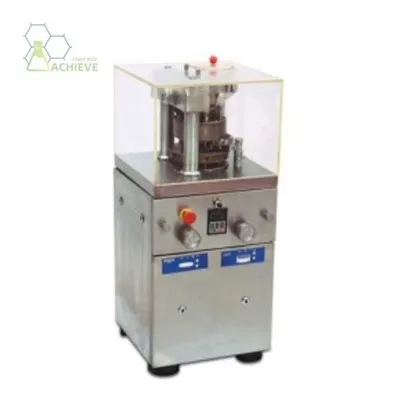
Tablet compression machines with odd numbers of stations, such as the 16 Station Tablet Compression Machine, offer several advantages in terms of tablet quality, production efficiency, and adaptability. The even distribution of stations enhances the uniformity of tablet compression, simplifies maintenance, and supports efficient production. As technology continues to advance, these machines will likely benefit from further innovations, making them even more effective and versatile.
For more information about our tablet compression machines or other lab equipment, please contact us at sales@achievechem.com.