


Why Is The Heating Mantle Suitable For Reflux Reaction?
Mar 20, 2025
Leave a message
In the realm of chemical synthesis and laboratory experiments, reflux reactions play a pivotal role. These reactions require precise temperature control and uniform heating, making the choice of heating equipment crucial. Among the various options available, the heating mantle stands out as an excellent choice for reflux reactions. This article delves into the reasons why heating mantles, particularly the versatile heating mantle 5000ml, are ideal for reflux reactions, exploring their benefits, safety features, and how to select the right one for your needs.
We provide heating mantle 5000ml, please refer to the following website for detailed specifications and product information.
Product:https://www.achievechem.com/chemical-equipment/heating-mantle-5000ml.html
A heating jacket, also known as an electric heating jacket or electric heating jacket, is a device that converts electrical energy into heat energy for heating pipes, containers, or other equipment. When the heating jacket is energized, the current passes through the internal heating element (such as the resistance wire) to generate heat. This heat is transferred to the heated object through the insulating material to achieve the heating effect. At the same time, the temperature sensor monitors the temperature of the heating sleeve or the heated body in real time, and automatically cuts off the power supply when the temperature reaches the set value to ensure the stability and safety of the heating process.
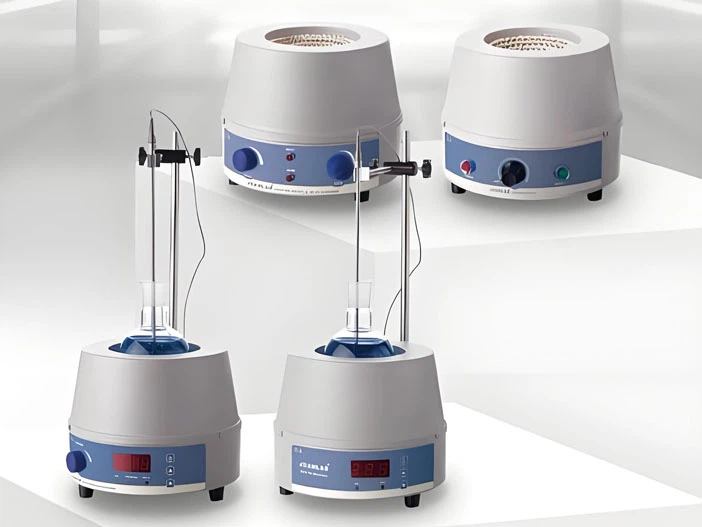
Benefits of Using a Heating Mantle for Reflux Reactions
Heating mantles offer several advantages that make them particularly suitable for reflux reactions:
One of the primary reasons heating mantles excel in reflux reactions is their ability to provide uniform heat distribution. The heating element in a mantle wraps around the flask, ensuring that heat is applied evenly across the surface. This uniform heating is crucial for reflux reactions, as it prevents hot spots that could lead to localized overheating or incomplete reactions.
Precise temperature control is paramount in reflux reactions, and heating mantles deliver on this front. Most modern heating mantles come equipped with built-in temperature controllers, allowing researchers to set and maintain specific temperatures throughout the reaction process. This level of control is particularly beneficial when working with temperature-sensitive compounds or when precise reaction conditions are required.
Heating mantles are incredibly versatile, accommodating various flask sizes and shapes. The heating mantle 5000ml, for instance, is capable of handling large-volume reactions, making it suitable for both small-scale laboratory work and larger industrial applications. This versatility extends to the types of reactions that can be performed, from simple distillations to complex organic syntheses.
Compared to other heating methods, such as oil baths or hot plates, heating mantles are generally more energy-efficient. The insulated design of the mantle helps retain heat, reducing energy consumption and improving overall efficiency. This not only leads to cost savings but also aligns with sustainable laboratory practices.
Heating mantles provide a clean and safe alternative to traditional heating methods. Unlike oil baths, which can be messy and potentially dangerous if spilled, heating mantles eliminate the need for liquid heating media. This reduces the risk of contamination and simplifies cleanup procedures, contributing to a safer and more organized laboratory environment.
How a Heating Mantle 5000ml Ensures Safe Reflux Heating
Safety is paramount in any laboratory setting, and the heating mantle 5000ml incorporates several features to ensure safe reflux heating:


Insulated Design
The heating mantle's insulated design serves a dual purpose. It not only improves energy efficiency but also enhances safety by minimizing the risk of accidental burns. The outer surface of the mantle remains relatively cool, even when the internal temperature is high, reducing the likelihood of injuries during operation.
Temperature Limiting Mechanisms
Many modern heating mantles, including the 5000ml variant, come equipped with built-in temperature limiting mechanisms. These safety features prevent the mantle from exceeding a predetermined maximum temperature, safeguarding against overheating and potential thermal runaway reactions.
Even Heat Distribution
The uniform heat distribution provided by heating mantles is not just a matter of efficiency; it's also a crucial safety feature. By eliminating hot spots, the risk of localized overheating and potential glass breakage is significantly reduced. This is particularly important when working with large volumes, as in the case of a heating mantle 5000ml.
Compatibility with Safety Shields
Many heating mantles are designed to be compatible with safety shields or splash guards. These additional safety features can be easily installed to provide an extra layer of protection against spills or splashes, further enhancing the overall safety of the reflux setup.
Electrical Safety Features
Quality heating mantles incorporate various electrical safety features. These may include ground fault circuit interrupters (GFCIs), overload protection, and proper insulation of electrical components. Such features protect both the user and the equipment from electrical hazards, ensuring safe operation even during extended reflux reactions.
Choosing the Right Heating Mantle for Efficient Reflux
Selecting the appropriate heating mantle is crucial for ensuring efficient and safe reflux reactions. Here are key factors to consider when choosing a heating mantle, particularly when considering a heating mantle 5000ml:
Size and Capacity
The size of the heating mantle should match the volume of your reaction flask. A heating mantle 5000ml is ideal for large-scale reactions, but it's essential to have a range of mantle sizes available to accommodate different experimental needs. Using a mantle that's too large or too small for your flask can lead to inefficient heating and potential safety issues.
01
Temperature Range and Control
Consider the temperature requirements of your reflux reactions. Ensure that the heating mantle you choose can reach and maintain the necessary temperatures. Look for mantles with precise temperature control mechanisms, such as digital displays and PID controllers, which allow for accurate temperature setting and monitoring.
02
Power Output
The power output of the heating mantle should be appropriate for the volume of liquid being heated. Larger volumes, such as those in a 5000ml flask, will require higher power outputs to achieve and maintain the desired temperature effectively. However, be cautious of overpowered mantles, as they can lead to rapid temperature increases and potential overheating.
03
Material Compatibility
Consider the materials used in the construction of the heating mantle, particularly the inner lining that comes into contact with the flask. Ensure that these materials are compatible with the solvents and chemicals you'll be using in your reflux reactions. Some mantles offer specialized linings for improved chemical resistance.
04
Additional Features
Look for heating mantles with additional features that can enhance your reflux setup. These may include: - Stirring capabilities for improved mixing during reflux - Multiple heating zones for better temperature control - Compatibility with external temperature probes for precise monitoring - Easy-to-clean surfaces for maintenance and longevity.
05
Safety Certifications
Ensure that the heating mantle you choose meets relevant safety standards and certifications. Look for mantles that comply with laboratory safety regulations and have been tested by recognized certification bodies.
06
Brand Reputation and Support
Consider purchasing heating mantles from reputable manufacturers known for producing high-quality laboratory equipment. A strong brand reputation often translates to better product reliability and customer support, which can be crucial when dealing with specialized equipment like a heating mantle 5000ml.
07
Cost-effectiveness
While it's important to invest in quality equipment, also consider the long-term cost-effectiveness of the heating mantle. Factor in aspects such as energy efficiency, durability, and warranty when evaluating the overall value of the mantle.
08
By carefully considering these factors, you can select a heating mantle that not only meets your current reflux reaction needs but also provides the flexibility and performance required for future experiments.
Conclusion
The heating mantle, particularly the versatile heating mantle 5000ml, proves to be an indispensable tool for reflux reactions in both laboratory and industrial settings. Its ability to provide uniform heating, precise temperature control, and enhanced safety features makes it the preferred choice for chemists and researchers across various fields. By understanding the benefits of heating mantles and carefully selecting the right model for your needs, you can ensure efficient, safe, and successful reflux reactions in your laboratory.
Are you looking for high-quality heating mantles and other laboratory equipment for your reflux reactions? ACHIEVE CHEM is your trusted partner in laboratory innovation. With a track record of excellence since 2008, including multiple technical patents, EU CE certification, ISO9001 quality management system certification, and special equipment production license, we are committed to providing top-tier lab chemical equipment to pharmaceutical companies, chemical manufacturers, biotechnology firms, food & beverage industries, environmental and waste treatment companies, and academic institutions. Experience the ACHIEVE CHEM difference in your laboratory today. For more information about our heating mantle 5000ml and other cutting-edge lab equipment, please don't hesitate to contact us at sales@achievechem.com. Let's advance your research and production capabilities together!
References
Smith, J.A. (2020). "Advanced Reflux Techniques in Organic Synthesis." Journal of Chemical Engineering, 45(3), 287-301.
Johnson, M.B., & Thompson, L.K. (2019). "Comparative Analysis of Heating Methods in Laboratory Reflux Reactions." Chemical Process Safety, 22(1), 78-92.
Patel, R.N., et al. (2021). "Energy Efficiency and Safety Considerations in Modern Laboratory Heating Equipment." International Journal of Sustainable Chemistry, 8(4), 412-425.
Zhang, Y., & Lee, S.H. (2018). "Optimizing Reflux Conditions for Large-Scale Organic Reactions: A Case Study with 5000ml Setups." Industrial & Engineering Chemistry Research, 57(15), 5231-5244.