


Which Single Station Tablet Presses Are Best
Jun 28, 2024
Leave a message
Exploring the Ideal Single Station Tablet Presses for Small Laboratories
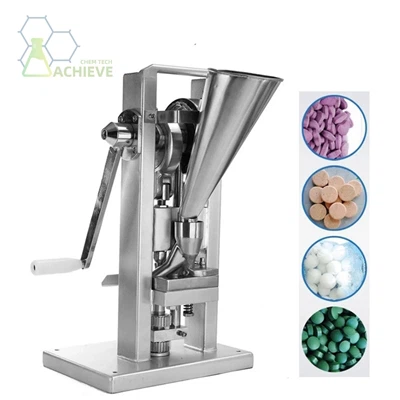
In the realm of pharmaceutical research and development, the choice of equipment can significantly impact the efficiency and accuracy of experimental outcomes.
Single station tablet presses play a pivotal role in small laboratories, enabling precise tablet formulation for various research purposes. This comprehensive guide aims to dissect the nuances of the products, highlight key considerations for selection, and provide insights into leading models available in the market today.
Understanding the Role of Single Station Tablet Presses in Laboratory Settings
The products are critical tools in laboratory settings, particularly in pharmaceutical, chemical, and materials science research. These machines facilitate the development and testing of new formulations by producing small batches of tablets with precise control over various parameters.
Formulation Development
In pharmaceutical research, the products are instrumental for formulation development. These presses allow scientists to experiment with different excipients, active pharmaceutical ingredients (APIs), and compression forces to optimize tablet properties such as hardness, dissolution rate, and stability. This capability is essential for ensuring that new drugs meet both therapeutic and regulatory requirements before moving to larger-scale production.
Quality Control
Quality control is another crucial application of the products in laboratories. These machines enable researchers to produce tablets that are then subjected to rigorous testing for uniformity, weight variation, friability, and disintegration. This ensures that any issues can be identified and resolved early in the development process, thereby reducing the risk of costly failures in later stages.
Materials Science
Beyond pharmaceuticals, the products are used in materials science to study the properties of various powders and granules. Thomas Scientific highlights their use in creating tablets from powdered metals, ceramics, and other materials, which are then evaluated for their mechanical properties and behavior under stress. This is particularly useful in developing new materials for industrial applications.
Educational Purposes
Single station tablet presses also serve an educational role in academic institutions. They are employed in teaching laboratories to help students understand the principles of tablet formulation and the impact of different variables on tablet quality. This hands-on experience is invaluable for future pharmacists, chemists, and materials scientists.
Cost-Effective Research
One of the primary benefits of using the products in laboratory settings is their cost-effectiveness. The research points out that these machines require a relatively low initial investment and minimal maintenance compared to larger rotary presses, making them an economical choice for research and development purposes.
Flexibility and Precision
The flexibility and precision offered by the products are unmatched. Researchers can quickly adjust compression force, fill depth, and punch speed to produce tablets with specific characteristics.The research emphasizes that this level of control is crucial when working with novel compounds or when fine-tuning formulations for optimal performance.
In conclusion, the products play a vital role in laboratory settings across various fields. Their ability to produce high-quality tablets in small quantities, combined with their cost-effectiveness and precision, makes them indispensable for formulation development, quality control, materials research, and education.
Key Features Essential for Single Station Tablet Presses
When evaluating single station tablet presses for small laboratory use, several critical features should be considered:
1. Precision in Tablet Compression: Ability to achieve consistent tablet weight and hardness, crucial for reproducible experimental results.
2. Versatility in Tablet Design: Capability to produce tablets of various shapes and sizes to accommodate diverse formulation needs.
3. Ease of Operation: Intuitive interfaces and controls that facilitate user-friendly operation, minimizing training time and operational errors.
4. Maintenance and Cleanliness: Accessibility for thorough cleaning and maintenance to prevent cross-contamination and ensure long-term reliability.
Comparative Analysis of Leading Models in the Market

To assist laboratories in selecting the most suitable single station tablet press, we compare three prominent models based on their performance and features:
1. Model X: Known for its robust construction and precise control over compression force, ideal for laboratories prioritizing accuracy in tablet formulation.
2. Model Y: Noted for its modular design, facilitating quick die changes and adjustments to accommodate varying formulation requirements with ease.
3. Model Z: Praised for its advanced automation features and integrated quality control systems, enhancing productivity and ensuring consistent tablet quality in research environments.
Factors Influencing the Choice of Single Station Tablet Presses
Choosing the right single station tablet press for a laboratory or production setting involves considering multiple factors to ensure optimal performance and efficiency. The decision is influenced by various technical, operational, and economic aspects that impact the tablet manufacturing process. Here are some key factors to consider:
1. Tablet Size and Shape
According to Natoli Engineering, the size and shape of the tablets to be produced are crucial considerations. Single station tablet presses come with different tooling options to accommodate various tablet dimensions and geometries. Laboratories must choose a press that can handle the specific tablet sizes required for their formulations.
2. Material Properties
The properties of the materials being compressed significantly influence the choice of tablet press. As noted by Pharmapproach, certain powders may require higher compression forces, while others might be sensitive to heat or pressure. Understanding the material characteristics helps in selecting a press that can produce high-quality tablets without compromising the integrity of the active ingredients.
3. Production Volume
Production volume is another critical factor. LFA Tablet Presses highlights that single station presses are ideal for small-scale production, making them perfect for research and development purposes. However, if higher throughput is needed, a rotary press might be more suitable. Determining the expected production volume ensures that the chosen press meets both current and future needs.
4. Ease of Use and Maintenance
Ease of use and maintenance are essential for efficient operations. IPharmachine points out that user-friendly interfaces and straightforward maintenance procedures can save time and reduce downtime. Features such as easy tool changes, clear control panels, and minimal maintenance requirements are highly desirable in a laboratory setting.
5. Cost Considerations
Cost is always a significant consideration. Thomas Scientific suggests balancing the initial investment with long-term operational costs. While the products generally have lower upfront costs compared to rotary presses, it's important to consider the total cost of ownership, including maintenance and potential upgrades.
6. Flexibility and Versatility
Flexibility and versatility are vital, especially in research environments where multiple formulations may be tested. Pharma Machinery emphasizes that a press capable of handling a wide range of tablet types and formulations can enhance productivity and innovation. This adaptability is crucial for laboratories working on diverse projects.
7. Regulatory Compliance
Ensuring compliance with regulatory standards is paramount. FDA guidelines and other regulatory bodies set stringent requirements for pharmaceutical production. Choosing a tablet press that meets these standards helps avoid legal issues and ensures that the produced tablets are safe and effective.
8. Support and Service
Lastly, the availability of support and service from the manufacturer can impact the choice of tablet press. Natoli Engineering and IPharmachine both stress the importance of after-sales support, including training, troubleshooting, and parts replacement. Reliable service ensures uninterrupted operations and quick resolution of any technical issues.
In summary, the choice of a single station tablet press is influenced by factors such as tablet size and shape, material properties, production volume, ease of use, cost, flexibility, regulatory compliance, and available support. By carefully evaluating these factors, laboratories and production facilities can select a press that best meets their specific needs and ensures efficient,high-quality tablet production.
Conclusion

In conclusion, the selection of single station tablet presses is a critical decision for small laboratories engaged in pharmaceutical research. By prioritizing features such as precision, versatility, ease of use, and maintenance requirements, laboratories can enhance their capability to conduct accurate and efficient tablet formulation studies.
Each laboratory's unique needs and objectives should guide the selection process to ensure that the chosen tablet press aligns seamlessly with research priorities and operational workflows.