


What Is The Rotovap Method Of Extraction?
Apr 06, 2024
Leave a message
Rotovap Extraction Process:
Sample Preparation:
The to begin with step includes planning the fluid test containing the target compound(s) for extraction. This may incorporate dissolving the test in a appropriate dissolvable to encourage extraction.
Assembly of Rotating Evaporator:
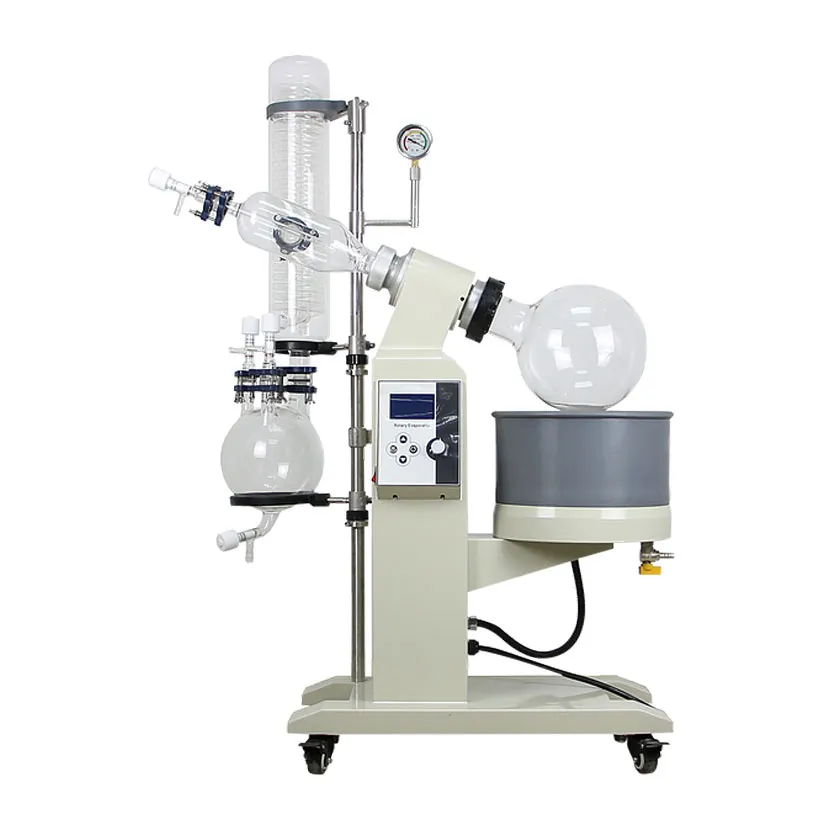
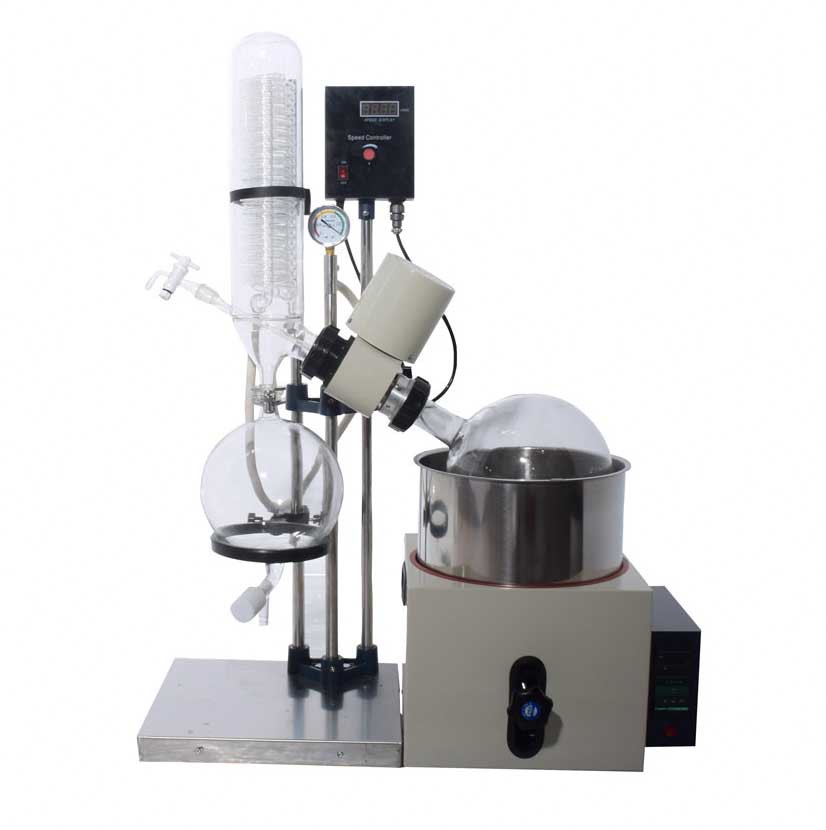
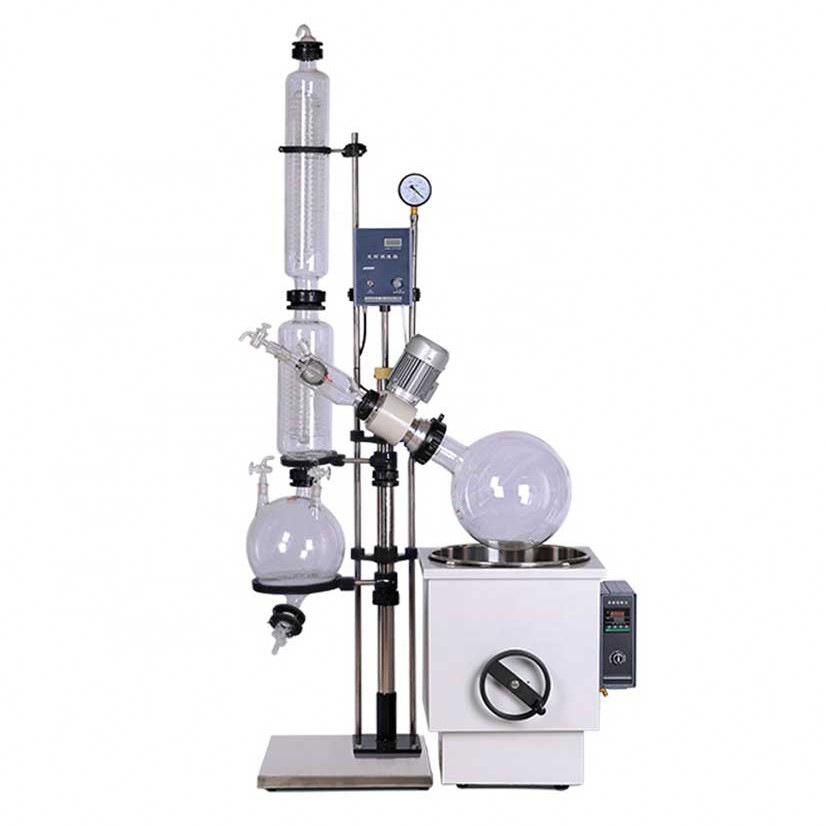
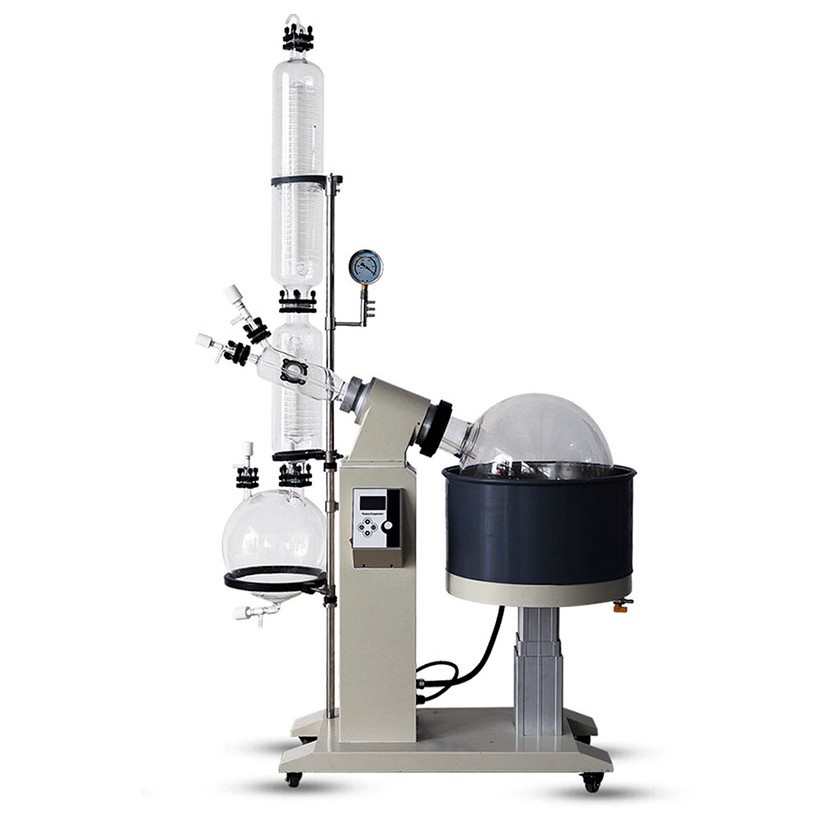
The rotating evaporator (rotovap) setup comprises of a pivoting jar, a warming shower or water shower, a condenser, a vacuum pump, and a collection carafe. The carafe containing the test is joined to the rotating evaporator system.
Evaporation:
The rotational evaporator makes a vacuum interior the framework, bringing down the weight and decreasing the bubbling focuses of the dissolvable and the target compound(s). The warming shower delicately warms the test, advancing dissipation of the solvent.
Rotation:
The carafe containing the test pivots at a controlled speed, expanding the surface range uncovered to the warm and encouraging speedier vanishing of the dissolvable. This turn makes a difference in the proficient evacuation of dissolvable vapors.
Condensation:
As the dissolvable vanishes, the vapor voyages through the condenser, where it is cooled and condensed back into fluid frame. The condensed dissolvable is collected in a partitioned carafe or container.
Compound Concentration:
The rotating evaporator strategy permits for the concentration of the target compound(s) as the dissolvable is vanished and evacuated from the test. This comes about in a more concentrated arrangement of the wanted compounds.
Solvent Recovery:
The solvent vapor collected in the condenser can be recovered and reused, contributing to cost savings and environmental sustainability by reducing waste.
End of Process:
Once the solvent has been evaporated to the desired extent and the target compound(s) are concentrated, the rotary evaporator is turned off, and the sample can be collected for further analysis or processing.
Benefits of Rotovap Extraction:
Efficient Solvent Removal: The rotovap method enables efficient and gentle removal of solvents, making it suitable for heat-sensitive compounds.
Precise Control:
Parameters such as temperature, rotation speed, and vacuum level can be controlled for optimized extraction.
Versatility:
The method is versatile and applicable to various sample types and solvents.
Time-saving: Rotovap extraction can save time compared to traditional methods.
Understanding the Rotary Evaporator: A Brief Overview
The rotary evaporator, affectionately referred to as the rotovap, embodies a fundamental principle in chemistry – the separation of substances based on differences in volatility. This ingenious apparatus facilitates the extraction of solvents from samples through evaporation under controlled conditions. At its core, the rotovap consists of a vacuum system, a rotating flask, a water or oil bath, and a condenser. The sample, typically dissolved in a solvent, is placed in the rotating flask, which is then subjected to controlled heating while simultaneously being rotated. As the solvent evaporates under reduced pressure, it is efficiently condensed and collected, leaving behind the desired compound in a concentrated form.
The Rotovap Method: Unraveling the Process
The process of extraction using a rotary evaporator entails a series of meticulously orchestrated steps, each contributing to the overall efficiency and efficacy of the procedure. Initially, the sample is prepared by dissolving it in an appropriate solvent, ensuring optimal solubility and compatibility. The solution is then carefully transferred into the rotating flask of the rotovap, taking into account the volume and viscosity of the sample. Subsequently, the flask is securely attached to the rotary evaporator system, and the vacuum pump is activated to create a vacuum environment within the apparatus.
With the vacuum in place, the water or oil bath is heated to a predetermined temperature, promoting the evaporation of the solvent from the sample. Simultaneously, the flask is set into rotation, facilitating uniform heating and maximizing surface area exposure. As the solvent evaporates, it undergoes vaporization and ascends into the condenser, where it is rapidly cooled and condensed back into liquid form. The condensed solvent is then collected in a separate receiving flask, ready for further analysis or disposal. Meanwhile, the target compound, now devoid of solvent, accumulates in the rotating flask, gradually increasing in concentration.
 |
 |
 |
 |
Applications and Advantages of the Rotovap Method
The versatility of the rotovap method extends across a myriad of scientific disciplines, ranging from organic chemistry and pharmaceuticals to environmental science and food analysis. Its applications are as diverse as they are profound, encompassing solvent recovery, purification of natural products, concentration of samples, and preparation of extracts for chromatographic analysis. Moreover, the rotovap method offers several distinct advantages over traditional extraction techniques, making it a preferred choice among researchers and scientists worldwide.
First and foremost, the rotovap method enables rapid and efficient solvent removal, significantly reducing extraction times and conserving valuable resources. By operating under vacuum conditions, the risk of sample degradation or thermal decomposition is minimized, ensuring the integrity and purity of the extracted compounds. Furthermore, the ability to control temperature and pressure parameters allows for precise modulation of the extraction process, enhancing reproducibility and yield optimization. Additionally, the compact size and user-friendly design of rotary evaporators make them ideally suited for small-scale laboratory environments, where space and resources are often limited.
Significance in Modern Scientific Endeavors
In the ever-evolving landscape of scientific research, innovation drives progress, and the rotovap method stands as a testament to ingenuity and excellence. Its widespread adoption across academic institutions, research laboratories, and industrial settings underscores its indispensable role in advancing knowledge and discovery. By simplifying and streamlining the process of extraction, the rotary evaporator empowers scientists to delve deeper into the intricacies of chemical compounds, unraveling mysteries and unlocking new possibilities.
From pharmaceutical development to environmental analysis, the rotovap method continues to shape the trajectory of scientific inquiry, facilitating breakthroughs and driving innovation. Its versatility, efficiency, and precision render it an indispensable tool for researchers seeking to unravel the complexities of the natural world. As technology evolves and methodologies refine, the rotary evaporator remains a stalwart companion in the pursuit of scientific excellence, epitomizing the spirit of exploration and discovery.
Conclusion
In conclusion, the rotovap method of extraction represents a pinnacle of scientific ingenuity, offering a sophisticated yet accessible approach to compound isolation and purification. Through meticulous control of temperature, pressure, and evaporation dynamics, this innovative technique empowers researchers to extract valuable compounds with unparalleled efficiency and precision. From its humble origins to its current status as a cornerstone of modern laboratory practice, the rotary evaporator exemplifies the convergence of theory and application, driving scientific progress and innovation. As we look to the future, the legacy of the rotovap method endures, inspiring generations of scientists to push the boundaries of knowledge and explore the vast frontiers of discovery.
References:
https://www.sigmaaldrich.com/technical-documents/articles/analytical/rotary-evaporator-principles-and-applications.html
https://www.buchi.com/en/p-technology/rotary-evaporation/what-is-rotary-evaporation
https://www.researchgate.net/publication/256654019_Rotary_Evaporation