


What Is The Purpose Of A Rotary Evaporator?
Jul 20, 2024
Leave a message
Basic Functionality of a Rotary Evaporator
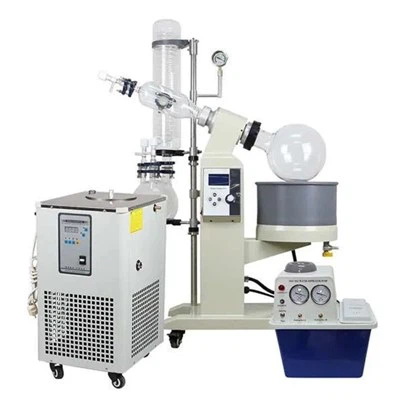
A fundamental function of a rotary evaporator is the evaporation of solvents from samples. The rotovap efficiently and safely concentrates solutions or purifies substances by employing a combination of gentle heating, reduced pressure, and mechanical rotation. The evaporation process is sped up and the risk of sensitive compounds degrading thermally is reduced by this method.
The Evaporation Process
A liquid sample is placed in a rotating flask during the fundamental procedure. The pivot makes a slender film of fluid over a huge surface region, which works with fast dissipation. The system operates simultaneously under reduced pressure, typically achieved by means of a vacuum pump. Because the solvent's boiling point is lower at lower pressure, it can evaporate at a lower temperature. When working with materials that are sensitive to heat, this is especially important.
Heating and Cooling Components
The rotary evaporator consists of a heated water or oil bath, which provides the necessary energy to evaporate the solvent. Above the bath, the rotating flask is partially submerged in the heating medium, ensuring consistent and controlled heating. The evaporated solvent then travels through a condenser, typically cooled by a water or glycol-based cooling system, where it is converted back into liquid and collected in a separate receiving flask.
Applications in Solvent Removal
One of the main roles of a rotational evaporator in little research centers is the proficient expulsion of solvents. This is especially helpful in natural science, where responses frequently happen in dissolvable media. After the response is finished, it's fundamental for eliminate the dissolvable to disengage the ideal item. The rotovap succeeds in this application, considering fast and delicate dissipation, safeguarding the honesty of the end result.
Concentration of Samples
The rotary evaporator is frequently used to concentrate samples in addition to solvent removal. This is especially useful for sample preparation for analysis and preparative chromatography. The solute becomes more concentrated as the solvent is evaporated, making it easier to work with and analyze. In processes like crystallization, purification, and extraction, this is a common step.
Advantages in Sample Purification
Purifying compounds is a critical step in many laboratory procedures, and the rotary evaporator plays a significant role in this process. By removing impurities and solvents, it helps in obtaining pure, concentrated substances essential for various experiments and analyses.
Distillation and Fractionation
In little research centers, the turning evaporator is frequently utilized for basic refining and fractionation. Parts are separated in these processes based on their boiling points. The rotovap's capacity to work at decreased pressures makes it ideal for refining compounds with high edges of boiling over at much lower temperatures, subsequently forestalling deterioration and protecting the nature of the example.
Recrystallization Solvent Removal
Another significant application is in the expulsion of solvents after recrystallization, a typical cleaning strategy. The rotary evaporator is used to get rid of any solvent that remains after the crude product has been dissolved in a hot solvent and allowed to cool and crystallize. This abandons unadulterated precious stones of the ideal compound, prepared for additional examination or use.
Enhancing Laboratory Efficiency
The rotary evaporator significantly contributes to laboratory efficiency, which is crucial. Many processes are streamlined by its ability to quickly and effectively remove solvents and concentrate samples, saving time and resources.
Speed and Precision
The rotovap's design allows for rapid evaporation, which is essential when processing multiple samples or working with time-sensitive materials. The precise control over temperature and pressure ensures consistent results, which is crucial for reproducibility in scientific experiments.
Safety Considerations
Laboratory safety is also improved by using a rotary evaporator. By working at lower temperatures because of decreased pressure, there is less gamble of warm corruption or risky responses. Also, the shut framework configuration limits the arrival of unstable solvents into the research facility climate, safeguarding both faculty and hardware.
Key Features and Components
Understanding the key features and components of a rotary evaporator helps in maximizing its potential. Each part plays a vital role in the overall functionality and efficiency of the device.
Rotating Flask
The rotating flask, usually made of glass, is where the sample is placed. Its rotation creates a thin film, increasing the surface area for evaporation. This simple yet effective design is crucial for the rapid removal of solvents.
Vacuum System
The vacuum system, typically consisting of a vacuum pump and controller, reduces the pressure within the apparatus. This lower pressure decreases the boiling point of the solvent, allowing it to evaporate at lower temperatures and preventing thermal decomposition of the sample.
Heating Bath
The rotating flask gets the heat it needs from the heating bath, which is filled with water or oil. Efficient and gentle evaporation is ensured by precisely controlling the temperature to meet the solvent and sample requirements.
Condenser
The condenser, often cooled by circulating water or a glycol solution, condenses the evaporated solvent back into liquid form. This recovered solvent is collected in a separate receiving flask, allowing for easy disposal or reuse.
OEM and ODM Services
Numerous makers offer OEM (Unique Gear Producer) and ODM (Unique Plan Maker) administrations for rotational evaporators. These services ensure that the equipment meets precise requirements by providing customized solutions tailored to the specific requirements of small laboratories.
Customization Options
OEM and ODM services offer various customization options, including different flask sizes, heating bath configurations, and vacuum systems. This flexibility ensures that the rotary evaporator is perfectly suited to the laboratory's needs, enhancing efficiency and performance.
Quality Assurance
Working with reputable manufacturers ensures high-quality construction and reliable performance. These companies often provide extensive testing and quality control measures, guaranteeing that the rotary evaporator will operate effectively and safely.
Frequently Asked Questions

What Types of Solvents Can Be Removed?
Rotary evaporators are versatile and can remove a wide range of solvents, including water, organic solvents, and even some acids. The choice of solvent and operating conditions will depend on the specific application and the properties of the compounds being handled.
How Do I Choose the Right Rotary Evaporator?
Choosing the right rotary evaporator involves considering factors such as the volume of samples, the types of solvents used, and the required level of precision. Consulting with manufacturers and experienced users can provide valuable insights and help in making an informed decision.
Can a Rotary Evaporator Be Used for Large Scale Operations?
While rotary evaporators are typically used in small laboratories, they can also be adapted for larger scale operations. Industrial-sized models are available, offering the same principles of operation but on a much larger scale, suitable for pilot plants and production facilities.
Conclusion
In conclusion, the purpose of a rotary evaporator in small laboratories is multifaceted. From solvent removal and sample concentration to purification and distillation, its applications are diverse and essential. Understanding how to effectively use and maintain this equipment can greatly enhance laboratory efficiency and the quality of research outcomes. The rotary evaporator remains a cornerstone of modern laboratory practices, embodying both simplicity and sophistication in its design and operation.