


What Is The Purpose Of A Press Machine?
Aug 29, 2024
Leave a message
In the world of manufacturing and pharmaceutical production, press machines play a crucial role in creating various products we use daily. One particular type of press machine that has revolutionized the pharmaceutical industry is the Rotary Tablet Press. But before we dive into the specifics of this impressive piece of equipment, let's explore the general purpose of press machines and how they've become indispensable in modern manufacturing.
The Fundamentals of Press Machines
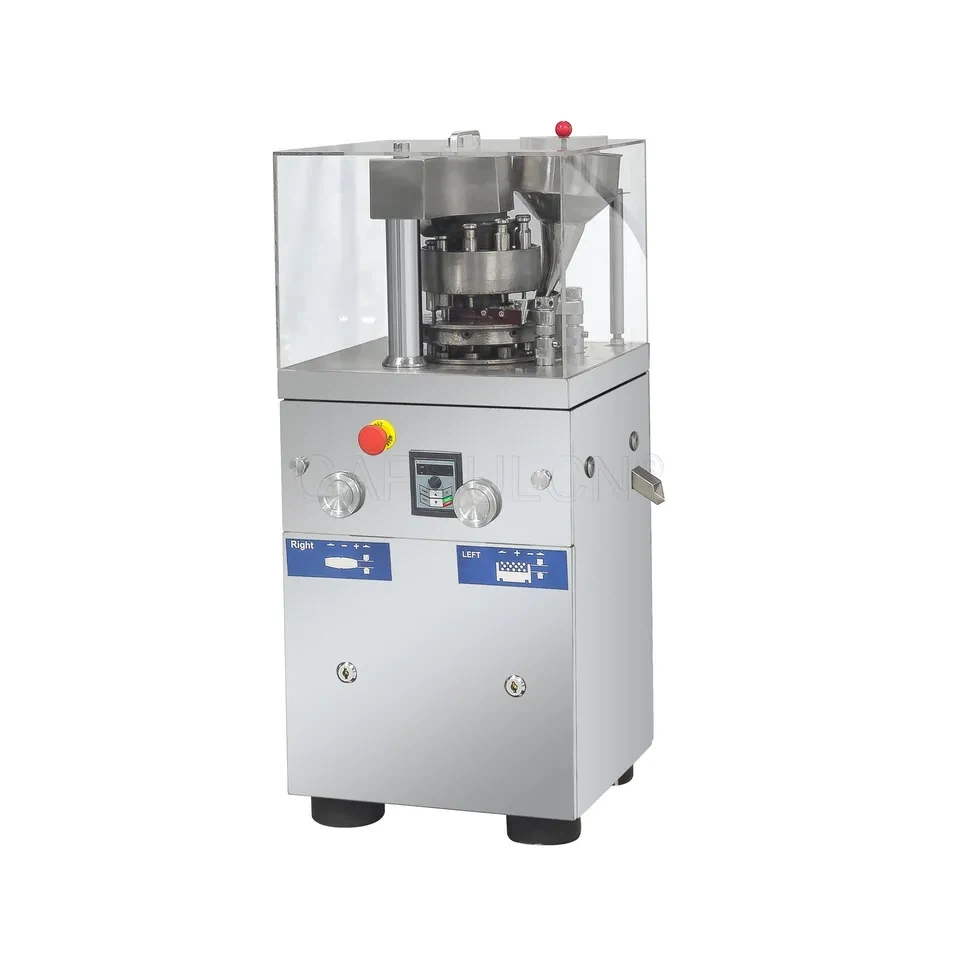
Press machines, in their most basic form, are designed to apply force to materials, shaping them into desired forms or compressing them for various purposes. These versatile tools have been around for centuries, evolving from simple manual presses to sophisticated, automated systems we see today.
The primary purposes of press machines include:
◆ Shaping materials: Press machines can mold metals, plastics, and other materials into specific shapes.
◆ Compressing substances: They're used to compact powders or granules into solid forms.
◆ Extracting liquids: Some presses are designed to squeeze out liquids from fruits, vegetables, or other materials.
◆ Joining components: Certain press machines can be used to assemble parts by applying pressure.
In the pharmaceutical industry, press machines have found a particularly important application in the form of tablet presses. These specialized machines compress powder mixtures into uniform, easy-to-swallow tablets that we're all familiar with.
The Rise of the Rotary Tablet Press
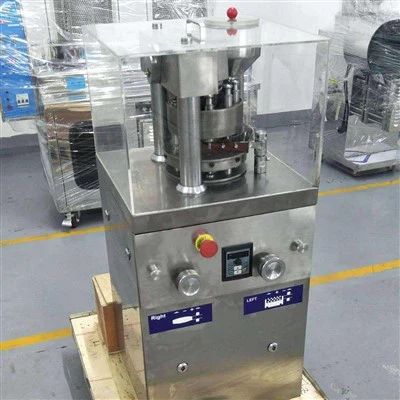
Among the various types of tablet presses, the rotational tablet press stands out as a game-changer. This innovative machine has significantly improved the efficiency and quality of tablet production in the pharmaceutical industry.
The rotational tablet press, as its name suggests, operates on a rotary principle. It consists of a circular die table that rotates continuously, allowing for a non-stop production process. This design offers several advantages over traditional single-station tablet presses:
◆ Enhanced Production Speed and Efficiency: Prior to the rotary tablet press, tablet production was primarily conducted using manual or single-station presses, which were time-consuming and labor-intensive. The rotational tablet press introduced a continuous, circular motion mechanism that enabled multiple tablet-making stations to operate simultaneously. This advancement allowed for the rapid compression of powder into tablets, drastically increasing production speeds and efficiency. Manufacturers could now produce thousands of tablets per hour, addressing the growing demand for pharmaceutical products more effectively.
◆ Precision and Consistency: One of the standout features of rotational tablet presses is their ability to deliver consistent tablet quality. Each station on the rotary press is capable of producing tablets with uniform weight, size, and shape. This precision is crucial in meeting strict regulatory standards and ensuring the reliability of the final product. The ability to maintain high levels of consistency reduces the likelihood of dosage errors and enhances the overall effectiveness of the medication.
◆ Cost Reduction: The introduction of rotational tablet presses also led to significant cost reductions. Automation reduced the need for manual labor, minimizing labor costs and associated expenses. Additionally, the efficient production process reduced material waste and optimized resource usage, further lowering production costs. The economies of scale achieved through rotary presses made it possible to produce high-quality tablets at a lower cost per unit.
◆ Scalability and Flexibility: Rotational tablet presses offer remarkable scalability and flexibility. Manufacturers can easily adjust the press's speed and capacity to accommodate varying production volumes. This adaptability is particularly valuable in responding to fluctuating market demands and scaling up production for new product lines or increased sales.
◆ Advanced Quality Control: Modern rotational tablet presses come equipped with sophisticated quality control systems that monitor and adjust the production process in real-time. Features such as automatic weight control, tablet hardness testing, and defect detection ensure that each tablet meets stringent quality standards. This capability enhances product safety and efficacy, critical factors in the pharmaceutical industry.
The rotational tablet press has become the industry standard for large-scale pharmaceutical manufacturing, enabling the production of the vast quantities of tablets needed to meet global demand for medications.
The Impact of Rotary Tablet Presses on Modern Medicine

The development and widespread adoption of Rotary Tablet Presses have had a profound impact on the pharmaceutical industry and, by extension, on global healthcare. Here's how:
Increased accessibility of medications: The high-volume production capabilities of rotational tablet presses have made it possible to manufacture medications on a massive scale, making them more readily available and affordable to people worldwide.
◆ Improved quality control: The precision and consistency offered by these machines ensure that each tablet meets strict quality standards, crucial for patient safety and drug efficacy.
◆ Diverse dosage forms: Rotational tablet presses can produce various tablet shapes and sizes, allowing for different dosage forms to suit different patient needs and preferences.
◆ Cost-effective production: The efficiency of these machines has significantly reduced production costs, making it economically viable to manufacture both common and rare medications.
◆ Innovation in drug delivery: The versatility of rotational tablet presses has enabled the development of novel tablet formulations, such as extended-release tablets, which have improved patient compliance and treatment outcomes.
As we can see, the purpose of a press machine, particularly a rotational tablet press, extends far beyond simply compressing powders into tablets. These machines are at the heart of modern pharmaceutical manufacturing, playing a crucial role in ensuring that millions of people around the world have access to the medications they need.
The evolution of press machines from simple manual devices to sophisticated Rotary Tablet Presses is a testament to human ingenuity and our constant drive to improve and innovate. As technology continues to advance, we can expect further improvements in press machine design, potentially leading to even more efficient and versatile tablet production methods.
For those in the pharmaceutical industry or related fields, staying up-to-date with the latest developments in tablet press technology is crucial. Whether you're looking to upgrade your current equipment or are simply curious about the inner workings of the pharmaceutical manufacturing process, understanding the purpose and capabilities of machines like the rotational tablet press is invaluable.
If you're interested in learning more about Rotary Tablet Presses or other types of laboratory chemical equipment, don't hesitate to reach out to experts in the field. Companies like ACHIEVE CHEM, with their years of experience and technical expertise, can provide valuable insights and solutions tailored to your specific needs.
Remember, the world of pharmaceutical manufacturing is constantly evolving, and staying informed about the latest technologies and best practices is key to success in this dynamic field. Whether you're a seasoned professional or just starting out, there's always more to learn about the fascinating world of press machines and their crucial role in modern medicine production.