


What Is The Maximum Pressure Of A Stainless Steel Autoclave?
Dec 11, 2024
Leave a message
The maximum pressure of a teflon stainless steel autoclave can vary significantly depending on its design, construction, and intended use. Our autoclaves of standard laboratory quality are usually designed to tolerate pressures between 15 and 30 bars (218 and 435 psi). Specialist high-pressure autoclaves, on the other hand, can be made to withstand pressures of up to 200 bars (2900 psi) or higher. It's important to remember that, in order to guarantee equipment longevity and safety, the maximum safe operating pressure is frequently lower than the theoretical maximum pressure.Our product's specific pressure rating should always be confirmed with the manufacturer or supplier because going over the rated pressure can result in catastrophic failure and present significant safety risks. To make sure an autoclave satisfies the necessary pressure requirements for your specific research or industrial process, it is crucial to take into account aspects like wall thickness, material grade, and safety features when choosing one for high-pressure applications.
How Much Pressure Can a Standard teflon stainless steel autoclave Withstand?
● Pressure Ratings of Common Laboratory Autoclaves
Teflon stainless steel autoclaves are typically designed to operate within a specific pressure range to ensure safety and efficiency. Most common laboratory autoclaves are rated for pressures between 15 to 30 bars (218 to 435 psi). This range is sufficient for a wide variety of sterilization and research applications, including microbiology, cell culture, and materials testing. It's important to note that these pressure ratings are based on the autoclave's ability to maintain structural integrity and prevent leaks or ruptures during normal operation. Laboratory autoclaves are rigorously tested for pressure tolerance to ensure they meet strict safety standards, offering reliable performance in demanding environments. The pressure range allows for consistent and thorough sterilization, ensuring that biological agents or contaminants are effectively eradicated. Moreover, the combination of high pressure and temperature ensures uniform distribution of heat, which is critical for achieving optimal sterilization results.
● High-Pressure Autoclave Specifications
For applications that demand extreme conditions, specialized high-pressure Teflon-coated stainless steel autoclaves are available. These units are designed to withstand significantly higher pressures, typically ranging from 50 to 200 bars (725 to 2900 psi), and in some cases, even higher. Such high-pressure autoclaves are essential in fields like chemical synthesis, materials science, and advanced research, where reactions or experiments require intense pressure environments. To ensure safe and efficient operation under these harsh conditions, these autoclaves are built with reinforced walls, stronger seals, and sophisticated safety features. The Teflon coating further enhances their durability, protecting the internal surfaces from wear and chemical attack. Together, these design elements guarantee that high-pressure autoclaves can perform reliably, meeting the rigorous demands of specialized industrial and research applications.

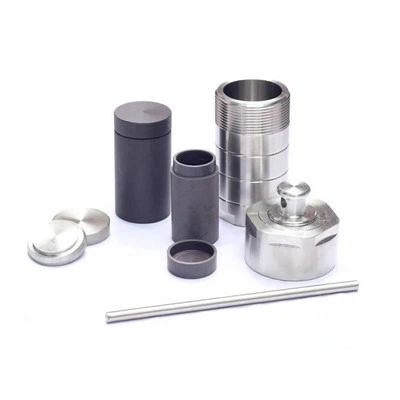
We provide teflon stainless steel autoclave, please refer to the following website for detailed specifications and product information.
Product: https://www.achievechem.com/chemical-equipment/hydrothermal-synthesis-reactor.html
What Factors Affect the Maximum Pressure of a teflon stainless steel autoclave?
● Material Properties and Construction
The maximum pressure capacity of a teflon stainless steel autoclave is largely determined by the material properties and construction details. The grade of stainless steel used, commonly 316 or 304, is crucial for determining the autoclave's ability to withstand high pressures. Higher-grade alloys, such as 316 stainless steel, offer superior corrosion resistance and strength, allowing them to handle greater pressures without compromising integrity. The thickness of the autoclave walls also plays a vital role; thicker walls provide enhanced pressure resistance, but they can also increase the overall weight and cost of the unit. Additionally, the design of the autoclave-such as the shape of the vessel and reinforcements in high-stress areas-can further improve its pressure tolerance. Reinforced joints, bolted or welded seals, and specialized internal supports help to distribute the pressure more evenly and prevent failure, ensuring reliable performance even under extreme conditions. Thus, a careful balance of material selection, wall thickness, and design is essential for optimizing an autoclave's pressure-handling capacity.
● Safety Features and Regulatory Compliance
Safety features and regulatory compliance are critical factors that influence the maximum allowable pressure of a Teflon-coated stainless steel autoclave. Manufacturers must ensure that their autoclaves meet stringent safety standards, which include incorporating essential safety mechanisms such as pressure relief valves, burst discs, and interlocks. These features are designed to prevent overpressurization, protecting both the equipment and operators from potential hazards. While an autoclave may be capable of withstanding a higher theoretical pressure, these safety features often limit the maximum operating pressure to ensure safe use in real-world conditions. Furthermore, adherence to industry standards and regulatory requirements, such as the ASME Boiler and Pressure Vessel Code or the European Pressure Equipment Directive, imposes additional restrictions on the maximum allowable working pressure. These regulations are designed to ensure the safety and reliability of pressure vessels across various industries, including chemical processing, pharmaceuticals, and research. Compliance with these codes helps ensure that autoclaves are not only effective but also safe under high-pressure conditions, minimizing the risk of accidents.
Can teflon stainless steel autoclaves handle chemical reaction high pressure requirements?
● Chemical Compatibility and Pressure ResistanceTeflon stainless steel autoclaves are well-suited for handling high-pressure chemical reactions due to their exceptional chemical compatibility and pressure resistance. The combination of stainless steel construction with a Teflon lining provides a robust and corrosion-resistant environment for a wide range of chemical processes. These autoclaves can typically withstand pressures up to 200 bars or more, depending on their specific design and construction. The Teflon lining offers excellent chemical inertness, preventing reactions between the vessel material and the chemicals inside, which is crucial for maintaining the purity of products and the integrity of the autoclave itself. |
|
|
|
● Customization for Specific Chemical ProcessesFor particularly demanding chemical reactions that require extreme pressures, teflon stainless steel autoclaves can be customized to meet specific requirements. This customization may involve using higher-grade materials, increasing wall thickness, or incorporating additional reinforcement to handle pressures exceeding standard ratings. Some manufacturers offer autoclaves capable of withstanding pressures up to 350 bars or more for specialized applications in the petrochemical industry or advanced materials research. When considering such high-pressure applications, it's essential to work closely with the manufacturer to ensure that the autoclave is designed and tested to meet the exact pressure and chemical compatibility requirements of the intended process. |

Conclusion
Teflon stainless steel autoclaves are versatile and robust pieces of equipment capable of handling a wide range of pressures, from standard laboratory conditions to extreme high-pressure environments. The maximum pressure capacity depends on various factors, including construction, materials, safety features, and intended use. For applications requiring specific pressure ratings or chemical compatibility, it's crucial to consult with experienced manufacturers who can provide tailored solutions.
If you're looking for a reliable autoclave that meets your precise pressure and chemical resistance needs, don't hesitate to reach out to ACHIEVE CHEM at sales@achievechem.com for expert guidance and high-quality equipment.