


What Is The Largest Rotovap?
Apr 05, 2024
Leave a message
The largest rotary evaporators (rotovaps) available on the market typically have a high evaporation capacity and are designed for industrial-scale applications, such as large-scale chemical processing, pharmaceutical manufacturing, or botanical extraction facilities. These large rotovaps are capable of handling large volumes of solvent and sample, allowing for efficient solvent recovery and concentration on a commercial scale.
The size of a rotovap is often determined by several factors, including the size of the evaporation flask, the power and capacity of the heating bath, the strength of the vacuum system, and the overall design and construction of the instrument.
While specific models and manufacturers may vary, some of the largest rotovaps available may have:
Vanishing Jar
Dissipation jars with capacities extending from 20 liters to over 100 liters. These large-volume jars permit for handling considerable amounts of dissolvable and test in a single batch.
01
Heating Shower
Capable warming showers able of keeping up tall temperatures and giving uniform warming over the expansive surface range of the dissipation jar. A few models may highlight warming showers with capacities surpassing 50 liters.
02
Vacuum Framework
Vigorous vacuum frameworks competent of accomplishing and keeping up tall vacuum levels essential for effective dissolvable dissipation. These frameworks frequently consolidate expansive vacuum pumps with tall pumping capacities to handle the expanded volume of vapor created amid evaporation.
03
Construction and Plan
Durable development and ergonomic plan highlights to back the weight and measure of the bigger components and guarantee secure and solid operation in mechanical situations.
04
Understanding Rotary Evaporators
Before delving into the largest rotovap, it's essential to understand the basics of rotary evaporators. Also known as rotovaps or rotavaps, these instruments are used to remove solvents from liquid mixtures through evaporation and condensation. By applying vacuum pressure and controlled heating, rotary evaporators facilitate efficient solvent recovery while minimizing heat exposure to sensitive compounds.
Rotovaps find applications in various industries, including pharmaceuticals, chemical synthesis, and food processing. Chemists rely on them for tasks such as concentration, purification, and solvent recycling. With their versatility and precision, rotary evaporators have become indispensable in modern laboratories.
Operation of a Rotary Evaporator
Preparation: Securely attach the evaporation flask to the rotating mechanism and place it in the heating bath. Connect the condenser to the flask and ensure proper sealing to maintain vacuum integrity.
Sample Loading: Add the sample containing the solvent to be evaporated into the evaporation flask. Ensure that the flask is not overfilled to allow for proper agitation and evaporation.
Heating: Start heating the bath to the desired temperature. The heat facilitates the evaporation of the solvent from the sample.
Rotation: Begin rotating the flask at a moderate speed to increase the surface area exposed to heat and promote efficient evaporation. The rotation speed can be adjusted based on the sample properties and evaporation rate.
Vacuum Application: Turn on the vacuum pump to lower the pressure inside the system. This reduces the boiling point of the solvent, aiding in faster evaporation while minimizing heat exposure to the sample.
Monitoring: Monitor the evaporation process, adjusting parameters such as temperature, rotation speed, and vacuum level as needed to optimize solvent removal and sample concentration.
Collection: The condensed solvent collects in the collection flask, while the concentrated sample remains in the evaporation flask. Once the evaporation is complete, stop the rotation and heating, and carefully remove the sample and collected solvent for further processing or analysis.
Features of Rotary Evaporators
Rotary evaporators come in various sizes and configurations, each tailored to specific laboratory requirements. Key features to consider when selecting a rotovap include:
The capacity of the evaporation flask determines the volume of liquid that can be processed in a single batch. Rotovaps range from small-scale models with flask capacities of a few liters to larger units capable of handling tens of liters or more.
The heating bath provides controlled heating to facilitate evaporation of the solvent. Precise temperature control is essential to prevent degradation of sensitive compounds. Advanced rotovaps may offer features such as digital temperature control and programmable heating profiles.
The condenser cools the vaporized solvent, causing it to condense back into liquid form. Common condenser types include traditional coiled condensers and more efficient designs such as the cold finger condenser or the diagonal condenser. The choice of condenser depends on factors such as solvent volatility and efficiency requirements.
A robust vacuum system is crucial for achieving efficient solvent evaporation. High-quality vacuum pumps and pressure regulators ensure consistent vacuum levels throughout the evaporation process, enhancing productivity and performance.
Exploring the Largest Rotovap
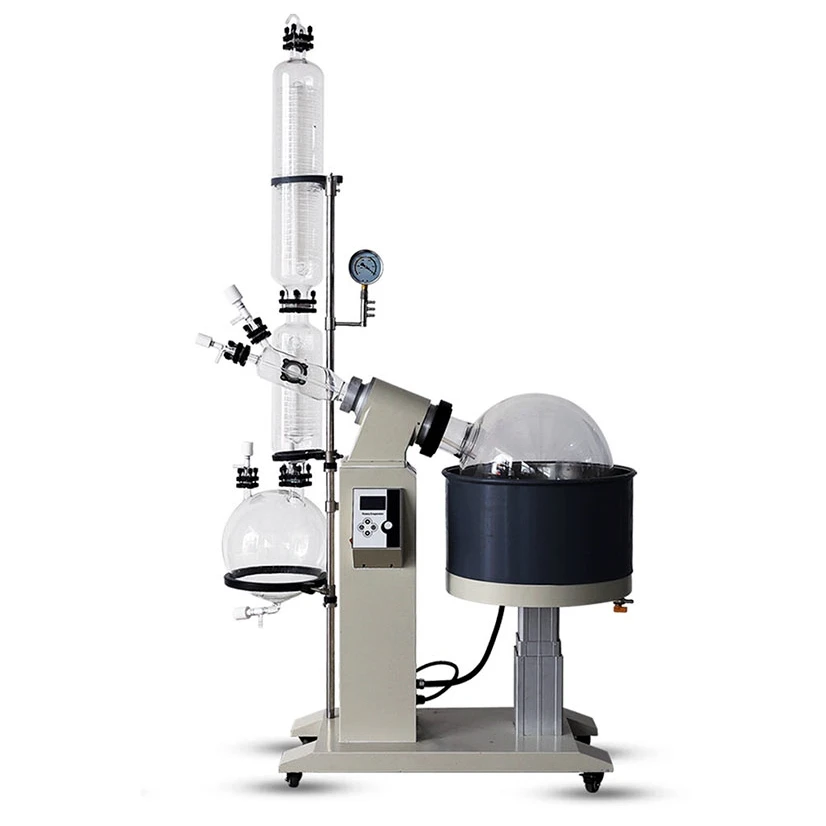
In the quest to find the largest rotovap, manufacturers have developed models with impressive capacities to meet the demands of industrial-scale operations. While smaller rotary evaporators suffice for laboratory-scale experiments, larger units are required for processing larger volumes of solvents efficiently.
One notable contender in the realm of large-scale rotary evaporators is the Büchi R-300. With its generous evaporation flask capacity and robust construction, the Büchi R-300 stands out as one of the largest rotovaps available on the market. Designed for industrial applications, this powerhouse of a rotovap offers unparalleled performance and scalability.
 |
 |
 |
Applications of Large-Scale Rotary Evaporators
Large-scale rotary evaporators like the Büchi R-300 find applications in a wide range of industries and research fields. Some common applications include:
1. Industrial Chemical Synthesis
In chemical manufacturing processes, large-scale rotary evaporators are used for solvent recovery, concentration of reaction mixtures, and purification of final products. The ability to process large volumes of solvent efficiently makes these rotovaps indispensable in industrial settings.
2. Pharmaceutical Production
In the pharmaceutical industry, large-scale rotary evaporators play a crucial role in drug development and manufacturing. From refining active pharmaceutical ingredients (APIs) to formulating drug formulations, rotovaps contribute to every stage of the pharmaceutical production process.
3. Food and Beverage Processing
Large-scale rotary evaporators are employed in food and beverage processing for tasks such as flavor extraction, concentration of juices and extracts, and removal of undesirable compounds. By efficiently recovering solvents and preserving flavor profiles, rotovaps help enhance the quality and consistency of food products.
Conclusion
In conclusion, rotary evaporators are indispensable tools in laboratory settings, offering precise control over solvent evaporation processes. While smaller models suffice for routine experiments, large-scale rotary evaporators like the Büchi R-300 cater to the needs of industrial-scale operations. With their impressive capacities and advanced features, these rotovaps enable efficient solvent recovery and processing on a grand scale, making them indispensable assets in various industries.
References:
Büchi Rotavapor R-300
Practical Considerations in Rotary Evaporation
Applications of Rotary Evaporators in Research and Industry