


What Is An Alternative To A Rotovap?
Jul 08, 2024
Leave a message
In the realm of laboratory and industrial settings, rotary evaporators, commonly known as rotovaps, are essential tools for efficient solvent removal.
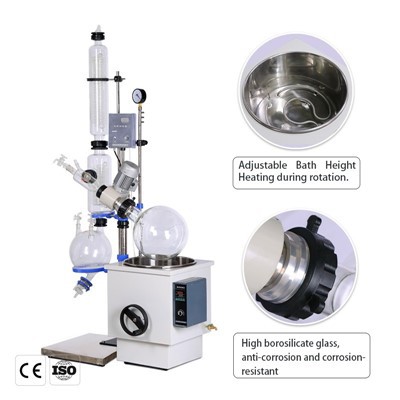
Rotary evaporators, or rotovaps, are prized for their ability to efficiently and gently remove solvents from solutions through evaporation under vacuum. Despite their effectiveness, exploring alternatives to rotovaps can unveil solutions better suited to diverse operational demands. Exploring alternatives can sometimes offer distinct advantages depending on specific needs and constraints.
This article delves into viable alternatives, examining their functionalities, benefits, and applications across various industries.
Why consider alternatives to a Rotovap?
Rotary evaporators, or rotovaps, are widely recognized for their effectiveness in solvent recovery tasks across various industries. However, several compelling reasons prompt exploration of alternative technologies in specific operational contexts.
Scalability and Throughput Requirements: While rotovaps are efficient for batch processing of moderate volumes, industries requiring high-throughput operations may find their batch nature limiting. Alternatives like the SpeedVac offer rapid processing capabilities suited for handling larger sample volumes efficiently. This scalability ensures that laboratories can meet increased demand without compromising on processing speed or sample integrity.
Automation and Workflow Optimization: Modern laboratory workflows increasingly rely on automation to enhance productivity and reproducibility. Rotovaps typically require manual intervention for setting parameters and monitoring progress, which can be labor-intensive and time-consuming. In contrast, alternatives such as the SpeedVac integrate advanced automation features, allowing for unattended operation and precise control over drying protocols. This automation not only streamlines workflow but also reduces the risk of human error, ensuring consistent results across experiments.
Compatibility with Heat-Sensitive Samples: Certain samples, particularly those sensitive to heat, require specialized handling to prevent degradation or alteration of their chemical composition. Rotovaps, with their reliance on elevated temperatures during solvent evaporation, may not be suitable for such heat-sensitive applications. Alternatives like the SpeedVac utilize lower temperatures and rapid evaporation techniques under vacuum conditions, minimizing thermal exposure and preserving the integrity of delicate compounds. This capability makes SpeedVacs ideal for industries where maintaining sample quality and consistency is paramount, such as pharmaceutical research and biotechnology.
Energy Efficiency and Operational Costs: Another consideration in choosing alternatives to rotovaps is energy efficiency and operational costs. Rotovaps can consume significant amounts of energy, especially during extended operation cycles or when processing large volumes. Alternatives like the SpeedVac are designed to operate efficiently, reducing overall energy consumption and associated costs over time. This efficiency not only supports sustainable laboratory practices but also contributes to cost savings in operational expenditures.
Flexibility in Application and Industry Adaptability: Different industries and research fields often have unique requirements for solvent recovery and sample processing. While rotovaps are versatile in their application, alternatives like the SpeedVac and other emerging technologies offer specialized functionalities tailored to specific industry needs. Whether in pharmaceutical development, environmental analysis, or food science, choosing the right alternative ensures that laboratories can achieve optimal performance and meet regulatory standards effectively.
What are the benefits of using a SpeedVac over a Rotovap?
SpeedVacs, also known as vacuum concentrators, offer distinct advantages over traditional rotovaps, especially in modern laboratory settings requiring efficiency, precision, and versatility in solvent evaporation tasks.
Processing Speed and Throughput Efficiency: SpeedVacs are designed to process small to medium-sized volumes of samples rapidly. Unlike rotovaps, which operate on a batch processing basis, SpeedVacs use centrifugal force and vacuum technology to expedite solvent evaporation. This capability significantly reduces processing times, making SpeedVacs ideal for high-throughput applications in biochemical research, pharmaceutical development, and forensic analysis. Laboratories can achieve quicker turnaround times for sample preparation, enhancing overall productivity without compromising on sample integrity.
Sample Integrity and Minimal Heat Exposure: One of the primary benefits of SpeedVacs is their ability to operate at lower temperatures compared to rotovaps. Traditional rotary evaporators rely on elevated temperatures to facilitate solvent evaporation, which can potentially degrade heat-sensitive samples or alter their chemical composition. In contrast, SpeedVacs employ rapid evaporation techniques under vacuum conditions, minimizing thermal exposure and preserving the integrity of delicate compounds. This feature is critical for applications where maintaining sample quality and consistency is paramount, such as in biological and pharmaceutical research.
Automation and Workflow Optimization: SpeedVacs integrate advanced automation features that enhance operational efficiency and workflow optimization. Unlike rotovaps, which often require manual intervention for parameter setting and monitoring, SpeedVacs offer automated controls for temperature, vacuum levels, and drying protocols. This automation not only reduces labor costs by enabling unattended operation but also improves reproducibility across experiments. Laboratories can achieve consistent results with minimal variability, thereby supporting rigorous scientific standards and regulatory compliance.
Versatility and Adaptability: Another key advantage of SpeedVacs is their versatility in handling diverse sample types and solvents. They are equipped to accommodate various applications across different industries, from concentrating biological samples in molecular biology to drying solvents in organic synthesis. This adaptability makes SpeedVacs suitable for multi-disciplinary research environments where flexibility and efficiency are essential.
Energy Efficiency and Operational Cost Savings: Operating costs associated with SpeedVacs are generally lower compared to rotovaps, primarily due to their faster processing times and reduced energy consumption. SpeedVacs optimize energy usage by employing efficient vacuum and centrifugal technologies, leading to cost savings over the equipment's lifecycle. Laboratories benefit from reduced utility bills and minimized maintenance requirements, contributing to sustainable laboratory practices.
How does a Falling Film Evaporator compare to a Rotovap?
Falling Film Evaporators (FFEs) and Rotary Evaporators (rotovaps) represent distinct approaches to solvent evaporation, each with unique advantages depending on the scale and requirements of the application.
Continuous vs. Batch Processing
One of the primary distinctions between FFEs and rotovaps lies in their operational modes. Rotovaps operate on a batch basis, where a flask containing the sample rotates in a water or oil bath under vacuum to facilitate evaporation. This method is effective for smaller volumes and provides precise control over evaporation parameters such as temperature and vacuum level.
In contrast, Falling Film Evaporators employ a continuous process where the liquid flows as a thin film down the surface of vertical tubes or plates. This continuous flow maximizes heat transfer efficiency and allows for the handling of large volumes of solvent. FFEs are ideal for industrial settings requiring high throughput and consistent production rates without the downtime associated with batch processing.
Efficiency and Energy Consumption
FFE technology is recognized for its energy efficiency compared to rotovaps. The continuous operation of FFEs minimizes heat loss and reduces energy consumption per unit of solvent processed. In industries such as food processing and pharmaceutical manufacturing, where energy costs and environmental impact are critical considerations, FFEs offer a sustainable solution by optimizing energy use while maintaining high productivity.
Rotovaps, while versatile for laboratory-scale operations and small-batch production, may require more energy per unit of solvent evaporated due to the intermittent nature of batch processing and the need for heating and cooling cycles between batches.
Application Flexibility
Rotary evaporators are versatile tools suitable for a wide range of applications in laboratories and small-scale production environments. They excel in concentrating samples, recovering solvents with high purity, and handling delicate materials that require precise control over evaporation conditions.
On the other hand, Falling Film Evaporators are favored in industries such as chemical processing, where continuous processing of large volumes is essential for maintaining production efficiency and meeting demand. FFEs accommodate various solvents and operate effectively at lower temperatures, making them suitable for processing thermally sensitive materials without compromising product quality.
Product Quality and Scalability
Both technologies play crucial roles in maintaining product quality, but their approaches differ significantly. Rotovaps offer superior control over evaporation parameters, which is advantageous for achieving specific product characteristics and purity levels in laboratory-scale applications.
In contrast, Falling Film Evaporators ensure consistent product quality and uniform concentration across large volumes due to their continuous operation and efficient heat transfer mechanism. This scalability makes FFEs indispensable in industries requiring high-volume production while adhering to stringent quality standards and regulatory requirements.
Conclusion

Exploring alternatives to a rotovap unveils diverse technologies tailored to specific operational needs, from the rapid processing capabilities of SpeedVacs to the continuous efficiency of Falling Film Evaporators.
Each alternative offers unique advantages in terms of scalability, efficiency, and compatibility with different sample types and industry applications.
By selecting the appropriate alternative based on these considerations, laboratories and industries can enhance productivity, preserve sample integrity, and optimize solvent management practices.