


What are the properties of reactants in a teflon lined hydrothermal autoclave?
Mar 08, 2025
Leave a message
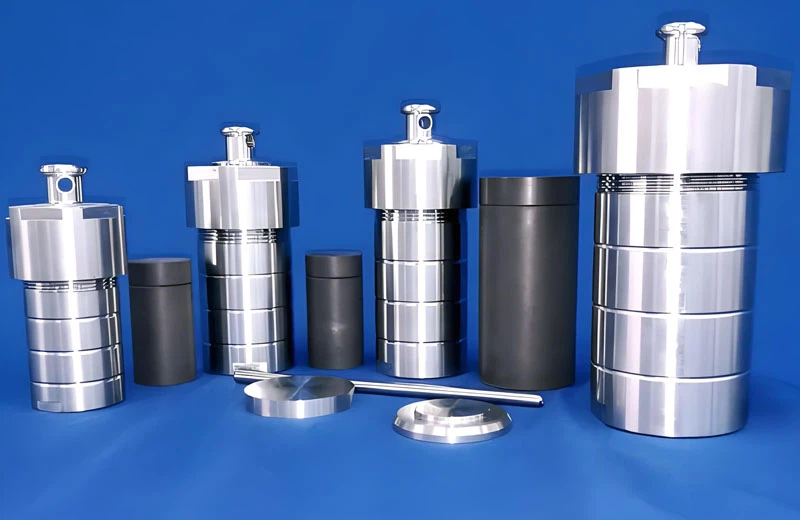
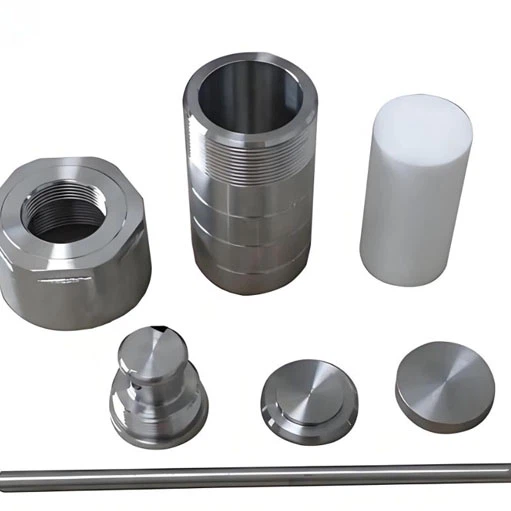
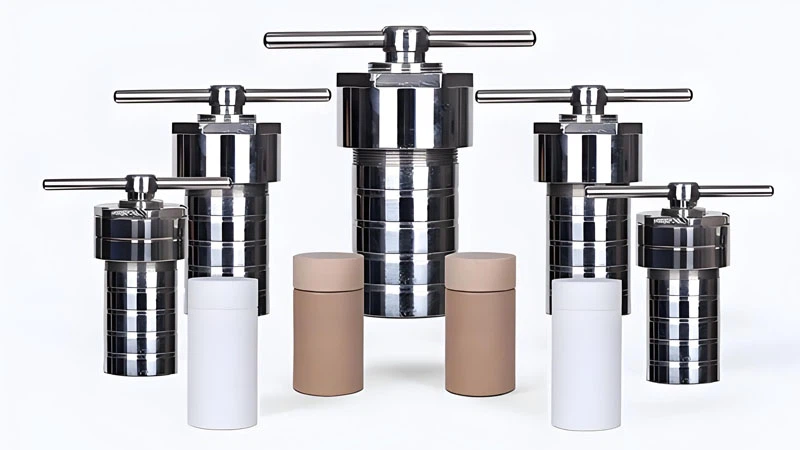
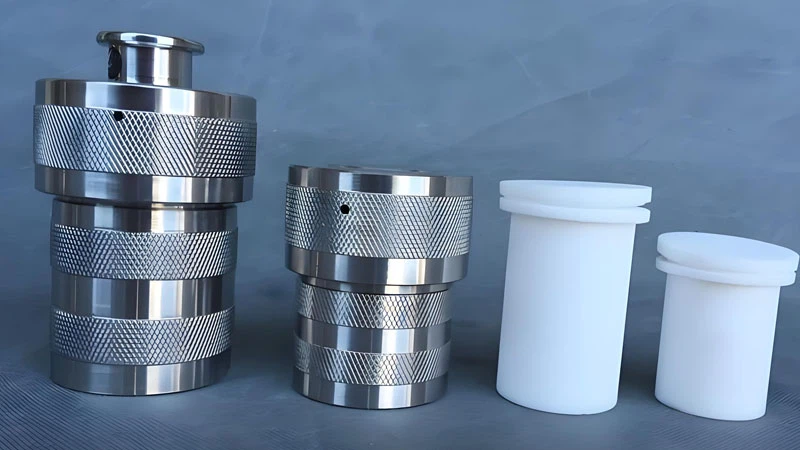
Teflon lined hydrothermal autoclave (usually referred to as hydrothermal synthesis reactor or autoclave) is a kind of experimental equipment widely used in many fields such as chemistry, materials science, geology, and environmental science. Its lining is made of polytetrafluoroethylene (PTFE) material, which has excellent corrosion resistance, high temperature resistance, chemical stability and non-adhesion, making the autoclave stable operation in the harsh environment of high temperature and pressure, and suitable for a variety of chemical reactions. The properties of reactants that can react in a teflon lined hydrothermal autoclave are analyzed in detail from several aspects.
We provide teflon lined hydrothermal autoclave, please refer to the following website for detailed specifications and product information.
Product:https://www.achievechem.com/chemical-equipment/teflon-lined-hydrothermal-autoclave.html
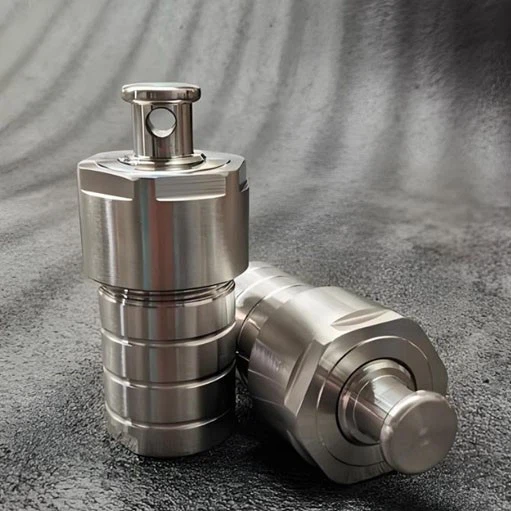
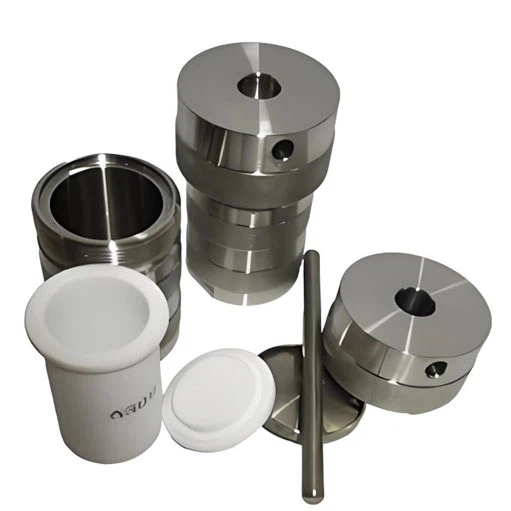
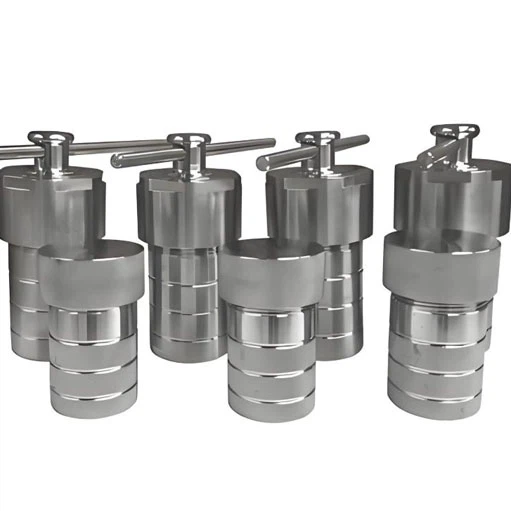
Polytetrafluoroethylene lined hydrothermal autoclave is a high-performance chemical reaction equipment, its kettle body is usually made of high-strength stainless steel to support the pressure required for the entire reaction process, and the lining uses polytetrafluoroethylene (PTFE) material as the lining, through a special process to tightly fit on the surface of the kettle body to form an anti-corrosion barrier. It has the characteristics of corrosion resistance, high temperature resistance and sealing performance, widely used in chemical production, pharmaceutical manufacturing and food processing and other fields, in the use of the process, should strictly abide by the operating procedures and safety precautions to ensure the normal operation of the equipment and the safety of the operator.
Chemical properties of the reactants
Corrosion resistance
One of the main advantages of teflon lining is its excellent corrosion resistance. PTFE is highly resistant to most chemicals, including strong acids, strong bases, organic solvents, and a variety of oxidants and reducing agents. Therefore, reactants with these properties can be used in hydrothermal autoclaves.
Strong acid and strong alkaline: Due to the corrosion resistance of PTFE, the reactants can be strong acids (such as sulfuric acid, hydrochloric acid, nitric acid, perchloric acid, hydroiodic acid, hydrobromic acid, etc.) or strong bases (such as sodium hydroxide, potassium hydroxide, lithium hydroxide, barium hydroxide, calcium hydroxide, etc.). Such reactants may corrode the vessel wall in conventional containers, but they are safe to use in PTFE-lined autoclaves.
Organic solvents: PTFE also has good stability for organic solvents, so a variety of organic solvents can be used as reactants or solvents. This includes alcohols (such as methanol, ethanol, etc.), ketones (such as acetone, butanone, etc.), esters (such as ethyl acetate, methyl formate, etc.), ethers (such as ether, tetrahydrofuran, etc.), and a variety of hydrocarbons (such as benzene, toluene, xylene, etc.).
Oxidants and reducing agents: Certain oxidants (such as potassium dichromate, sodium hypochlorite, hydrogen peroxide, lead dioxide, potassium permanganate, etc.) and reducing agents (such as carbon monoxide, sulfur dioxide, hydrogen sulfide, ammonia, sodium sulfite, ferrous sulfate, stannous chloride, etc.) may be corrosive or dangerous under conventional conditions, but can be safely used in PTFE-lined autoclave. However, it should be noted that some strong oxidants may decompose to produce gases such as oxygen at high temperatures, which may pose a threat to the safety of the autoclave, so the nature of the reactants should be fully understood before use.
Chemical stability
In addition to corrosion resistance, PTFE has high chemical stability. It is not easy to chemically react with other substances, and can maintain stable chemical properties even under high temperature and pressure conditions. This makes autoclaves suitable for a variety of complex chemical reactions, including organic synthesis, hydrothermal synthesis, crystal growth, sample digestion and extraction.
The physical properties of reactants
Thermal stability
Hydrothermal autoclaves usually react at high temperatures, so the reactants need to have some thermal stability. The temperature range of PTFE is usually from -200 ° C to +250 ° C (+300 ° C in some special cases), so the reactants should be stable in this temperature range.
High temperature non-decomposition: Reactants should not decompose at high temperatures to produce harmful gases or solid residues. This helps to keep the inside of the autoclave clean and the reaction efficient.
Heat-sensitive substances: For certain heat-sensitive substances (such as certain biomolecules, drugs, etc.), reactions need to be performed at lower temperatures to avoid their decomposition or inactivation. Such reactants can be adapted by adjusting the heating temperature and reaction time of the autoclave.
 |
 |
 |
 |
Volatility
Since autoclaves need to react in a closed environment, the volatility of the reactants is also a factor to consider.
Low volatility: The reactant should have a low volatility to avoid a large amount of volatilization during the reaction process resulting in a reduction in the concentration of the reactant or the production of harmful gases.
Gas production: Some reactants may produce gases during the reaction (e.g., ammonia, hydrogen, oxygen, carbon dioxide, etc.). These gases need to be properly handled during the design and use of the autoclave to avoid damage to the equipment or safety hazards.
Compatibility
When reacting in autoclaves, consideration needs to be given to the compatibility between the reactants and their compatibility with the PTFE lining.
Compatibility between reactants: Adverse interactions (such as precipitation, crystallization, explosion, etc.) should not occur between reactants to ensure the effectiveness and safety of the reaction.
Compatibility with PTFE: The reactants should not chemically react or physically adsorb with the PTFE lining to avoid damage to the equipment or affect the reaction results. This requires that when selecting reactants, their chemical properties should be fully understood and their compatibility with PTFE should be ensured.
Physical status
The physical state of the reactants (solid, liquid or gas) also affects the use and operation of the autoclave.
Solid reactants: Solid reactants need to be able to disperse evenly in a solvent or be able to dissolve or melt during the reaction to ensure the uniformity and effectiveness of the reaction. For solid reactants, the dispersion and reactivity can be improved by grinding, mixing, etc.
Liquid reactants: Liquid reactants should have good mobility so that they are evenly distributed in the autoclave. At the same time, it is necessary to pay attention to the boiling point and volatility of the liquid reactants to avoid the production of a large amount of gas during the reaction. For liquid reactants, its stability can be maintained by controlling its temperature and pressure.
Gaseous reactants: For gaseous reactants, it is necessary to ensure that they can maintain a certain pressure in the autoclave and can participate uniformly in the reaction during the reaction. In addition, attention should be paid to the toxicity and safety of gaseous reactants. For gaseous reactants, the efficiency and safety of the reaction can be ensured by controlling its flow and concentration.
Safety of reactants
When reacting in autoclaves, special attention needs to be paid to the safety of the reactants.

Toxic and harmful substances
The use of toxic and harmful substances as reactants should be avoided to reduce the harm to the environment and human body. If toxic and harmful substances must be used, it should be ensured that appropriate protective measures are taken during the reaction process, such as wearing protective masks, gloves and other personal protective equipment, and properly disposed of after the reaction, such as the use of special waste liquid treatment equipment or commissioned professional institutions for processing.
Flammable and explosive substances
Flammable and explosive substances have great safety risks when reacting in autoclave. Therefore, special care should be taken when using such reactants and necessary safety measures should be taken. For example, the autoclave can be filled with inert gas (such as nitrogen, argon, etc.) to dilute the concentration of combustible gas and reduce the risk of explosion; At the same time, explosion-proof devices (such as explosion-proof disks, explosion-proof valves, etc.) can be set up to release pressure in time in the event of an explosion and protect the safety of equipment and personnel.
Corrosive substances
Although PTFE has good corrosion resistance to most chemicals, some highly corrosive substances can still cause damage to the PTFE lining. Therefore, caution is required when using such reactants and the integrity of the equipment is checked regularly. If the equipment is found to be damaged or corroded, it should be stopped immediately and repaired or replaced.
Selection and optimization of reactants
In the selection and use of reactants, in addition to considering the above properties, it is also necessary to optimize according to experimental needs and target products. Here are some suggestions:
Understand the reaction mechanism
Before selecting a reactant, the reaction mechanism and reaction conditions should be fully understood to ensure that the selected reactant can react as expected and produce the target product.
Optimization of reaction conditions
By adjusting the reaction temperature, pressure, time and other conditions, the reaction process can be optimized and the yield and purity of the target product can be improved.
Choosing the right solvent
Solvents play an important role in the reaction and can affect the reaction rate and product selectivity. Therefore, factors such as solubility, volatility and stability should be considered in the selection of solvents.
Adding catalysts or additives
In some cases, the addition of catalysts or additives can accelerate the reaction rate and increase the yield of the target product. However, it should be noted that the selection and use of catalysts or additives should follow the principles of safety and environmental protection.