


Rotary Evaporator Extraction
Jul 24, 2024
Leave a message
Introduction to Rotary Evaporator Extraction

Rotary evaporator extraction involves separating components from a mixture using a rotavap. This technique is widely used in chemical, pharmaceutical, and food industries, as well as in academic research. The extraction process leverages the principles of distillation, where a solvent is evaporated from a solution and then condensed back into a liquid, leaving behind the desired compounds.
Principles of Rotary Evaporation
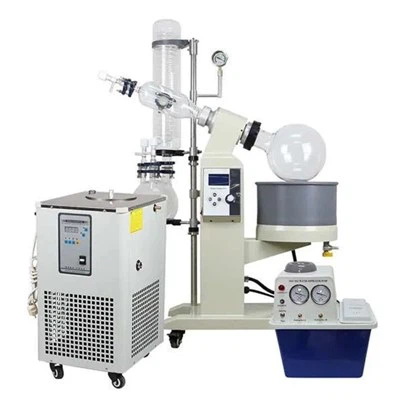
Understanding the basic principles of rotary evaporation is crucial for grasping its application in extraction processes. The main components of a rotavap include a rotating flask, a water bath, a condenser, and a collection flask. The rotating flask contains the solution, which is heated in the water bath. As the flask rotates, the solution spreads out into a thin film, increasing the surface area for evaporation. The solvent vapor is then condensed and collected in a separate flask.
Key Factors in Rotary Evaporator Extraction
○ Solvent Selection
Choosing the right solvent is pivotal for successful extraction. The solvent should have a low boiling point relative to the compounds being extracted, allowing it to evaporate easily without degrading the target compounds.
○ Temperature Control
Maintaining an optimal temperature in the water bath is essential. Too high a temperature can degrade sensitive compounds, while too low a temperature can slow down the evaporation process. A common practice is to keep the bath temperature slightly below the boiling point of the solvent.
○ Vacuum Pressure
Applying a vacuum reduces the boiling point of the solvent, allowing for lower temperature evaporation. This is particularly useful for heat-sensitive compounds. Proper vacuum control ensures efficient and gentle extraction.
Benefits of Rotary Evaporator Extraction
○ Efficiency
Rotary evaporators enable rapid solvent removal, making the extraction process faster compared to traditional methods. This efficiency is crucial in small laboratories where time and resources are often limited.
○ Gentle Processing
The ability to control temperature and pressure allows for gentle extraction, preserving the integrity of heat-sensitive compounds. This is especially important in the pharmaceutical and food industries.
○ Versatility
Rotavaps are versatile and can be used for a wide range of applications, from extracting essential oils to purifying chemical compounds. Their adaptability makes them a valuable asset in any small laboratory.
Applications in Small Laboratories
○ Botanical Extractions
One of the most common applications of rotary evaporator extraction in small laboratories is the extraction of essential oils and other compounds from plants. For instance, extracting essential oils from lavender involves soaking the plant material in a solvent, evaporating the solvent using a rotovap, and collecting the concentrated oil.
○ Pharmaceutical Research
In pharmaceutical research, rotavaps are used to purify compounds and remove solvents from drug formulations. This ensures that the final product is free from impurities and solvents, which is critical for safety and efficacy.
○ Food Industry
Rotavaps are also used in the food industry for flavor extraction and concentration. For example, extracting natural flavors from fruits involves evaporating the solvent and concentrating the flavor compounds, which can then be used in various food products.
Practical Tips for Efficient Extraction
○ Pre-concentration
Before using the rotavap, pre-concentrating the solution can significantly reduce the time required for extraction. This involves removing some of the solvent through other methods like simple distillation.
○ Optimal Rotation Speed
Adjusting the rotation speed to maximize the surface area of the solution without causing spillage is crucial. Faster rotation speeds generally increase evaporation efficiency, but care must be taken to avoid splashing.
○ Regular Maintenance
Ensuring that all components of the rotavap are in good working condition is essential for optimal performance. Regularly checking and maintaining seals, glassware, and the vacuum system can prevent leaks and ensure efficient operation.
Case Studies and Examples
○ Case Study 1: Essential Oil Extraction
In one instance, I used a rotary evaporator to extract essential oils from mint leaves. By soaking the leaves in ethanol and evaporating the solvent at a controlled temperature and pressure, I was able to obtain a highly concentrated mint oil. The process took approximately two hours and yielded a pure, aromatic oil that was free from solvents.
○ Case Study 2: Drug Compound Purification
In another scenario, I used a rotovap to purify a drug compound in a small pharmaceutical lab. The initial solution contained both the drug and a solvent. By carefully controlling the temperature and vacuum pressure, I was able to remove the solvent efficiently without degrading the drug compound. The entire process took about three hours, resulting in a pure and potent drug formulation.
Troubleshooting Common Issues
○ Poor Evaporation Rate
If the evaporation rate is slow, it could be due to insufficient temperature or vacuum pressure. Ensuring that the water bath is at the correct temperature and the vacuum system is properly sealed can resolve this issue.
○ Foam Formation
Foam formation can be problematic during rotary evaporation. To mitigate this, anti-foaming agents can be added to the solution, or the rotation speed can be adjusted to reduce foam formation.
○ Solvent Bumping
Solvent bumping, where the solvent boils violently and splashes, can be prevented by gradually increasing the vacuum pressure and temperature. Using a larger evaporation flask can also help reduce bumping.
Conclusion
Rotary evaporator extraction is a highly efficient and versatile method for separating compounds in small laboratories. By understanding the key factors involved and implementing best practices, lab technicians can optimize the extraction process, saving valuable time and resources. Whether for botanical extractions, pharmaceutical research, or flavor concentration, rotavaps are invaluable tools that enhance the capabilities of any small laboratory.