


Operation Guide For High Pressure Chemical Reactor
May 09, 2025
Leave a message
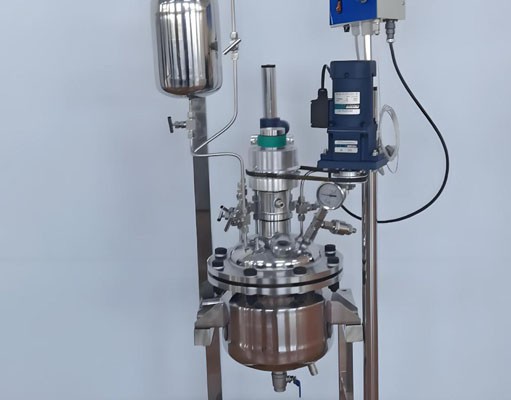
High pressure chemical reactors are important equipment in fields such as chemical engineering, materials, and medicine, promoting the progress of chemical reactions by providing a high-pressure environment. However, its operation involves dangerous factors such as high temperature and high pressure, and it is necessary to strictly follow the operating procedures to ensure safety. The following provides detailed guidelines from four aspects: preparations before operation, operation steps, precautions, and emergency handling.
We provide high pressure chemical reactor, please refer to the following website for detailed specifications and product information.
Product:https://www.achievechem.com/chemical-equipment/high-pressure-chemical-reactor.html

High Pressure Chemical Reactor
High pressure chemical reactors are one of the core devices in modern chemical industry. By accelerating the rate of chemical reactions under high temperature and high pressure conditions, they increase the yield and purity of products. Its application scope covers multiple fields such as petrochemicals, pharmaceuticals, and new materials, and it plays an important role in promoting technological progress and industrial development. However, the operational risks in a high-pressure environment are relatively high, and safety regulations must be strictly followed. The following is a detailed analysis from aspects such as working principle, application fields, safe operation and maintenance.
Preparations before operation
Personnel training and qualifications
Operators need to receive professional training and be familiar with the structure, performance and safety regulations of the equipment.
When operating for the first time, experienced technicians must be present to provide guidance.
Equipment inspection
Visual inspection: Confirm that the reactor body, valves and pipelines are free from damage, deformation or corrosion.
Sealing inspection: Use soapy water or a leak detector to check if there is any air leakage at the valves, flanges, reactor covers and other parts.
Safety accessory inspection: Ensure that safety devices such as pressure gauges, safety valves, and rupture discs are within the validity period of calibration.
Environmental preparation
Laboratories or workshops should be well-ventilated and equipped with emergency facilities such as fire extinguishers and eyewash stations.
Flammable and explosive items (such as lighters and mobile phones) are prohibited from being brought into the operation area.
Material preparation
Confirm the purity of the reactants to avoid side reactions or dangers caused by impurities.
According to the volume of the reaction vessel, strictly control the feeding amount (usually not exceeding two-thirds of the vessel's volume).
Operating Steps
 |
 |
 |
Feeding and sealing
Feed materials in a fume hood to prevent evaporation or leakage of the materials.
Install the sealing ring and apply an appropriate amount of vacuum silicone grease to ensure that the pot cover is closely attached to the pot body.
Tighten the bolts of the pot cover evenly to avoid leakage caused by uneven local force.
Air tightness test
Close all the valves and fill nitrogen through the air inlet to 0.5-1 MPa.
Close the intake valve and observe whether the reading of the pressure gauge is stable. If the pressure drops, the leakage point needs to be checked and resealed.
Displacement and pressurization
Nitrogen displacement: Repeatedly charge and release nitrogen 3 to 5 times to expel the air inside the reactor and prevent the mixture of oxygen and reactants from causing an explosion.
Hydrogen pressurization (if hydrogenation reaction is involved) :
Slowly fill hydrogen to the reaction pressure. During this period, closely monitor the pressure gauge to avoid overpressure.
Hydrogen gas cylinders should maintain a residual pressure of more than 0.01 MPa to prevent air backflow.
Heating and reaction
Start the heating system and raise the temperature to the set temperature as required by the process. The heating rate should not be too fast (usually ≤5℃/min) to avoid local overheating.
Turn on the stirring device to ensure that the materials are evenly mixed. The stirring speed needs to be adjusted according to the viscosity of the reactants.
Monitor parameters such as temperature, pressure and stirring current in real time, and record the data.
Sampling and Testing
If sampling is required during the reaction process, the temperature and pressure should first be reduced to a safe range.
Use a dedicated sampler to prevent air from entering the reactor.
Analyze in a timely manner after sampling and adjust the process parameters according to the results.
Cooling and pressure relief
After the reaction is completed, turn off the heating system and let it cool down naturally or by passing cooling water.
Slowly release the pressure inside the reactor to normal pressure to avoid material splashing or equipment damage caused by rapid pressure relief.
Only after confirming that the pressure gauge has returned to zero can the pot cover be opened.
Discharging and cleaning
The products are discharged through the discharge port to avoid residue.
Clean the inner walls, stirring paddles and sealing surfaces of the reaction vessel with appropriate solvents to prevent corrosion or cross-contamination.
After cleaning, blow dry the pot with nitrogen and close all the valves.
Precautions
Safety protection
Operators need to wear personal protective equipment such as protective suits, protective glasses and high-temperature resistant gloves.
When hydrogenation reactions are involved, it is strictly forbidden to wear shoes with nails or carry metal items to prevent sparks from impact.
Pressure and temperature control
Over-temperature and over-pressure operation is strictly prohibited. The maximum working pressure and temperature of the reaction vessel must not exceed the designed values.
Regularly calibrate the pressure gauge and thermometer to ensure accurate readings.
Properties of reactants
Understand the thermal stability, toxicity and corrosiveness of the reactants, and avoid using materials that are incompatible with the material of the reactor.
Exothermic reactions require strict control of the heating rate to prevent "runaway temperatures" from causing explosions.
Equipment maintenance
Regularly inspect the wear of components such as the agitator, seals, and valves, and replace them in a timely manner.
When the reactor is not in use for a long time, it needs to be filled with nitrogen for protection to prevent rust.
Emergency Response
Leakage treatment
Immediately close the air intake valve and stop heating and stirring.
Wear protective equipment and use soapy water to check for leakage points.
When there is a small leakage, purge with nitrogen. When there is a large-scale leakage, activate the emergency response plan and evacuate the personnel.
Overpressure treatment
When the safety valve is not activated, manually open the emergency exhaust valve to reduce pressure.
Cut off the power supply and gas source to prevent the situation from escalating.
Fire handling
Cut off the power supply and gas source, and use a dry powder fire extinguisher or a carbon dioxide fire extinguisher to put out the fire.
Do not use water to extinguish fires to prevent high-temperature equipment from exploding upon contact with water.
Personal injury
When the skin comes into contact with corrosive materials, rinse immediately with plenty of water and seek medical attention.
When inhaling toxic gases, quickly move to a well-ventilated area. If necessary, perform artificial respiration and seek medical attention.
Operation Records and Summaries
Record content
Process parameters such as feeding amount, reaction temperature, pressure and time.
The operating status of the equipment (such as stirring current, sealing condition).
Abnormal situations and handling measures.
Summary and Improvement
Regularly analyze the operation records and optimize the process parameters.
Propose improvement suggestions for equipment malfunctions or potential safety hazards and implement them.
The operation of high pressure chemical reactors must strictly follow the regulations to ensure that safety and efficiency are given equal importance. Through standardized operation procedures, meticulous preparatory work and complete emergency plans, risks can be minimized to the greatest extent and the safety of personnel and equipment can be guaranteed.