


Lab Essential: Double Glass Reactor Benefits
Jun 09, 2024
Leave a message
A double glass reactor is a sort of research facility gear utilized for chemical amalgamation, handle improvement, and generation in inquire about and mechanical settings. It comprises of two layers of glass, ordinarily with the internal layer made of a chemically resistant fabric such as borosilicate glass and the external layer giving extra assurance and separator.
Chemical Resistance: The internal glass layer of the reactor is ordinarily made of borosilicate glass, which is profoundly safe to chemical erosion and warm stun. This makes it appropriate for dealing with a wide extend of destructive chemicals, acids, and solvents without hazard of defilement or harm to the equipment.
Visibility: The straightforward glass development of the reactor permits for simple perception of the response prepare and observing of response parameters such as color changes, stage moves, and precipitation. This perceivability is vital for real-time response checking, investigating, and optimization.
Versatility: double glass reactors can be utilized for a assortment of chemical forms, counting blending, blending, warming, cooling, refining, reflux, and filtration. They are congruous with a wide run of response conditions and can suit distinctive response volumes and sorts, making them flexible instruments for research facility investigate and development.
Temperature Control: double glass reactors frequently include built-in warming and cooling frameworks, such as jacketed or coil condensers, to control the temperature of the response. This permits for exact temperature direction, warm solidness, and proficient warm exchange, empowering the execution of temperature-sensitive responses and warm cycling protocols.
Safety: The double-layered glass development of the reactor gives an extra layer of assurance against chemical spills, spills, and sprinkles, minimizing the chance of presentation to perilous substances and guaranteeing administrator security. The external glass layer acts as a control boundary, anticipating the discharge of poisonous or unstable chemicals into the research facility environment.
Easy Cleaning and Upkeep: double glass reactors are outlined for simple cleaning and upkeep, with smooth, non-porous surfaces that stand up to grip and encourage intensive cleaning between tests. The secluded plan of the reactor permits for fast dismantling, review, and substitution of components, decreasing downtime and guaranteeing reliable performance.
Scalability: double glass reactors can be scaled up from laboratory-scale to pilot-scale and production-scale forms with negligible adjustments, making them appropriate for prepare advancement and scale-up thinks about. The measured plan and conversely components permit for consistent move between distinctive reactor sizes and arrangements, guaranteeing coherence and consistency in production.
Data Logging and Robotization: Numerous double glass reactors are prepared with progressed control frameworks, information logging capabilities, and robotization highlights that streamline exploratory workflows, improve handle control, and move forward reproducibility. These frameworks permit for exact control of response parameters, real-time information securing, and farther checking of tests, empowering proficient information examination and optimization.
Overall, the benefits of utilizing a double glass reactor in research facility settings incorporate chemical resistance, perceivability, flexibility, temperature control, security, ease of cleaning and support, adaptability, and progressed control and computerization capabilities. These highlights make double glass reactors crucial instruments for chemical amalgamation, prepare advancement, and generation over different businesses, counting pharmaceuticals, chemicals, polymers, and materials science.
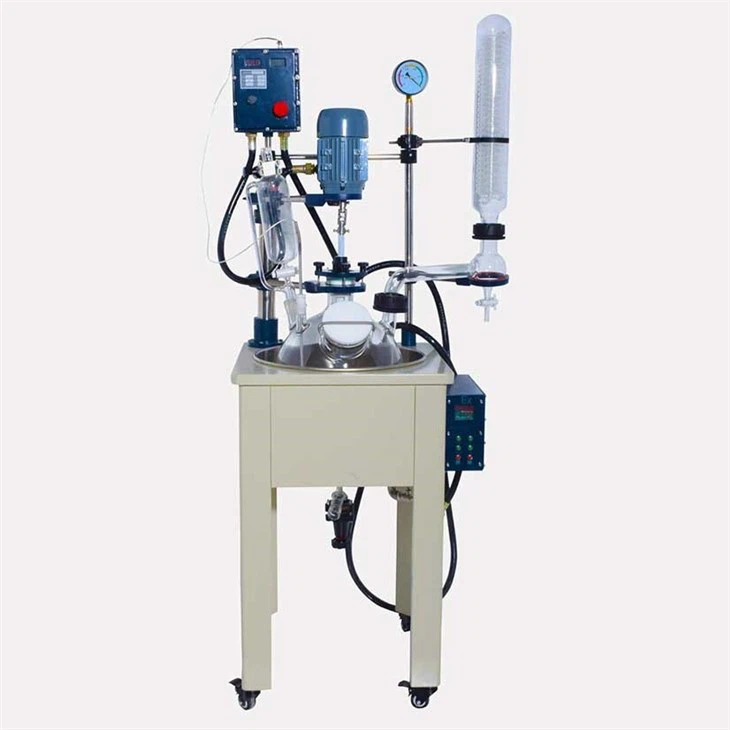
Understanding double Glass Reactors
Before digging into their benefits, it's foremost to get a handle on the principal workings of double glass reactors. Basically, these reactors comprise of an inward glass vessel encased inside an external shell, making a vacuum-sealed environment for chemical responses. This dual-layered development gives a few preferences, counting improved warm cover, ideal response perceivability, and prevalent erosion resistance.
Enhanced Security and Durability
One of the first preferences of double glass reactors is their unparalleled security highlights. The dual-layered plan acts as a defend against chemical spills and spills, minimizing the chance of dangerous presentation to research facility staff. Furthermore, the vigorous glass fabric gloats remarkable toughness, guaranteeing long-term unwavering quality and negligible upkeep necessities. These inborn security measures make double glass reactors an perfect choice for taking care of unstable substances and receptive chemicals in research facility settings.
Precise Temperature Control
Temperature regulation plays a pivotal role in various chemical reactions, influencing reaction kinetics, product yields, and overall process efficiency. Double glass reactors excel in providing precise temperature control, thanks to their advanced heating and cooling mechanisms. Equipped with customizable heating elements and efficient cooling systems, these reactors enable researchers to maintain optimal reaction temperatures with pinpoint accuracy. Such precise temperature control not only enhances reaction outcomes but also facilitates the replication of experimental conditions for consistent results.
Versatility Across Applications
From pharmaceutical research to chemical synthesis, double glass reactors find widespread utility across diverse scientific disciplines. Their adaptable design accommodates a wide range of experimental setups, allowing researchers to conduct batch reactions, distillations, and crystallizations with ease. Moreover, the transparent glass construction offers unparalleled visibility into the reaction process, enabling real-time monitoring and analysis of reaction kinetics and phase transitions. This versatility makes double glass reactors indispensable tools for academic research, industrial R&D, and process optimization endeavors.
Optimized Workflow Efficiency
In the fast-paced environment of laboratory research, efficiency is paramount to success. Double glass reactors streamline experimental workflows by consolidating multiple reaction steps within a single apparatus. With integrated stirring mechanisms, reflux condensers, and vacuum systems, these reactors facilitate seamless reaction monitoring and product collection without the need for cumbersome external equipment. By minimizing downtime and simplifying experimental setups, double glass reactors empower researchers to focus their efforts on data analysis and scientific inquiry, accelerating the pace of discovery and innovation.
Scale-Up Potential
While initially designed for small-scale laboratory applications, double glass reactors offer scalability for process development and pilot-scale production. Researchers can leverage the insights gained from bench-scale experiments to optimize reaction conditions and scale up production volumes seamlessly. Furthermore, the modular design of double glass reactors allows for easy integration with additional components such as feeding systems, sampling ports, and automation modules, further enhancing their scalability and adaptability to evolving research needs.
Conclusion

In conclusion, the benefits of double glass reactors are manifold, encompassing safety, versatility, efficiency, and scalability.
As indispensable tools in small-scale laboratory setups, these reactors empower researchers to conduct a wide range of chemical reactions with precision and confidence.
With their advanced features and robust construction, double glass reactors continue to drive scientific advancements across various fields, shaping the future of research and innovation.
References
https://www.sciencedirect.com/science/article/pii/S2352340918301309