


How Long Does The Freeze Drying Process Take For Different Food?
Nov 21, 2024
Leave a message
The freeze drying process,also known as lyophilization,is a sophisticated preservation method that can take anywhere from 20 to 72 hours,depending on the type of food being processed.This time frame varies significantly based on factors such as moisture content,density,and the specific characteristics of the food item.For instance,fruits with high water content may require up to 48 hours in a deep freeze dryer,while dense meats could take up to 72 hours for complete dehydration.The process involves three main stages:freezing,primary drying(sublimation),and secondary drying (desorption),each contributing to the overall duration.It's important to note that while the process may seem lengthy,it results in food products with extended shelf life,preserved nutritional value,and maintained original flavor and texture.Understanding these time variations is crucial for industries utilizing freeze-drying technology,from pharmaceutical companies preserving vaccines to food manufacturers creating long-lasting,lightweight meals for outdoor enthusiasts.
We provide deep freeze dryer,please refer to the following website for detailed specifications and product information.
Product:https://www.achievechem.com/freeze-dryer/deep-freeze-dryer.html
How long does it take to freeze-dry fruits and vegetables?
Freeze-drying duration for common fruits
Fruits can be freeze-dried for anywhere between 24 and 36 hours,depending on their structure and water content.In a commercial deep freeze dryer, berries like blueberries and strawberries typically take 24 to 30 hours.These fruits can remove moisture more effectively because of their high surface area to volume ratio.However,it can take up to 36 hours for fruits with denser flesh,like apples or peaches,to fully lyophilize.After a quick freezing phase,the ice sublimates straight into vapor during the primary drying stage.Approximately 80% of the process time is spent on this critical and frequently time-consuming step.
Vegetable lyophilization timeframes
Vegetables generally have a lower moisture content compared to fruits,which can affect their freeze-drying duration.Leafy greens like spinach or kale may only require 20-24 hours in a deep freeze dryer due to their thin structure and relatively low water content.Root vegetables such as carrots or potatoes,with their denser composition,might need 30-36 hours for complete dehydration.The secondary drying phase,which removes unfrozen water molecules,is particularly important for vegetables to ensure a crisp,long-lasting product.This phase typically takes about 30-40% of the total process time and is critical for achieving the desired low residual moisture content,usually below 2%,which is essential for extended shelf life and preservation of nutritional value.
What is the average freeze drying time for meat and protein foods?
Freeze-drying duration for various meats
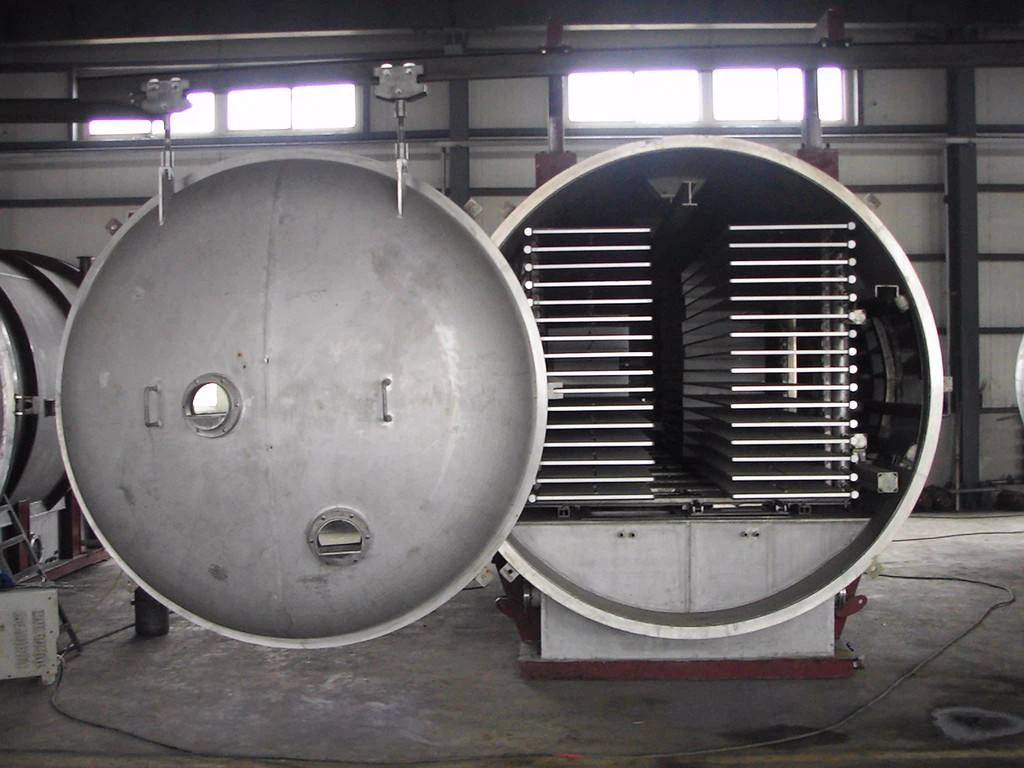
Meat products generally require longer freeze-drying times due to their complex structure and higher fat content.On average,the process can take between 48 to 72 hours in a deep freeze dryer. Lean meats like chicken breast or turkey may be on the lower end of this range,typically needing about 48-60 hours.However,fattier cuts such as beef or pork can take up to 72 hours for complete lyophilization.The freezing stage for meats is particularly crucial,as it affects the final texture of the product.Rapid freezing creates smaller ice crystals,leading to less cellular damage and better rehydration properties.The primary drying phase for meats is extended due to the need to carefully control temperature and pressure to prevent melting of fats,which could compromise the quality of the final product.
Protein-rich foods and their lyophilization times
The freeze-drying times of other foods high in protein,such as eggs,dairy products,and plant-based proteins,vary.For example,commercial deep freeze dryers may need 36 to 48 hours to process egg products.Eggs require a delicate process because overheating can cause coagulation and impair the product's capacity to properly rehydrate.In order to avoid lactose crystallization,dairy products like cheese and yogurt usually require 48 to 60 hours of careful temperature control.The precise amount of time needed for plant-based proteins,such as tofu or tempeh,varies depending on their density and moisture content.For these protein-rich foods,the secondary drying stage is especially crucial because it guarantees the removal of bound water,which is necessary to stop microbial growth and increase shelf life.
Why does freeze-drying time vary for different types of food?
Impact of food composition on lyophilization duration
The composition of food significantly influences the time required for freeze-drying.Foods with high water content,such as watermelon or cucumber, generally take longer in a deep freeze dryer due to the increased amount of ice that needs to be sublimated.Conversely,foods with lower moisture levels,like nuts or seeds,may require less time.The presence of sugars and salts can also affect the process duration.These solutes can lower the freezing point of water,potentially extending the primary drying phase.Fats present another challenge,as they can form a barrier that slows down the sublimation process.This is why fattier meats often require longer freeze-drying times compared to leaner cuts.The protein content of food also plays a role,as proteins can bind water molecules tightly,necessitating a more extended secondary drying phase to remove this bound water effectively.
Influence of food structure on freeze-drying efficiency
The physical structure of food items significantly impacts freeze-drying efficiency and duration.Foods with a larger surface area to volume ratio,such as sliced fruits or shredded meat,typically dry faster in a deep freeze dryer.This is because the sublimation process occurs more efficiently when ice crystals have a shorter path to the food's surface.Dense or thick foods,like whole strawberries or large chunks of meat,may require longer processing times as the ice in the center takes longer to sublimate.The cellular structure of the food also plays a role.Foods with rigid cell walls,like many vegetables,can maintain their structure better during freeze-drying,potentially speeding up the process.In contrast,foods with more delicate structures may collapse during drying,creating a denser product that takes longer to process fully.Understanding these structural influences is crucial for optimizing freeze-drying protocols and achieving consistent results across different food types.
Conclusion
The freeze-drying process duration varies significantly across different food types,ranging from 20 hours for some vegetables to 72 hours for dense, fatty meats.This variation is primarily due to differences in moisture content,composition,and physical structure of the foods.Understanding these factors is crucial for industries utilizing freeze-drying technology to optimize their processes and produce high-quality,shelf-stable products.Whether you're in the pharmaceutical industry preserving sensitive biologics or in food manufacturing creating lightweight,nutritious meals,the deep freeze dryer is an indispensable tool.Its ability to preserve the original properties of food while extending shelf life makes it a valuable asset in various sectors.For more information on freeze-drying equipment and processes,feel free to reach out to us at sales@achievechem.com.
References
1.Duan,X.,Yang,X.,Ren,G.,Pang,Y.,Liu,L.,& Liu,Y.(2016).Technical aspects in freeze-drying of foods.Drying Technology,34(11),1271-1285.
2.Ratti,C.(2001).Hot air and freeze-drying of high-value foods:a review.Journal of Food Engineering,49(4),311-319.
3.Ciurzyńska,A.,& Lenart,A.(2011).Freeze-drying - application in food processing and biotechnology-a review.Polish Journal of Food and Nutrition Sciences,61(3),165-171.
4.Barbosa-Cánovas,G.V.,& Vega-Mercado,H.(1996).Dehydration of foods.Springer Science & Business Media.