


How Is A Stainless Steel Reactor Constructed?
Oct 18, 2024
Leave a message
Chemical interpreting, pharmaceutical manufacturing, and the production of food are among the many industries that rely heavily on stainless steel reactor. These flexible packagings are made to endure difficult conditions while maintaining the quality of the chemicals they exercise. It is essential for people who work in companies or are contemplating acquiring such machinery to understand how a stainless steel reactor is created.
In-depth discussion of the elements, manufacturing processes, and quality control measures used to guarantee that the end result satisfies strict marketplace standards will be provided in this piece on the intricate details involved in constructing a stainless steel reactor. Whether you're a seasoned professional or new to the field, this comprehensive guide will provide valuable insights into the creation of these indispensable industrial tools.
Materials and Design Considerations of Stainless Steel Reactor
|
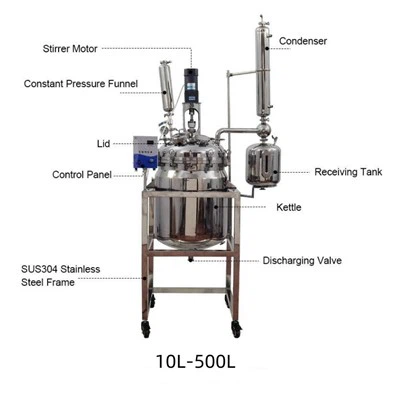
The construction of a stainless steel reactor begins with careful material selection and design considerations. Stainless steel is the material of choice due to its excellent corrosion resistance, durability, and ability to maintain product purity. However, not all stainless steel is created equal, and the specific grade chosen depends on the intended application of the reactor. Common grades used in reactor construction include: 1) 316L: Offers superior corrosion resistance and is often used in pharmaceutical and food processing applications. 2) 304: A versatile grade suitable for many chemical processing applications. 3) 2205 Duplex: Provides high strength and excellent resistance to stress corrosion cracking.
|
|
|
|
The design phase involves careful consideration of factors such as: ◆ Reactor capacity and dimensions ◆ Operating pressure and temperature ranges ◆ Required agitation and mixing capabilities ◆ Heating and cooling requirements ◆ Inlet and outlet configurations ◆ Safety features and compliance with industry regulations Engineers use advanced computer-aided design (CAD) software to create detailed 3D models of the reactor, ensuring all components fit together perfectly and meet the specified performance criteria. These models also help in optimizing the reactor's efficiency and identifying potential issues before construction begins. |

Manufacturing Process of Stainless Steel Reactor
Once the design is finalized, the manufacturing process of the stainless steel reactor can commence. This process typically involves several stages:
◆ Material Preparation: The selected stainless steel is cut to size and shaped according to the design specifications. This may involve cutting, bending, and rolling of metal sheets to form the reactor's shell and other components.
◆ Welding: Various parts of the reactor are joined together through precise welding techniques. Tungsten Inert Gas (TIG) welding is often used for its ability to produce high-quality, clean welds that maintain the integrity of the stainless steel.
◆ Internal Components: The reactor's internals, such as baffles, agitators, and heating/cooling coils, are fabricated and installed. These components are crucial for the reactor's performance and must be positioned accurately.
◆ Surface Finishing: The interior and exterior surfaces of the reactor undergo careful finishing processes. This may include grinding, polishing, and passivation to enhance corrosion resistance and ensure a smooth, easily cleanable surface.
◆ Nozzle and Port Installation: Various nozzles and ports for input, output, instrumentation, and cleaning are added to the reactor body. These must be precisely positioned and securely welded to prevent leaks.
◆ Pressure Testing: The completed reactor vessel undergoes rigorous pressure testing to ensure it can withstand the designed operating conditions without leaks or structural failures.
◆ Insulation and Cladding: If required, the reactor may be insulated and clad with an additional layer of stainless steel or other materials to improve thermal efficiency and protect the insulation.
Throughout the manufacturing process, strict quality control measures are implemented to ensure each step meets the required standards. This includes material certifications, weld inspections, and dimensional checks.
Quality Assurance and Testing of Stainless Steel Reactor
A thorough examination and quality assurance techniques constitute a component of the last phase of building a stainless steel reactor. These steps are crucial to ensure the reactor meets all design specifications and safety requirements before it is put into service.
|
◆ Non-Destructive Testing (NDT): Various NDT methods are employed to inspect the reactor's integrity without damaging it. These may include: 1) Radiographic testing to detect internal defects in welds 2) Ultrasonic testing to check for material thickness and identify potential flaws 3) Dye penetrant testing to reveal surface imperfections 4) Magnetic particle inspection for ferromagnetic stainless steel grades ◆ Hydrostatic Testing: The reactor is filled with water and pressurized to a level above its design pressure to verify its structural integrity and check for any leaks. ◆ Chemical Composition Analysis: Samples of the stainless steel used in construction are analyzed to confirm they meet the specified grade and composition requirements. |
|
|
|
◆ Surface Finish Inspection: The interior and exterior surfaces are carefully examined to ensure they meet the required finish standards, which is crucial for maintaining cleanliness and preventing product contamination. ◆ Dimensional Verification: All dimensions, including the positioning of nozzles, ports, and internal components, are verified against the design specifications. ◆ Functionality Testing: If the reactor includes moving parts such as agitators or valves, these are tested to ensure smooth operation and proper sealing. ◆ Documentation: Detailed records of all materials, processes, and test results are compiled into a comprehensive documentation package. This typically includes material certificates, welding procedures, NDT reports, and compliance certificates. |


Once all quality assurance steps are completed and the reactor passes all tests, it receives final approval for use. This rigorous process ensures that each stainless steel reactor leaving the manufacturing facility meets the highest standards of quality and safety.
Conclusion
Building a stainless steel reactor is a hard method that calls for knowledge, accuracy, and strict adherence to quality requirements. From the initial design considerations and material selection to the final quality assurance tests, each step plays a crucial role in creating a reliable and efficient reactor.
The use of high-quality stainless steel, advanced manufacturing techniques, and rigorous testing procedures ensures that the final product can withstand the demanding conditions of industrial processes while maintaining the purity of the materials it contains. Recent advances in reactor design and construction will likely end in even more flexible and effective stainless steel reactors as technology advances.